29 Oct 2010

Relational Leadership and Employee Retention – A Match, part 2 (Segment Two)

Management & Leadership 1 Comment

In Part Two – Segment Two will complete the discussion on a trusting organization. These 10 principles of trust when employed consistently to your entire organization without bias will build a bridge of loyalty that will stand against the elements. People do not willingly leave organizations built on moorings as strong as trust.

This article will examine the last five Building Blocks of Trust. All of the building blocks are important and it is essential to note that you cannot selectively skip one in favor of another. Companies that score high in the Trust Index will see lower turnover and greater productivity.
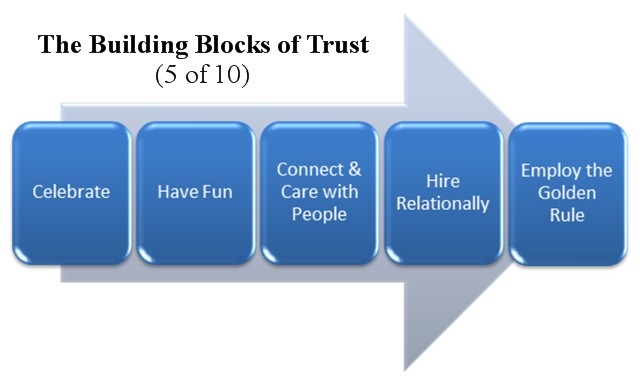
Figure 1: The Second Five Building Blocks of Trust

In the workplace very little goes unnoticed. What is celebrated an expression of what you value as a leader. You always want to be careful to send the right signals to employees. If you say everyone matters in the business’s success, then your celebrations must include the potential for all employees to be recognized for their efforts. Celebrations do not have to be elaborate or costly but they must be broad, sincere, and meaningful. By their nature celebrations often include fun, thus if well thought out, you are able to reinforce two building blocks at a time.

The Relational Leader: A Revolutionary Framework to Engage Your Team (Course Technology PTR, Cengage Learning 2010)
by Frank McIntosh


The Relational Leader presents a framework to use as a compass point so that you can project a consistent message and methodology to your people. The book will expose you to the principles of relational leadership and show you how the principles when applied in tandem, can produce substantial results.

People are the core of this leadership style. How you approach people and the environment that you provide for them to work in revolves around seven attributes called: Fairness, Character, Trust, Fun, Celebration, Attentiveness, and Purpose.

You will understand how these attributes affect people through the eyes and experiences of highly successful leaders. You will learn how to put the attributes in play for yourself in your own leadership situation.

This book will explore how our institutional leaders can make claim once again to ethical, fair, and purposeful practices that underscore the value of human beings as the linchpins of our society. The methods presented in the book will help you build a motivated and responsive team within your workgroup.

For example, Discover Bank held monthly meetings of all staff by location and shift. Relevant information was shared, birthdays, anniversaries, births noticed, accomplishments cited, and volunteerism recognized. Senior leadership was always present and involved. A party atmosphere was created with balloons and music. Everyone in the company looked forward to these meetings and they set a tone that everyone was respected and valued. It reinforced all the people-centric policies of the company.

Leaders sometimes forget that new hires are a reflection of the belief systems they established. Every attempt must be made to integrate the company’s value system into its hiring profiles. New hires must reflect the company’s core beliefs.

I once hired someone with excellent “pedigree” i.e. fine university training, JA program volunteer, excellent work record in finance and extraordinarily enthusiastic about Junior Achievement. I was blind to the fact that he was a bit “uppity” and often talked down to people. He used words that most people never heard of. When I discussed these observations with him, he said it wasn’t up to him to lower himself to others’ level. That’s when I knew I had made a mistake. So I said, “I made a mistake, I own this, I am going to fix it, and I am not going to do it again.” I gave him 4 months to find a new job.

To some, saying your business philosophy includes connecting with people and caring about them sounds soft. It just doesn’t project the hard-nosed, thick-skin vision that many have of the successful business leader. You connect with people by demonstrating that you are sincerely interested in them and helping them in a time of need. It is possible to be hard-nosed and caring.

Charlie Cawley, legendary leader of MBNA (the credit card giant) is an excellent example. He drove hard bargains and held exacting expectations but he also let newlyweds borrow one of his antique autos for their wedding day or provided for funeral cars and the funeral meal for grieving employees. Contradiction in terms? I think not; he demanded the best for his business and supported his employees in times of great joy or sorrow.

If you allow the “Golden Rule” to be your guide and measurement in your dealings with people, you will likely pass the many tests of trust that will confront you daily. If you are viewed as a trusting organization and a learning, thinking organization you are well on your way to being a relational organization. People who are fortunate to work in these environments are energetic, enthusiastic and loyal.


About the Author

Frank McIntosh is author of The Relational Leader (Course Technology PTR, Cengage Learning 2010). During his 36 year career, Frank has worked with many of the most recognized companies and executives in the world. He has provided consulting services for peers across the country and helped initiate Junior Achievement programs in Ireland, the Ivory Coast, Oman, the United Arab Emirates, Bahrain, and Uzbekistan. Frank was inducted into the Delaware Business Leaders Hall of Fame in October 2008, one of 38 individuals so honored and the first not-for-profit executive to receive this distinction in Delaware’s 300 year business history. To read Frank’s complete biography, click here.

For more information regarding this subject, visit Frank McIntosh at his website www.FJMcIntosh.com.

Related Articles:

  1. Relational Leadership and Employee Retention – A Match, part 2 (Segment One)
  2. Relational Leadership and Employee Retention – A Match, part 1
  3. StrategyDriven Podcast Special Edition 40a – An Interview with Frank McIntosh, author of The Relational Leader, part 1 of 2
  4. StrategyDriven Podcast Special Edition 40b – An Interview with Frank McIntosh, author of The Relational Leader, part 2 of 2
  5. StrategyDriven Podcast Episode 36 – The Warning Signs of Employee Disenfranchisement

One Response to “Relational Leadership and Employee Retention – A Match, part 2 (Segment Two)”

  1. Relational Leadership and Employee Retention – A Match, part 2 … « Tips to attract and retain high performing employees says:

    [...] Relational Leadership and Employee Retention – A Match, part 2 … Uncategorized   complete-the-discussion, employee-retention, frank, leadership, leave, [...]

Leave a Reply