StrategyDriven Podcasts focus on the tools and techniques executives and managers can use to improve their organization’s alignment and accountability to ultimately achieve superior results. These podcasts elaborate on the best practice and warning flag articles on the StrategyDriven website.
The strength of our community grows with the additional insights brought by our expanding member base. Please consider rating us on iTunes by clicking here. Rating the StrategyDriven Podcast and providing your comments online improves our ranking and helps us attract new listeners which, in turn, helps us grow our community.
Thank you again for listening to the StrategyDriven Podcast!
About the Author
Hank Moore has advised 5,000+ client organizations worldwide (including 100 of the Fortune 500, public sector agencies, small businesses and non-profit organizations). He has advised two U.S. Presidents and spoke at five Economic Summits. He guides companies through growth strategies, visioning, strategic planning, executive leadership development, Futurism and Big Picture issues which profoundly affect the business climate. He conducts company evaluations, creates the big ideas and anchors the enterprise to its next tier. The Business Tree™ is his trademarked approach to growing, strengthening and evolving business, while mastering change. To read Hank’s complete biography, click here.
Nathan Ives is a StrategyDriven Principal, and Host of the StrategyDriven Podcast. For over twenty years, he has served as trusted advisor to executives and managers at dozens of Fortune 500 and smaller companies in the areas of management effectiveness, organizational development, and process improvement. To read Nathan’s complete biography, click here.
https://www.strategydriven.com/wp-content/uploads/SDELogo5-300x70-300x70.png00Nathan Iveshttps://www.strategydriven.com/wp-content/uploads/SDELogo5-300x70-300x70.pngNathan Ives2013-02-14 06:12:382015-10-08 00:24:53StrategyDriven Podcast Episode 43 – The Big Picture of Business: Business Leader as Community Leader, part 1 of 2
Organizations get people caught in activity traps…unless managers periodically pull back and reassess in terms of goals. Managers lose sight of their employees’ goals.
Employees work hard, rather than productively. Mutually agreed-upon goals are vital.
Failure can stem from either non-achievement of goals or never knowing what they were. The tragedy is both economic and humanistic. Unclear objectives produce more failures than incompetence, bad work, bad luck or misdirected work.
When people know and have helped set their goals, their performance improves. The best motivator is knowing what is expected and analyzing one’s one performance relative to mutually agreed-upon criteria.
Goal attainment leads to ethical behavior. The more that an organization is worth, the more worthy it becomes. Most management subsystems succeed or fail according to the clarity of goals of the overall organization.
How to Find Goals:
Examine problems.
Study the organization’s core business.
Strengths, Weaknesses, Opportunities and Threats.
Portfolio analysis.
Cost containment.
Human resources development.
Motivation and commitment.
Make Goal Setting a Reality:
Start at the top.
Adopt a policy of strategic planning.
Strategic goals and objectives must filter downward throughout all the organization.
Training is vital.
Continual follow-up, refinement and new goal setting must ensue.
Programs must be competent, effective and benchmarked.
A corporate culture must foster all goal setting, policies, practices and procedures.
Priorities for Goals:
Focus on important goals.
Make goals realistic, simple and attainable.
Reward risk takers.
Recognize that trade-offs must be made.
Goals release energy.
Information leads to dissemination, leading to teaching-training, leading to insight, leading to understanding, leading to knowledge, leading to wisdom.
View goals as long-term, rather than short-term.
Ways in Which Goals Improve Effectiveness:
Defines effectiveness as the increase in value of people and their activities as resources.
Recognizes that humans are achievement and success creatures.
Goals infuse meaning into work and work into other aspects of life. Life is fully lived when it has meaning.
One cannot succeed without definitions of success. One must expect something to achieve success.
Failure is inevitable and is the best learning curve for success.
One’s goals start from within, not from work situations. The goal-oriented person adapts to the work environments.
Collaborations with other people create success. One cannot be successful alone or working in a vacuum.
One is always dependent upon other people, and other people are dependent upon you.
Commitments must be made to other people.
One must view the future and change as affirmative, in order to succeed.
Knowledge of results is a powerful force in growing and learning.
Without goals, one cannot operate under self-control.
Objectives under one’s own responsibility helps one to identify with the objectives of the larger organization of which he-she is a part. Sense of belonging is enhanced.
Achieving goals which one set and to which one commits enhances a person’s sense of adequacy.
People who set and are striving to achieve goals together have a sense of belonging, a major motivator for humanity.
Because standards are spelled out, one knows what is expected. The main reason why people do not perform is that they do not know what is expected of them.
Through goal setting and achievement, one becomes actualized.
Goal setting creates a power of one’s life…especially the part that relates to work.
With goals, one can be a winner. Without goals, one never really succeeds…he-she merely averts-survives the latest crisis.
7 Measurements of Successful Budgeting and Planning:
The business you’re in. You’re highly dedicated, talented, resourceful and give customers what they cannot really get elsewhere.
Running the business. Business is approached as both an art and a science. Operations continue to streamline and are professional and productive. Demonstrated integrity and dependability assure customers that the team will perform magnificently.
Financial. Keeping the cash register ringing is not the only reason for being in business. You always give customers their money’s worth. Your charges are fair and reasonable. Business is run economically and efficiently, with excellent accounting procedures, payables-receivables practices and cash management.
People. The company is people-friendly. Collaborations assure that top talent is assembled. The team is empowered, likeable, competent and demonstrate initiative and judgment.
Business Development. Customer service is always the focus…for and with clients. Communications are open, frequent, professional and with a deep sense of caring.
Body of Knowledge. There is a sound understanding of the relationship of each business function to the other. You provide leadership for progress, rather than following along. You develop-champion the tools to change.
The Big Picture. Approach business as a Body of Work…a lifetime track record of accomplishments. You have and regularly update-benchmark a strategy for the future, shared company Vision, ethics, Big Picture thinking and ‘walk the talk’.
About the Author
Hank Moore has advised 5,000+ client organizations worldwide (including 100 of the Fortune 500, public sector agencies, small businesses and non-profit organizations). He has advised two U.S. Presidents and spoke at five Economic Summits. He guides companies through growth strategies, visioning, strategic planning, executive leadership development, Futurism and Big Picture issues which profoundly affect the business climate. He conducts company evaluations, creates the big ideas and anchors the enterprise to its next tier. The Business Tree™ is his trademarked approach to growing, strengthening and evolving business, while mastering change. To read Hank’s complete biography, click here.
https://www.strategydriven.com/wp-content/uploads/HankMoore2.jpg333290StrategyDrivenhttps://www.strategydriven.com/wp-content/uploads/SDELogo5-300x70-300x70.pngStrategyDriven2012-12-07 06:41:342016-05-13 19:29:10The Big Picture of Business: Goal Setting… An Important Part of Strategic Planning.
Frame of reference is everything in business. Different people within the same organization have contrasting views as to the Business They’re Really In.
The term Budgeting gets tossed around in many ways. Budgets get blamed for gridlock. Budgets get politicized.
Budgets get more attention than the umbrellas under which they rightfully belong: Strategic Planning and Visioning.
Budgeting by itself is a minor piece of business strategy. By itself, Budgeting does not constitute full-scope planning and business strategy. Budgeting is a peg in the process.
Questions to follow in Budgeting as part of Strategic Planning and Visioning processes include:
Does this process increase your accountability to funding sources and to the public?
Are budgeting measures used to manage performance?
Is the performance management system focused upon outcomes?
Are the key measures the best representation of progress of the institution?
Can the benchmarking information be accessed regularly?
How well can management interpret and apply findings to the decision process?
Does your strategic plan adequately describe what you do?
Does the strategic plan provide necessary guidance to the activities you will measure?
How diverse is the planning committee?
Do performance measures provide an early warning system for problems?
How do you handle crisis management and preparedness?
Have you prioritized and fully defined key measures and non-key measures?
Have you done scenario planning of measures beyond your immediate control, i.e. external factors which profoundly impact your livelihood?
Do the measures address both internal management and external perceptions and accountabilities?
Performance measures should be included in contracts with all resources, such as adjuncts, vendors, suppliers. Supply chain management should be implemented. Quality management should be implemented.
Adjustments must be periodically made to target markets, definition of terms and modification of strategies.
Organizations start out to be one thing, but they evolve into something else. In their mind, they’re one thing. Other people think they are something else. Priorities change. Dedicated providers of the service stated in the original company mission become frustrated when they don’t understand the reasons for shifting priorities.
Most often, what organizations say they do in external promotions to potential customers actually ranks low on the actual priority list. That occurs due to the agendas of individuals who guide the organization…departing from the core business for which founders were presumably educated and experienced. Add to that the harsh realities of doing business and staying competitive.
Here is an average priority ranking for companies-organizations:
Revenue volume and its rewards (bonuses for key management).
Growth, defined as increasing revenues each year (rather than improving the quality of company operations).
Doing the things necessary to assure revenue (billings, sales, add-on’s, marketing). Keeping the cash register ringing… rather than focusing upon what is being sold, how it is made and the kind of company they need to be.
Running a bureaucracy.
Maintaining the status quo. Keeping things churning. Making adjustments, corrections or improvements only when crises warrant (band-aid surgery).
Glory, gratification and recognition (for the company and for certain leaders).
Furthering stated corporate agendas.
Furthering unwritten corporate agendas.
Courting favor with opinion leaders.
Actually delivering the core business. Making the widget itself. Doing what you started in business to do…what you tell the customers that you do.
Doing the things that a company should do to be a good company. Processes, policies and procedures to make better widgets and a better organization.
Customer service, consideration or follow-up beyond the sale.
Looking after the people, in terms of training, empowerment, resources and rewards.
Giving back to those who support the company.
Advancing conditions in which core business is delivered.
Walking the Talk: ethics, values, quality, vision.
Giving back to the community, industry, Body of Knowledge.
People in the organization who do things below the top nine priorities have vastly different perceptions of the organization, its mission, their role and the parts to be played by others:
Some jockey for position… to make their priority seem to advance higher.
Some keep people on the low rungs in check, assuring that their priorities remain low.
Some become frustrated because others’ priorities are not theirs.
Some build fiefdoms within the organization to solidify their ranking.
Some do their job as well as possible, hoping that others will recognize and reward their contributions.
Some don’t think that they’re noticed and simply occupy space within the organizational structure.
Some try to take advantage of the system.
Some are clueless as to the existence of a system, pecking order, corporate agendas, company vision or other realities.
7 Steps Toward Getting Budgets Accepted More Readily:
Commitment toward strategic planning for your function-department-company.
Know your values.
Refine your values.
Control your values.
Add value via internal services.
Take ownership of your values.
Continue raising the bar on values.
7 Stages in Making a Case for Business Funding:
Link to a strategic business objective.
Diagnose a competitively disadvantaging problem or an unrealized opportunity for competitive advantage.
Prescribe a more competitively advantaged outcome.
Cost the benefits of the improved cash flows and diagram the improved work flows that contribute to them.
Collaborate with others.
Maintain accountability and communications toward top management.
Contribute to the organization’s Big Picture.
Rules for Budgeting-Planning:
Use indicators and indices wherever they can be used.
Use common indicators where categories are similar, and use special indicators for special jobs.
Let your people participate in devising the indicators.
Make all indicators meaningful, and retest them periodically.
Use past results as only one indicator for the future.
Have a reason for setting all indicators in place.
Indicators are not ends in themselves…only a means of getting where the organization needs to go. Indicators must promote action. Discard those that stifle action.
Base Budgets on Value, Not on Cost
Readily measurable values:
Time and cost of product development-service delivery cycles.
Reject, rework and make-good rates.
Downtime rates and meantime between downtimes.
Meantime between billings and collections.
Product-service movement at business-to-business levels.
Product-service movement at retail levels.
Product-service movement in the aftermarket (re-sales, repeat business, referrals, follow-up engagements).
Values in terms of savings:
Time and motion savings.
Inventory costs.
Speed of order entry.
Values in terms of efficiencies:
Meantime between new product introductions.
Forecast accuracy, compared to actual results.
Speed, accuracy and efficiency of project fulfillment.
Productivity gained.
Continuous quality improvement within your own operation.
Values which benefit other aspects of the company operation:
Quality improved on behalf of the overall organization.
Creative new ideas generated.
Empowerment of employees and colleagues to do better jobs.
Information learned.
Applications of your work toward other departments’ objectives.
Satisfaction in your service elevated.
Voiced-written confidence, recognition, referrals, endorsements, etc.
Capabilities enhanced to work within the total organization.
Reflections upon the organization’s Big Picture.
Contributions toward the organization’s Big Picture (corporate vision).
About the Author
Hank Moore has advised 5,000+ client organizations worldwide (including 100 of the Fortune 500, public sector agencies, small businesses and non-profit organizations). He has advised two U.S. Presidents and spoke at five Economic Summits. He guides companies through growth strategies, visioning, strategic planning, executive leadership development, Futurism and Big Picture issues which profoundly affect the business climate. He conducts company evaluations, creates the big ideas and anchors the enterprise to its next tier. The Business Tree™ is his trademarked approach to growing, strengthening and evolving business, while mastering change. To read Hank’s complete biography, click here.
https://www.strategydriven.com/wp-content/uploads/HankMoore2.jpg333290StrategyDrivenhttps://www.strategydriven.com/wp-content/uploads/SDELogo5-300x70-300x70.pngStrategyDriven2012-11-02 06:24:092016-05-13 15:37:50The Big Picture of Business: Putting Budgeting Into Perspective, The Bigger Picture of Strategic Planning
In eras following downturns and scandals, it is incumbent upon good companies to go the extra distance to be ethical and set good examples. Demonstrating visible caring for communities by company executives is the ultimate form of potlache.
No matter the size of the organization, goodwill must be banked. Every company must make deposits for those inevitable times in which withdrawals will be made.
To say that business and its communities do not affect each other is short-sighted… and will make business the loser every time. Business marries the community that it settles with. The community has to be given a reason to care for the business. Business owes its well-being and livelihood to its communities.
Business leaders have an obligation to serve on community boards and be very visible in the communities in which they do business. If done right, community stewardship builds executives into better leaders, as well as receiving deserved credit for the company. Civic service is the ultimate way to steer heir apparents toward the leadership track.
Communities are clusters of individuals, each with its own agenda. In order to be minimally successful, each company must know the components of its home community intimately. Each company has a business stake for doing its part. Community relations in reality is a function of self-interest, rather than just being a good citizen.
Companies should support off-duty involvement of employees in pro bono capacities but not take unfair credit. Volunteers are essential to community relations. Companies must show tangible evidence of supporting the community by assigning key executives to high-profile community assignments. Create a formal volunteer guild, and allow employees the latitude and creativity to contribute to the common good. Celebrate and reward their efforts.
Publicity and promotions should support effective community relations and not be the substitute or smokescreen for the process. Recognition is as desirable for the community as for the business. Good news shows progress and encourages others to participate.
The well-rounded community relations program embodies all elements: accessibility of company officials to citizens, participation by the company in business and civic activities, public service promotions, special events, plant communications materials and open houses, grassroots constituency building and good citizenry.
No entity can operate without affecting or being affected by its communities. Business must behave like a guest in its communities, never failing to give potlache or return courtesies. Community acceptance for one project does not mean than the job of community relations has been completed. It is not ‘insurance’ that can be bought overnight. It is tied to the bottom line and must be treated accordingly, with the resources and expertise to do it effectively. It is a bond of trust that, if violated, will haunt the business. If steadily built, the trust can be exponentially parlayed into successful long-term business relationships.
Potlache
Potlache is the ultimate catalyst toward Customer Focused Management. It means extra gifts, beyond value-added, visionary mindset and the ultimate achievement of the organization.
The word ‘potlache’ is a native American expression, meaning ‘to give’. For American Indians, the potlache was an immensely important winter ceremony featuring dancing, food and gift giving. Potlache ceremonies were held to observe major life events. The native Americans would exchange gifts and properties to show wealth and status. Instead of the guests bringing gifts to the family, the family gave gifts to the guests.
Colonists settled and started doing things their own way, without first investigating local customs. They alienated many of the natives. Thus, the cultural differences widened. The more diverse we become, the more we really need to learn from and about others. The practice of doing so creates an understanding that spawns better loyalty.
When one gives ceremonial gifts, one gets extra value because of the spirit of the action. The more you give, the more you ultimately get back in return. Reciprocation becomes an esteemed social ceremony. It elevates the givers to higher levels of esteem in the eyes of the recipients.
Potlache is a higher level of understanding of the business that breeds loyalty and longer-term support. It leads to increased quality, better resource management, higher employee productivity, reduced operating costs, improved cash management, better management overall and enhanced customer loyalty and retention.
Community Relations
The well-rounded community relations program embodies all elements: accessibility of company officials to citizens, participation by the company in business and civic activities, public service promotions, special events, plant communications materials and open houses, grassroots constituency building and good citizenry.
Never stop evaluating. Facts, values, circumstances and community composition are forever changing. The same community relations posture will not last forever. Use research and follow-up techniques to reassess the position, assure continuity and move in a forward motion.
Companies need community relations at all times:
Prior to coming into locales.
Every year in which they do business there…in good and bad economic times.
When they are leaving an area.
Even after they have ceased operation in certain communities.
In today’s economy, no business can operate without affecting or being affected by its communities. Business must behave like a guest in its communities… never failing to show or return courtesies.
Community acceptance for one project does not mean than the job of community relations has completed. Programs always shift into other gears… breaking new ground.
Community relations are not ‘insurance’ that can be bought overnight. It is tied to the bottom line and must be treated accordingly… with resources and expertise to do it effectively. It is a bond of trust that, if violated, will haunt the business. If steadily built, the trust can be exponentially parlayed into successful long-term business relationships.
About the Author
Hank Moore has advised 5,000+ client organizations worldwide (including 100 of the Fortune 500, public sector agencies, small businesses and non-profit organizations). He has advised two U.S. Presidents and spoke at five Economic Summits. He guides companies through growth strategies, visioning, strategic planning, executive leadership development, Futurism and Big Picture issues which profoundly affect the business climate. He conducts company evaluations, creates the big ideas and anchors the enterprise to its next tier. The Business Tree™ is his trademarked approach to growing, strengthening and evolving business, while mastering change. To read Hank’s complete biography, click here.
https://www.strategydriven.com/wp-content/uploads/HankMoore2.jpg333290StrategyDrivenhttps://www.strategydriven.com/wp-content/uploads/SDELogo5-300x70-300x70.pngStrategyDriven2012-10-05 06:01:522015-12-19 19:29:33The Big Picture of Business: The Business Leader as Community Leader
StrategyDriven Podcasts focus on the tools and techniques executives and managers can use to improve their organization’s alignment and accountability to ultimately achieve superior results. These podcasts elaborate on the best practice and warning flag articles on the StrategyDriven website.
The strength of our community grows with the additional insights brought by our expanding member base. Please consider rating us on iTunes by clicking here. Rating the StrategyDriven Podcast and providing your comments online improves our ranking and helps us attract new listeners which, in turn, helps us grow our community.
Thank you again for listening to the StrategyDriven Podcast!
About the Author
Hank Moore has advised 5,000+ client organizations worldwide (including 100 of the Fortune 500, public sector agencies, small businesses and non-profit organizations). He has advised two U.S. Presidents and spoke at five Economic Summits. He guides companies through growth strategies, visioning, strategic planning, executive leadership development, Futurism and Big Picture issues which profoundly affect the business climate. He conducts company evaluations, creates the big ideas and anchors the enterprise to its next tier. The Business Tree™ is his trademarked approach to growing, strengthening and evolving business, while mastering change. To read Hank’s complete biography, click here.
https://www.strategydriven.com/wp-content/uploads/SDELogo5-300x70-300x70.png00StrategyDrivenhttps://www.strategydriven.com/wp-content/uploads/SDELogo5-300x70-300x70.pngStrategyDriven2012-09-27 06:04:502016-05-13 19:33:12StrategyDriven Podcast Episode 41 – The Big Picture of Business: When the Next Recession is Coming
 A VETERAN OWNED SMALL BUSINESS | Call or text now for a FREE consultation: +1 (770) 765-3692 |
 StrategyDriven Podcasts focus on the tools and techniques executives and managers can use to improve their organization’s alignment and accountability to ultimately achieve superior results. These podcasts elaborate on the best practice and warning flag articles on the StrategyDriven website.
 , shares with us his insights and illustrative examples regarding:
 the benefits businesses realize through strong community relationships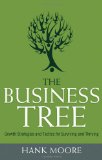
 The strength of our community grows with the additional insights brought by our expanding member base. Please consider rating us on iTunes by clicking here. Rating the StrategyDriven Podcast and providing your comments online improves our ranking and helps us attract new listeners which, in turn, helps us grow our community.
 Hank Moore has advised 5,000+ client organizations worldwide (including 100 of the Fortune 500, public sector agencies, small businesses and non-profit organizations). He has advised two U.S. Presidents and spoke at five Economic Summits. He guides companies through growth strategies, visioning, strategic planning, executive leadership development, Futurism and Big Picture issues which profoundly affect the business climate. He conducts company evaluations, creates the big ideas and anchors the enterprise to its next tier. The Business Tree™ is his trademarked approach to growing, strengthening and evolving business, while mastering change. To read Hank’s complete biography, click here.
 Nathan Ives is a StrategyDriven Principal, and Host of the StrategyDriven Podcast. For over twenty years, he has served as trusted advisor to executives and managers at dozens of Fortune 500 and smaller companies in the areas of management effectiveness, organizational development, and process improvement. To read Nathan’s complete biography, click here.
 Business Programs