 A VETERAN OWNED SMALL BUSINESS |
Best Payroll Software for Cannabis-Industry Businesses in 2026

Running payroll in the cannabis space is genuinely one of the more punishing administrative tasks any business owner faces. Payroll Software for Cannabis-Industry businesses has to account for IRS Section 280E, which strips out standard deductions and inflates your taxable payroll burden in ways that catch people off guard. Add limited banking access, constantly shifting state labor laws, and multi-jurisdiction tax codes, and you’re dealing with a compliance puzzle most general payroll tools weren’t designed to solve. After reviewing the leading platforms across the cannabis payroll software space, this guide breaks down exactly which options hold up under real operational pressure.
How the Picks Were Chosen
Each platform was assessed using publicly available information drawn from official product pages, user review platforms, software directories, and case study documentation. Only providers with a demonstrated track record in cannabis payroll software made the final cut.
→ See the full research breakdown
- Hybrid Payroll – Best for cannabis industry payroll and compliance
- BambooHR – Best for small to medium-sized business HR and payroll management
- Rippling – Best for enterprise employee management and payroll automation
- Paychex – Best for small to medium-sized business payroll and HR outsourcing
- Gusto – Best for small to midmarket business payroll and HR management
Why Payroll Software for the Cannabis Industry Is Worth the Investment
Choosing the wrong payroll tool in this industry doesn’t just slow you down. It creates real financial exposure.
IRS Section 280E means cannabis businesses can’t deduct ordinary payroll-related expenses the way other industries do, so payroll tax obligations run heavier than most operators expect. On top of that, limited banking access turns routine payroll tax deposits into genuine logistical challenges that need careful planning.
Specialized payroll software built with cannabis operations in mind handles these pressure points differently than a generic platform would. The right tool works cleanly across multiple jurisdictions, keeps your 280E compliance cost impact from spiraling, and cuts down on payroll errors so each pay period runs on time.
The payoff shows up in faster time-to-process payroll, cleaner tax filing accuracy across every state you operate in, and fewer correction cycles eating into your HR team’s time.
Payroll Software For Cannabis-Industry: Comparison Table
Note: All data in this table is sourced from review platforms and the official websites of the listed companies.
| Company Name | Years Operating | Team Size | Headquartered In |
|---|---|---|---|
| Hybrid Payroll | Est. 2014 | 51-200 employees | Denver, Colorado |
| BambooHR | Est. 2008 | 1,627 employees | Draper, Utah |
| Rippling | Est. 2016 | 7,131 employees | San Francisco, CA |
| Paychex | Est. 1971 | ~19,000 employees | Rochester, New York |
| Gusto | Est. 2012 | 4,008 employees | San Francisco, CA |
Hybrid Payroll – Best for Cannabis Industry Payroll and Compliance
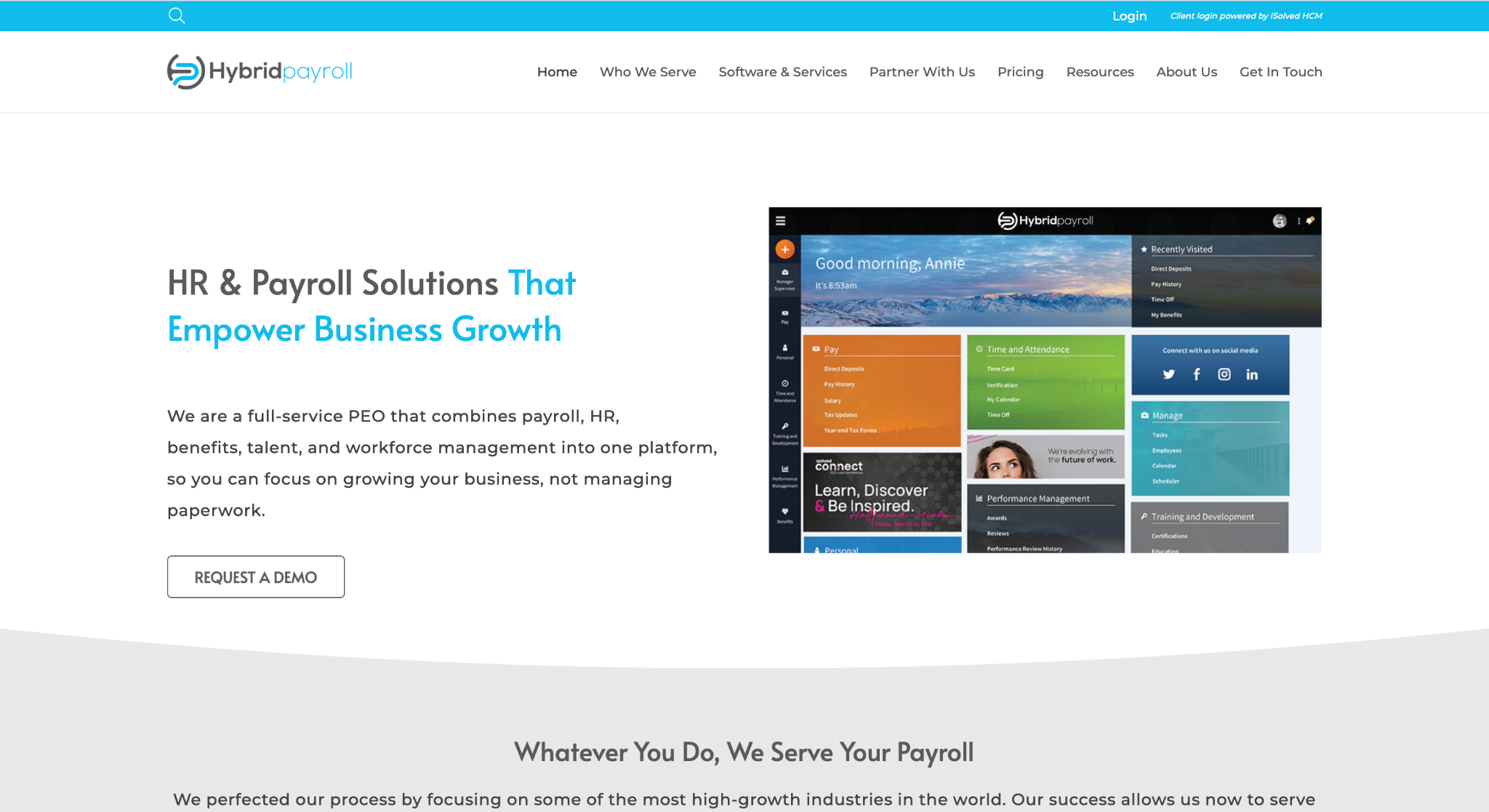
Which Functions Does Hybrid Payroll Perform?
Denver-based since 2014, they operate as both a direct payroll processor and a Professional Employer Organization, which means they handle automated payroll, tax calculations, and compliance management alongside full co-employment services. Being positioned as a leading cannabis payroll company in a major cannabis hub gives them firsthand exposure to the regulatory demands Colorado operators deal with daily. Their bundled HR products are built for specific industries rather than adapted from generic templates, which makes a real difference when cannabis-specific compliance is non-negotiable.
What’s Hybrid Payroll’s Edge in Payroll Software for the Cannabis Industry?
Cannabis businesses dealing with multi-jurisdiction payroll tax codes and 280E-inflated obligations need a provider that understands the industry’s compliance layer from the ground up, not one trying to bend a standard framework to fit. Their PEO structure adds an extra layer of risk protection that standalone payroll processors simply don’t offer, and that’s particularly important when state cannabis labor laws keep shifting.
The Review Roundup:
From what the data shows, businesses using Hybrid Payroll respond positively to the personalized service model and the flexibility that comes with customized HR bundling. That kind of personalized approach is rare at this price tier and reflects well on their positioning within the cannabis payroll software space.
BambooHR – Best for Small to Medium-Sized Business HR and Payroll Management
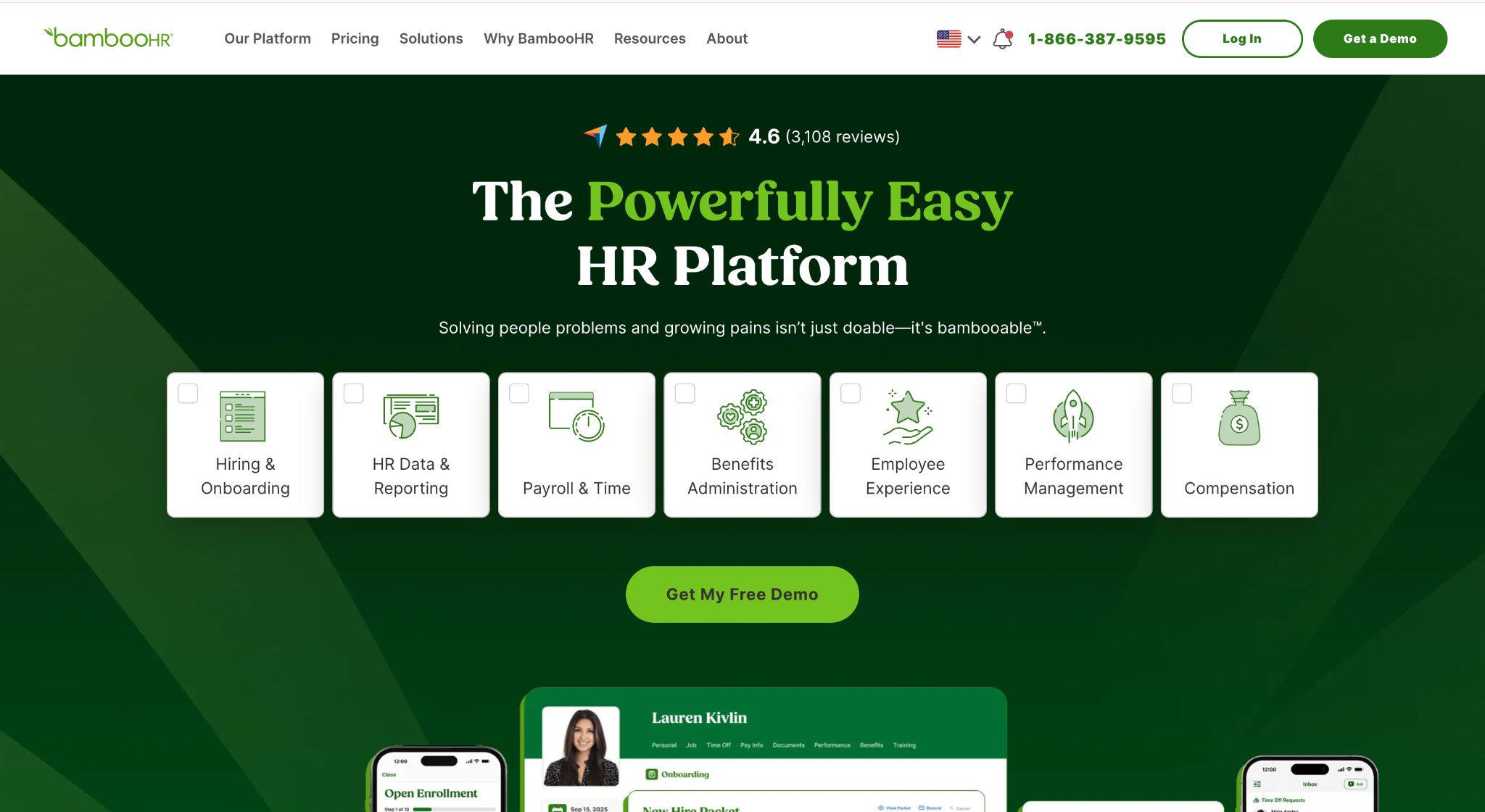
Which Functions Does BambooHR Perform?
BambooHR covers the full HR stack: payroll processing, tax filing, benefits administration, performance management, and talent acquisition, all inside one native platform. They serve over 34,000 customers across 190 countries, which signals serious scalability. The embedded AI and connected ecosystem mean HR workflows don’t require manual intervention at every step, and that reduces the new hire setup and exit process burden that hits cannabis businesses harder than most due to high employee turnover.
What’s BambooHR’s Edge in Payroll Software for the Cannabis Industry?
Cannabis operators managing employees across multiple license types (say, a grow facility alongside a dispensary) need an HR platform that doesn’t fragment data across disconnected tools. BambooHR’s unified architecture addresses exactly that gap. And honestly, the full-service tax filing built into their platform removes one of the more error-prone steps in multi-state cannabis payroll runs.
The Review Roundup:
Users consistently point to the clean interface and the all-in-one structure as the platform’s strongest selling points. The 2025/26 Cloud Awards recognition for Best Cloud HR/HRMS Solution lines up with what practitioners in the field actually say about it being a genuinely cohesive system, not just a collection of bolted-together modules.
Rippling – Best for Enterprise Employee Management and Payroll Automation
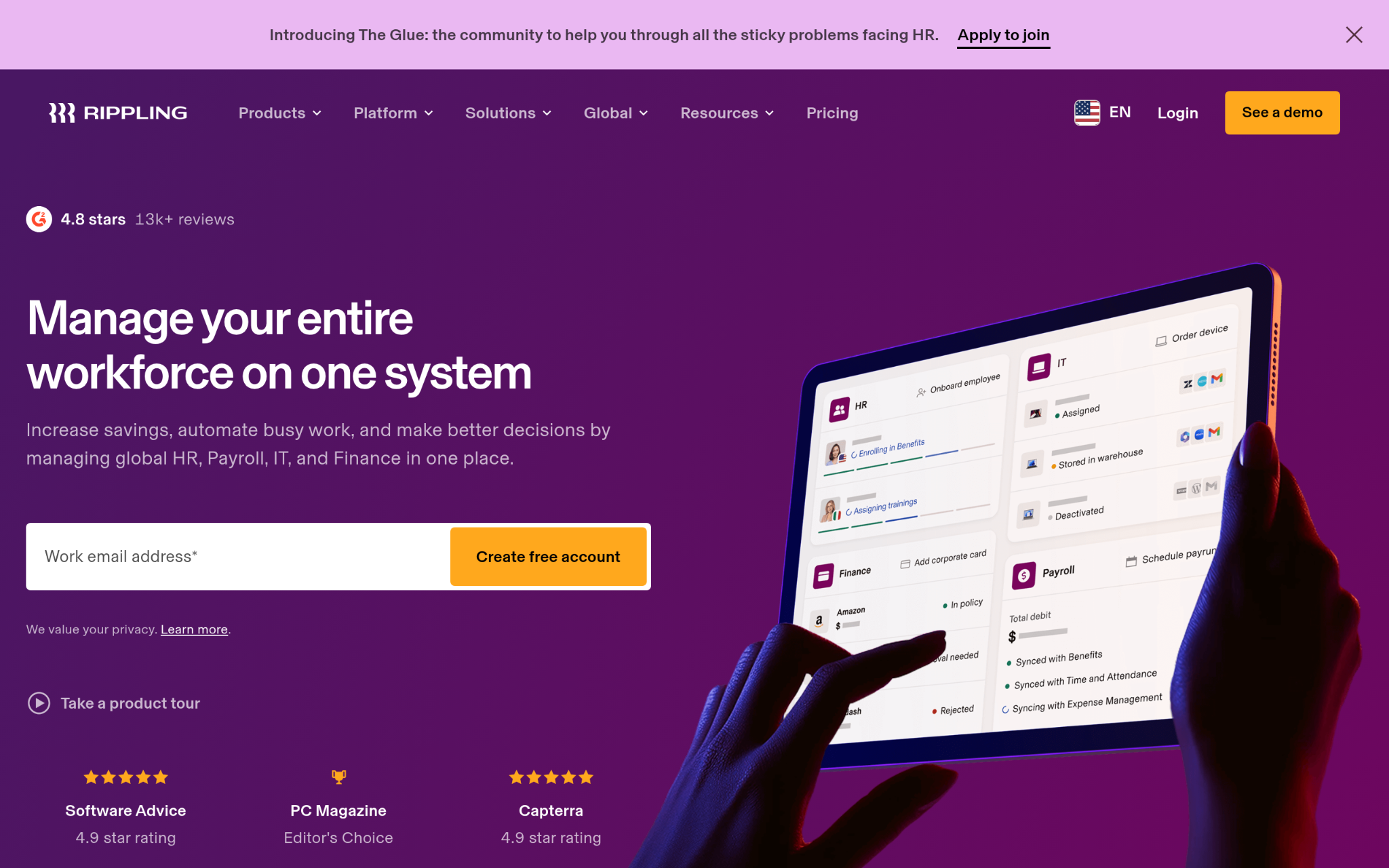
Which Functions Does Rippling Perform?
Rippling runs on a single source of truth for employee data and connects payroll, devices, apps, benefits, and corporate cards across 500+ connections. The 90-second new hire setup capability is worth noting because cannabis businesses dealing with high turnover spend a disproportionate amount of HR time on that process. Their compliance controls sit at the platform level, meaning rule changes don’t require manual reconfiguration across every system separately.
What’s Rippling’s Edge in Payroll Software for the Cannabis Industry?
For multi-state cannabis operators juggling different license types and locations, Rippling’s ability to manage payroll, compliance, and employee data under one unified system cuts the coordination overhead that typically leads to filing errors. The $16.8 billion valuation following their Series G round signals serious long-term investment in the platform, which matters when you’re building payroll infrastructure that needs to scale.
The Review Roundup:
Rippling earned the number one spot for vendor satisfaction and interface design in payroll and benefits among 10,000+ HR professionals, and that’s not a small sample size. The speed and depth of automation are what practitioners mention most, though the feature density can feel like a lot for smaller operations (think enterprise pricing territory here).
Paychex – Best for Small to Medium-Sized Business Payroll and HR Outsourcing
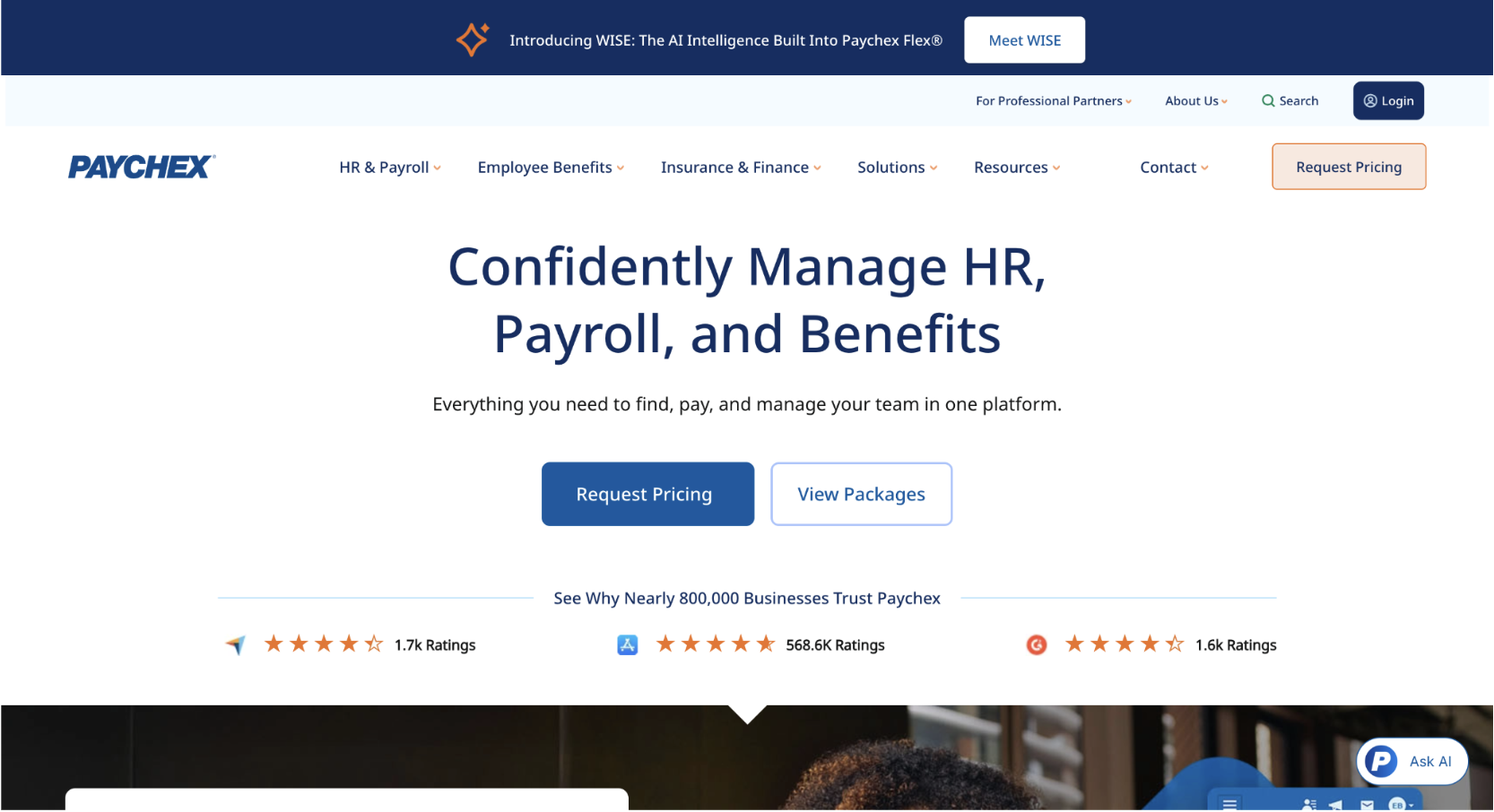
Which Functions Does Paychex Perform?
Founded in 1971, Paychex processes payroll for approximately 800,000 clients across more than 100 offices in the U.S. and Europe. Their SaaS HCM platform covers payroll, HR management, talent acquisition, and workforce management, and they process payroll for roughly 1 in 11 U.S. private sector workers. That kind of scale means their tax filing infrastructure handles real demands across jurisdictions, including the multi-state situations cannabis businesses run into constantly.
What’s Paychex’s Edge in Payroll Software For the Cannabis-Industry?
Cannabis CFOs evaluating payroll outsourcing need a provider with enough infrastructure to handle IRS filings across multiple jurisdictions without errors. Paychex’s 50-plus years of payroll processing experience gives them depth most newer platforms haven’t built yet. Being named to Ethisphere’s World’s Most Ethical Companies list and acknowledged as the largest 401(k) recordkeeper in the U.S. for ten consecutive years reflects well on their reliability, which matters when payroll audit documentation needs to hold up under scrutiny.
The Review Roundup:
Users working with Paychex in regulated industries tend to value the breadth of service options and the established support infrastructure. The Fortune 500 ranking and consistent recognition for staying current suggest a platform that keeps pace with industry changes, though smaller cannabis operations sometimes find the full suite more than they need (not cheap, but worth it for operators who want full outsourcing).
Gusto – Best for Small to Midmarket Business Payroll and HR Management
Which Functions Does Gusto Perform?
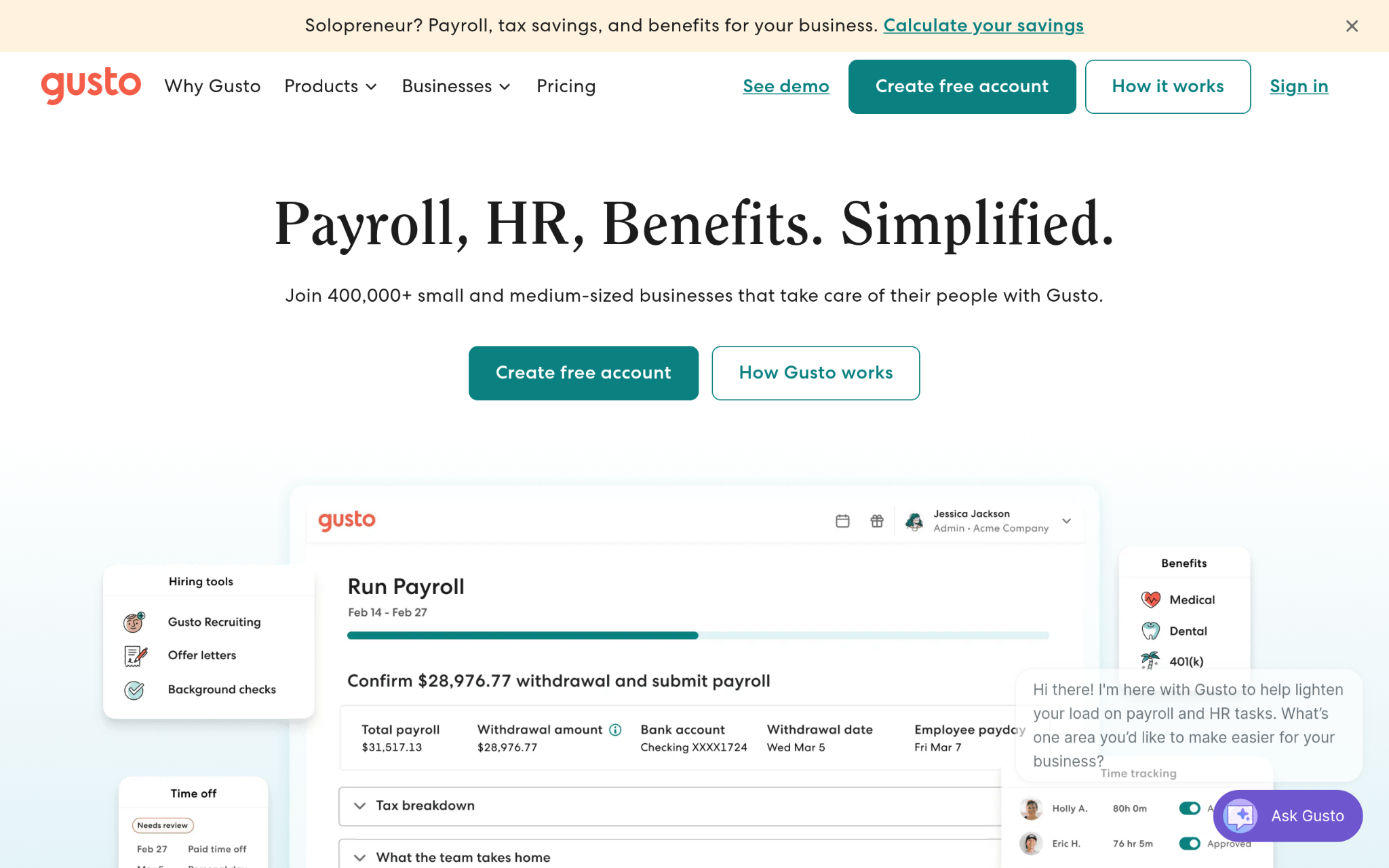
Gusto handles payroll processing, automatic tax filing, employee setup, and full benefits administration including health, dental, and vision, all for 400,000 U.S.-based businesses. The automatic payroll tax filing comes at no extra charge, which directly offsets some of the cost pressure cannabis businesses face from 280E’s inflated tax obligations. Their nearly 150 third-party software connections give cannabis operators flexibility to connect with accounting and operations tools they’re already using.
What’s Gusto’s Edge in Payroll Software for the Cannabis Industry?
For smaller cannabis operators who can’t justify a full PEO or enterprise HR platform, Gusto offers a clean, cost-effective path to compliant payroll without requiring a dedicated HR team to run it. Earning the number one Highest Satisfaction Software rating on G2 in 2026 signals that the experience isn’t just functional but genuinely easy to use. That’s a meaningful advantage when your HR team is wearing multiple hats.
The Review Roundup:
Reviewers reliably call out the interface as the platform’s strongest point, and the awards for Best Overall Payroll Processing Software and Best Payroll Software back that up across multiple evaluation cycles. From what the reviews show, the all-in-one approach appeals most to businesses that previously juggled multiple payroll and HR vendors (a common situation for cannabis startups trying to scale fast).
Selection Framework: How Each Pick Was Evaluated
The goal of this evaluation was to identify payroll software options that could genuinely handle the specific demands cannabis businesses face, not just platforms that happen to offer payroll as one feature among many.
The starting point was building a broad list of payroll platforms from software directories, HR technology review sites, industry-specific forums, and product documentation pulled directly from company websites. The initial pool included both general-purpose payroll platforms and providers with documented experience in regulated industries. Each source was cross-referenced to confirm that the platform information was current and reflected the product’s actual state rather than older marketing materials.
Filtering Candidates by Important Criteria
From the initial list, platforms were narrowed down by removing any option without verifiable reviews or documented product capabilities. Review patterns were analyzed across multiple platforms rather than relying on a single rating source. Platforms with inconsistent review histories, outdated feature sets, or gaps in their tax filing documentation were removed from consideration at this stage. The focus stayed on options with enough operational history to assess real-world payroll processing behavior.
Checking Accuracy Against Source Material
Claims made on official product pages were cross-checked against what actual users reported in verified reviews. Where a platform advertised specific capabilities around tax filing accuracy, multi-jurisdiction support, or compliance management, those claims were weighed against the actual review sentiment from HR professionals and business operators. Any major gap between marketing claims and user-reported experience was flagged and factored into the final assessment.
Each platform’s broader reputation was examined through published recognition, industry awards, press mentions, and analyst reports. Platforms that had earned meaningful recognition from credible third-party evaluators, such as software award programs or HR industry publications, carried more weight than those relying solely on self-reported metrics. How long a platform had maintained its standing in the market was also factored in, since payroll software in regulated industries requires sustained reliability over time.
Real-World Payroll Software For Cannabis-Industry Evidence
The final filter focused on whether each platform had visible evidence of handling cannabis-adjacent payroll demands. Dedicated service pages addressing regulated industry payroll, verified case studies referencing multi-state tax compliance, and review documentation from users in complex regulatory environments all contributed to this assessment. Platforms with the strongest real-world evidence across these signals made the final list.
Choosing the Right Payroll Software for the Cannabis Industry: A Quick Guide
Picking payroll software for a cannabis business isn’t the same decision it would be for a restaurant or a retail shop. The IRS 280E burden, multi-jurisdiction tax codes, and state-by-state cannabis operating restrictions create a set of requirements that need deliberate evaluation. Here’s what to look at before committing.
- Industry/Domain Experience: Look for providers that have worked with cannabis businesses or regulated industries. General payroll experience is useful, but familiarity with Schedule I federal classification realities and state cannabis labor laws saves a lot of painful problem-solving later.
- Features and Service Options: Confirm the platform handles automated tax calculations, multi-state payroll filing, employee setup and exit processes, and benefits administration. Bonus points for seed-to-sale platform compatibility or cannabis-specific HR documentation.
- Pricing Structure: Understand whether the pricing model scales with your headcount and license types. Some platforms charge per employee per pay period, others bundle everything into a flat fee. Factor in what 280E compliance cost impact does to your margins before deciding.
- Results Measurement: Ask how the platform tracks payroll tax filing accuracy rate, time-to-process payroll per pay period, and audit documentation completeness. Platforms that give you visibility into these metrics make compliance reviews far less stressful.
- Industry Knowledge and Compliance: Confirm the software gets updated when state cannabis regulations change, not six months later. Real-time or near-real-time updates to payroll tax codes are non-negotiable when your operating environment shifts as often as the cannabis industry does.
Payroll in cannabis is complicated in ways most other industries never have to deal with. The right payroll software for cannabis-industry businesses reduces your exposure to 280E cost overruns, keeps multi-jurisdiction tax filings accurate, and handles high-turnover new hire setup without falling apart. Whether you’re running a single dispensary or scaling across multiple license types, the options on this list each address different operational profiles. As the cannabis industry matures and more states regulate, demand for purpose-built payroll tools will keep growing.








 Business Programs
Leave a Reply
Want to join the discussion?Feel free to contribute!