 A VETERAN OWNED SMALL BUSINESS |
5 Best Prop Trading Firms in 2026: Payouts, Rules and Funding Models Compared

Choosing a prop firm is mostly a question of fit rather than ranking. The evaluation model, the drawdown rules, and the payout structure all shape whether a given firm suits how you actually trade, and a firm that works well for a futures scalper can be a poor match for a swing trader on forex.
The five firms below take noticeably different approaches to those three variables. This comparison looks at what each one publishes about its own model, so you can judge which structure lines up with your own trading.
- Evaluation structure varies widely, from one-step and two-step challenges to direct funding without an evaluation phase.
- Profit splits are the headline number, but payout frequency and processing time often matter more in practice.
- Drawdown rules differ in kind as well as degree, and a trailing drawdown behaves very differently from a static one.
- Some firms specialize in futures, others in forex and CFDs, and a few cover both.
- Challenge fees are only the real cost if you pass the first time, so factor in the likelihood of retries.
Each firm was assessed on what it publishes about its own program: the evaluation model, profit split structure, payout arrangements, trading rules, and the markets it covers.
We focused on structural details rather than headline figures that shift frequently across this industry.
We also included firms with genuinely different models rather than five variations on the same challenge.
Matching a firm’s structure to your trading style is the decision that matters, and that requires comparing structures rather than marketing claims.

Hola Prime is a global prop firm supporting traders across more than 175 countries, with access to over 50 financial instruments through multiple professional trading platforms.
It runs programs in both forex and futures, built around risk management, transparency, and trader support.
Its most distinctive feature is payout speed. Approved withdrawals are processed within one hour, supported by a zero payout denials policy, which addresses one of the more persistent complaints traders raise about the industry.
Profit splits run up to 95% on forex and up to 90% on futures. Traders can enter through an evaluation challenge or take a direct account without an evaluation phase, and passing traders receive a full refund of the challenge fee, credited in four equal 25% instalments alongside each of the first four payouts.
The futures side carries no activation or subscription fees and no daily loss limit on the 1-Step Prime structure, though a trailing maximum loss applies in its place, which changes how a trading day can be managed compared with programs that impose a daily stop.
Transparency is handled through daily price transparency reports, which publish benchmark comparisons of price feeds.

FTMO is among the longest established firms in the forex and CFD prop space, operating out of the Czech Republic since the mid-2010s. That longevity is the main thing traders cite when choosing it.
Its model is a standardised two-step evaluation. Phase one asks for a higher profit target; phase two lowers that target under the same drawdown conditions, and the rules have stayed broadly consistent over the years.
Funded accounts begin at an 80% profit split, rising to 90% for traders who meet the conditions of its scaling plan. Payouts run on a fixed cycle rather than on demand.
The firm covers forex, indices, commodities, and CFDs rather than exchange-traded futures, and it publishes periodic trader statistics.
For traders who value a predictable rule set and a long operating record, that consistency is the appeal.
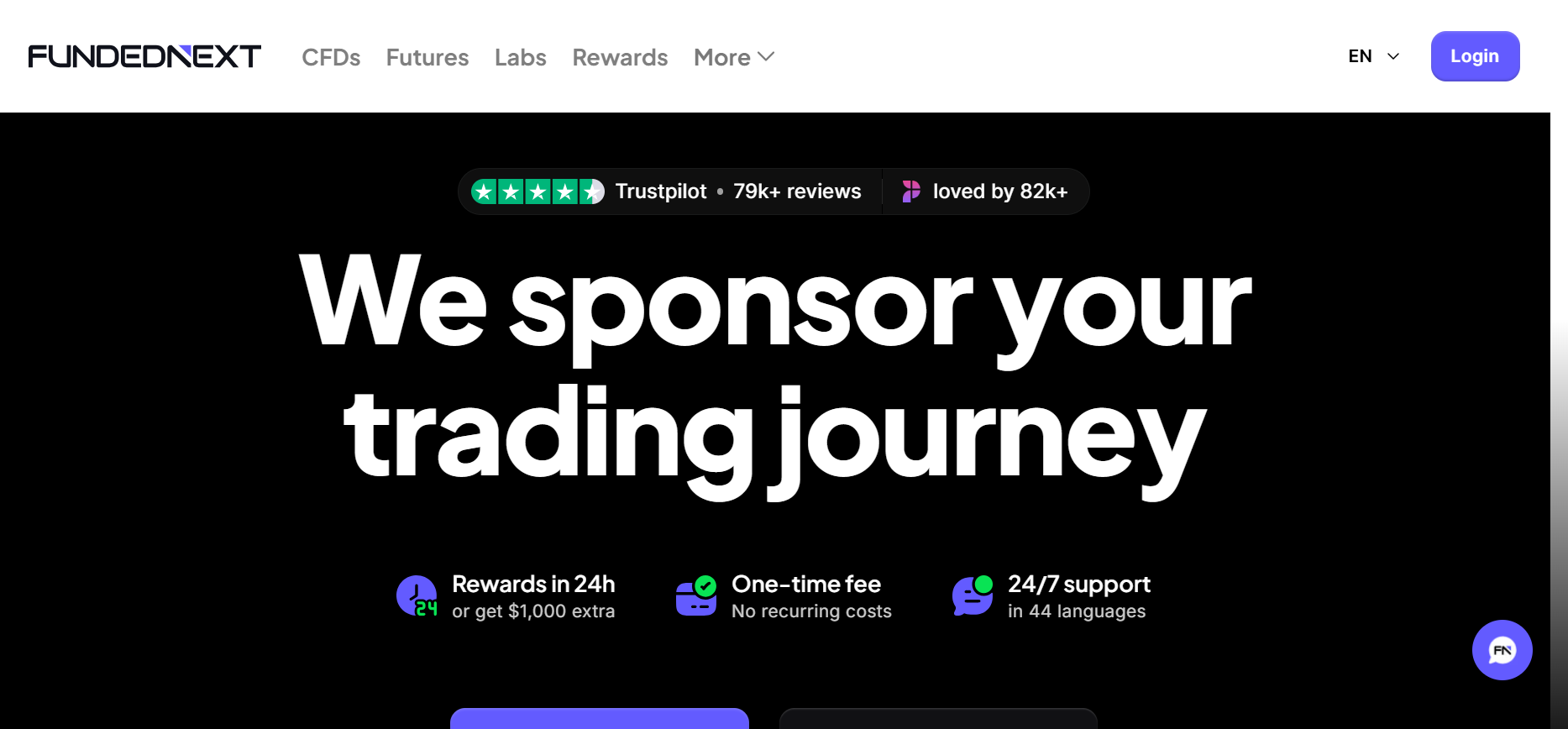
FundedNext launched in 2022 and has grown quickly, offering both CFD and futures programs. It runs multiple evaluation routes rather than a single standard path.
Traders can choose one-step or two-step challenges, or take an instant funding route that skips the evaluation entirely. That flexibility suits traders who know which structure fits their approach.
Its most distinctive feature is profit sharing during the evaluation itself. Under its Stellar model, traders receive a share of profits generated in the challenge phase, which is unusual among firms of comparable size.
Profit splits vary by model and by optional add-ons, and accounts can scale substantially through consistent performance. Confirm the specific terms for the model you choose, since they differ meaningfully between routes.

Topstep is the specialist option here, focused exclusively on CME futures rather than forex or CFDs. If you trade instruments like ES, NQ, or CL, that specialization is the point.
Its pricing model is a monthly subscription rather than a one-off challenge fee. That lowers the upfront cost and changes the arithmetic, since a longer evaluation period accumulates cost over time.
The firm has one of the longest continuous operating histories in futures prop trading. Its rule set is built natively around futures rather than adapted from a forex model, which shows in how drawdown is calculated.
Trailing drawdown is the rule to understand before committing. It recalculates at the close rather than sitting at a fixed level, so a day that builds profit and closes higher permanently raises the floor for the next session in a way static drawdown does not.
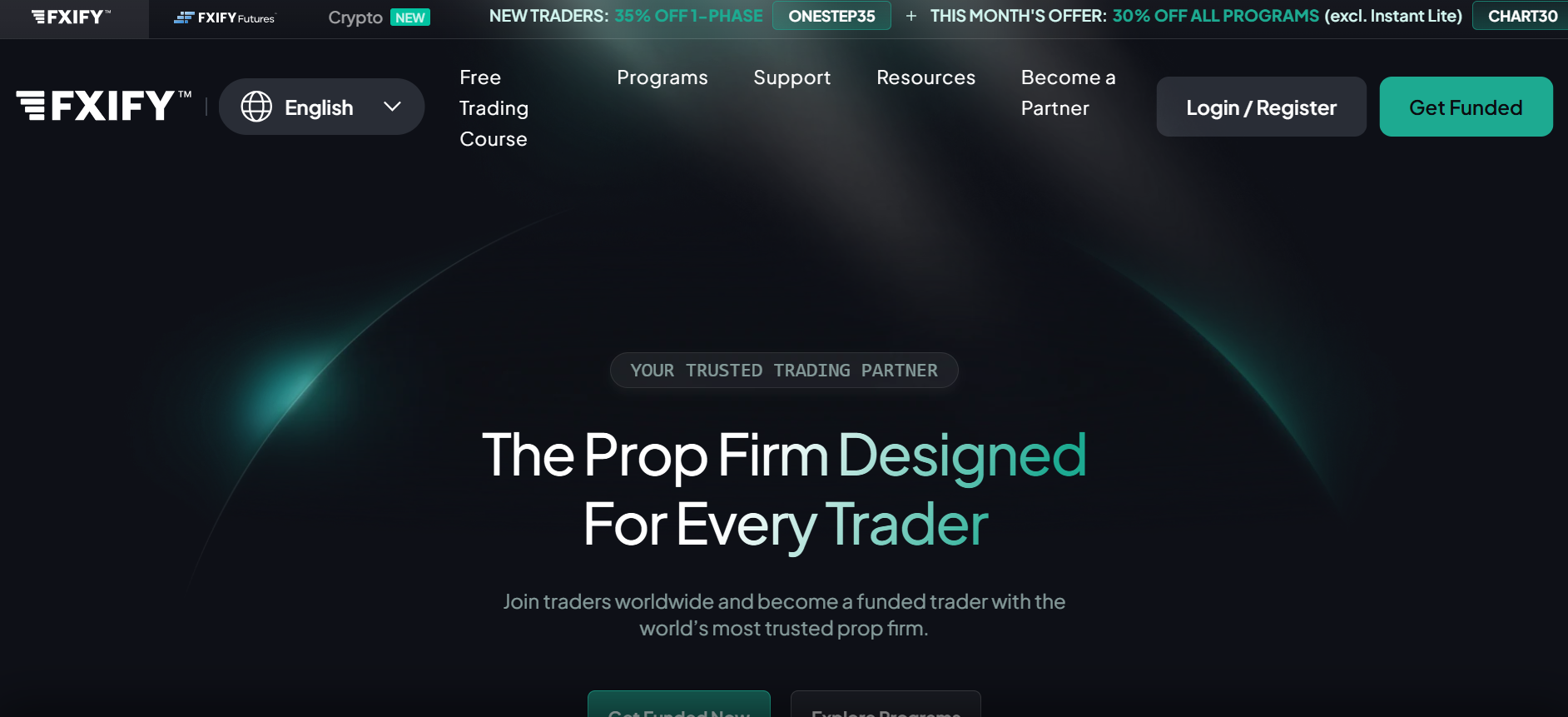
FXIFY operates in the forex and CFD space with a focus on flexibility in how traders enter and exit programs. It offers fast-track evaluation routes alongside standard challenge structures.
Profit splits run up to 90%, and the firm supports both conventional and cryptocurrency payout methods. That range suits traders operating across different regions and banking environments.
Its customisable evaluation options let traders adjust certain parameters when purchasing a challenge.
The trade-off is that pricing changes with those adjustments, so the configuration affects the cost.
It covers forex alongside indices, commodities, and other CFD instruments rather than exchange-traded futures.
That places it in the same category as the larger forex-focused firms, with configurability as its main point of difference.
As with any firm in this category, check the current rule set directly before purchasing. Terms in this industry change more often than in most.
| Firm | Markets | Evaluation model | Distinctive feature |
|---|---|---|---|
| Hola Prime | Forex and futures | Challenge or direct account | One-hour payout processing after approval |
| FTMO | Forex and CFDs | Two-step evaluation | Long operating record and consistent rules |
| FundedNext | CFDs and futures | One-step, two-step or instant | Profit share during the challenge phase |
| Topstep | CME futures | Subscription-based evaluation | Futures-native rule set |
| FXIFY | Forex and CFDs | Standard and fast-track routes | Configurable evaluation parameters |
Start with the market you actually trade. If you trade CME futures, your options narrow immediately to futures-native firms, and if you trade forex and CFDs, the field is wider, but the rule sets vary more.
Then look carefully at drawdown rather than profit split. A trailing drawdown and a static drawdown of the same percentage produce very different outcomes for the same trading pattern, and this is where most evaluations fail.
Finally, weigh the real cost rather than the sticker price. A challenge fee multiplied by the number of attempts it realistically takes is the number that matters, and refund policies and subscription structures change that calculation.
No single firm suits every trader, and the useful comparison is between structures rather than brands.
Payout speed matters most if cash flow is your concern, rule flexibility matters most if your strategy needs room, and specialization matters most if you trade a specific instrument class.
Whichever direction you lean, read the current trading rules on the firm’s own site before paying for anything.
Trading in financial markets carries significant risk, evaluation programs are demanding to pass, and nothing in this article should be treated as investment advice or a recommendation to trade.
A proprietary trading firm gives traders access to capital under defined rules, in exchange for a share of any profits generated. Traders typically qualify by passing an evaluation that tests discipline and risk management.
It is the percentage of trading profits the trader keeps, with the firm retaining the remainder. Splits commonly sit between 80% and 95%, and some firms raise the percentage through scaling plans or paid add-ons.
What is the difference between a one-step and two-step challenge?
A two-step evaluation has two separate phases with different profit targets, usually a higher target first and a lower one second.
A one-step evaluation combines this into a single phase, which is faster but often applies tighter rules.
What does trailing drawdown mean?
Trailing drawdown moves upward as your account equity grows rather than staying at a fixed level.
It means giving back open profit can breach the limit even when your account is still above its starting balance.
How important is payout speed?
It depends entirely on your circumstances, and it matters most to traders relying on withdrawals for income.
Processing time, payout frequency, and the firm’s track record on honoring withdrawals are all worth checking before committing.
Is leverage an advantage for new traders?
Leverage increases both potential gains and potential losses, so higher leverage raises risk rather than reducing it.
Traders new to funded programs generally benefit from understanding position sizing and drawdown rules thoroughly before using higher leverage.









 Business Programs
Leave a Reply
Want to join the discussion?Feel free to contribute!