Posts

A Guide to Better Managing Facility Assets to Support Long-Term Business Growth

A Guide to Better Managing Facility Assets to Support Long-Term Business Growth | StrategyDriven Article

A guide to better managing facility assets begins with a clear understanding of how physical spaces influence revenue, risk, and brand trust. Facilities house people, technology, and processes that keep operations moving every day. When assets receive thoughtful care, organizations reduce downtime, extend asset life, and avoid surprise expenses. Poor oversight, on the other hand, drains budgets and distracts leadership from growth goals. Strong asset management supports long term business growth by aligning maintenance decisions with strategy, data, and accountability. It encourages proactive thinking instead of reactionary fixes. This guide breaks down practical approaches that help leaders protect investments, improve performance, and plan for the future with confidence and control.

1. Build a Strategic Asset Inventory

Effective facility management starts with knowing exactly what assets exist and how each one supports operations. A strategic inventory captures equipment age, condition, warranties, and maintenance history in one living system. Teams gain clarity and avoid guesswork during budgeting or repairs. Digital tracking tools simplify updates and reporting across departments. Clear ownership assignments keep data accurate and actionable. With a reliable inventory in place, decision makers prioritize spending, forecast replacements, and align capital plans with long term business objectives.

2. Shift From Reactive to Preventive Maintenance

Preventive maintenance reduces surprises and extends asset lifespan through scheduled care. Teams plan service intervals based on usage data instead of waiting for breakdowns. This approach protects safety, controls costs, and stabilizes daily operations. The roof, for example, shields every interior asset from weather, energy loss, and structural stress, so your company’s roofing strategy deserves focused attention. A trusted commercial roofer helps assess material condition, drainage performance, and repair timing before small issues escalate. Maintenance calendars, checklists, and performance metrics guide consistent execution. When leaders support preventive routines, staff confidence grows and emergency calls decline. Over time, facilities operate smoothly and contribute steady value to growth initiatives.

3. Use Data to Drive Smarter Capital Planning

Data transforms asset management from intuition into informed action. Condition scores, maintenance costs, and downtime trends reveal where investment delivers the highest return. Dashboards help leaders compare repair versus replacement scenarios with clarity. Accurate data also strengthens budget requests and long-range planning conversations. When teams share insights across finance, operations, and facilities, capital plans reflect real needs instead of assumptions. Consistent data review keeps growth plans grounded and defensible.

4. Align Facility Strategy With Business Growth Goals

Facility assets perform best when strategy connects directly to business direction. Expansion plans, workforce changes, and technology upgrades all place new demands on buildings. Leaders who integrate facilities planning into executive discussions avoid costly misalignment later. Clear growth goals guide location decisions, space utilization, and asset upgrades. Cross-functional collaboration ensures facilities support productivity, culture, and customer experience. Regular strategy reviews keep assets flexible as markets shift. When facilities evolve alongside the business, organizations protect capital, support employees, and sustain momentum without disruption. Long-term success depends on disciplined execution, transparent communication, and accountability at every level. Facility teams that measure outcomes and report progress earn trust and influence.

5. Standardize Processes Across All Facilities

Consistency strengthens control when organizations manage multiple locations. Standardized processes create uniform expectations for inspections, maintenance, safety, and reporting. Teams reduce errors and confusion because everyone follows the same playbook. Clear standards also simplify training and onboarding. Leaders gain comparable data across sites, which improves benchmarking and performance reviews. Standardization does not remove flexibility. It provides a stable framework that teams can adapt to local needs without losing oversight or accountability.

6. Invest in Staff Training and Accountability

Facilities perform only as well as the people who manage them. Ongoing training equips staff with updated skills, safety awareness, and system knowledge. Clear role definitions prevent gaps and duplicated effort. Accountability systems encourage ownership and follow-through. When teams understand how their work supports broader business goals, motivation improves. Strong leadership reinforces standards and recognizes proactive problem-solving. Skilled and accountable teams protect assets and reduce operational risk every day.

7. Plan for Sustainability and Energy Efficiency

Sustainable asset management supports both cost control and brand credibility. Energy-efficient systems reduce utility expenses and environmental impact. Preventive upgrades, such as lighting retrofits or HVAC optimization, deliver measurable returns. Sustainability planning also prepares facilities for regulatory changes and stakeholder expectations. Long-term thinking replaces short-term fixes. Facilities that conserve resources and operate efficiently create stability and resilience that support growth without unnecessary strain.

8. Prepare for Risk and Emergency Scenarios

Risk management protects assets from unexpected disruptions. Facilities teams should identify vulnerabilities related to weather, equipment failure, or security threats. Emergency response plans clarify responsibilities and communication channels. Regular drills build confidence and speed. Insurance reviews and documentation support faster recovery after incidents. Preparation minimizes downtime and financial loss. Businesses that plan for disruption recover faster and maintain customer trust under pressure.

9. Review Performance and Adapt Continuously

Asset management requires regular evaluation. Performance reviews highlight successes and expose inefficiencies. Metrics such as downtime, maintenance costs, and asset lifespan guide adjustments. Feedback from occupants and staff adds practical insight. Continuous improvement keeps facilities aligned with changing business needs. Leaders who encourage adaptation avoid stagnation and maintain operational relevance. Review cycles turn experience into smarter decisions over time.

Better facility asset management supports long-term business growth through discipline, foresight, and collaboration. Strategic inventories, preventive care, data-driven planning, and skilled teams protect valuable investments. Standardized processes and sustainability efforts strengthen resilience and efficiency. Risk preparation and continuous review ensure facilities adapt as organizations evolve. When leaders treat facilities as strategic assets rather than background costs, businesses gain stability and flexibility. Strong asset management creates environments where people work effectively, operations run smoothly, and growth remains sustainable for years ahead. Over time, this approach reduces uncertainty and improves decision quality across all levels of the organization. Facilities then become reliable enablers of innovation instead of sources of disruption. That reliability supports confidence, continuity, and consistent performance in competitive markets. Organizations can scale operations with greater predictability, control costs with confidence, and support expansion without compromising operational integrity.

How Smart MSPs Are Using AI to Double Client Revenue in 2025

How Smart MSPs Are Using AI to Double Client Revenue in 2025 | StrategyDriven Managing Your Business Article

AI is no longer a nice to have capability for managed service providers. It has become essential for survival and long term growth. What once served as a competitive edge is now a baseline expectation as clients demand faster, smarter, and more proactive service delivery. The rapid expansion of the generative AI market reflects this shift, with forecasts projecting growth from $67.18 billion to $967.65 billion between 2024 and 2032.

This pace of change is forcing organizations to rethink how they operate. Research shows that companies must revisit their business strategies every two to five years to keep up with evolving market conditions. For employees, this constant transformation can be overwhelming, with 71% reporting increased stress tied to workplace change. For MSPs, AI offers a practical way to manage this complexity by automating routine tasks, improving decision making, and delivering measurable improvements without adding operational strain.

The business impact is already clear. Studies indicate that 76.4% of organizations expect AI powered services to account for 11 to 50% of their revenue in the near future, alongside a projected 20% gain in operational efficiency. Real world examples support these expectations. One organization deployed more than 100 automations and saved 14,000 hours in a single year, the equivalent of 88 full time roles.

This article explores how forward thinking MSPs are using AI to transform their service models, unlock new revenue opportunities, and deliver greater value to clients in 2025 and beyond.

The Shift from Traditional MSPs to AI-Driven Strategic Partners

Traditional MSPs are going through a complete transformation in 2025. They have evolved from technical troubleshooters into AI-powered strategic partners. Industry experts now call this change “MSP 3.0” – a new approach built on intelligent orchestration and business outcomes rather than just fixing technical problems.

From Reactive Support to Proactive Strategy

Traditional MSP models waited for systems to fail before taking action. Remote monitoring tools existed but needed heavy human involvement. Modern MSPs now use AI to build anticipatory service models that work better:

  • Predictive maintenance: AI studies years of logs to spot failures before they occur. This makes downtime something you can prevent
  • Pattern recognition: AI-powered systems connect signals from endpoints, networks, and identities. This cuts average threat response time by 44%
  • Self-healing systems: Automation and AI run operations that predict, optimize, and fix problems without human input

These changes matter even more because 61% of small and midsize businesses fear a serious cyberattack could end their operations. AI-driven security helps detect threats 60% faster and resolves incidents 50% quicker.

Why AI is Reshaping the MSP Business Model

MSPs have compelling reasons to adopt AI. Those using AI services see their service revenue grow by 20-30% each year. Client demands push this change too – 39% of organizations will need MSP support for AI and ML tools in the next two years.

AI completely changes the economics of running an MSP. The old rule of hiring more technicians for more clients no longer applies. AI lets MSPs serve more clients without adding staff at the same rate. Pricing models have changed from device-based or hourly billing to focusing on delivered value.

Clients see this value clearly – 94% of organizations will pay more for AI and ML support. This shows how MSPs have become crucial strategic partners instead of replaceable vendors.

MSP financial structures look different now. Investments in AI and hyperautomation show up in non-payroll expenses as a percentage of revenue. Leading MSPs now act as “Managed Intelligence Providers” who help clients set up and improve AI solutions in their workflows.

Core AI Capabilities Powering MSP Service Transformation

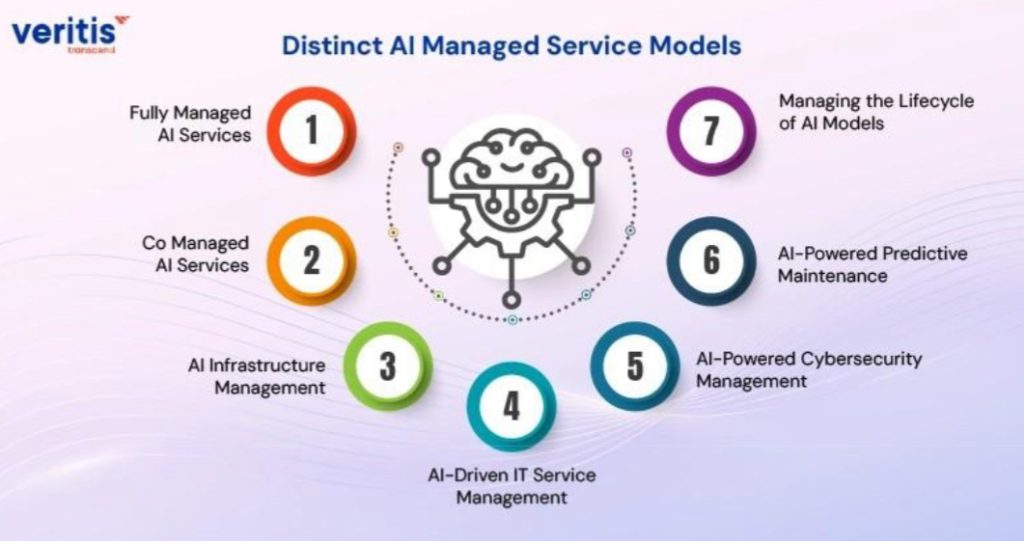
Image Source: Veritis

MSP technology stacks are evolving rapidly as artificial intelligence reshapes modern service delivery. Many MSP leaders now expect AI driven offerings to generate 11 to 50 percent of future revenue while improving operational efficiency by around 20 percent.

Key capabilities driving this transformation include:

  • AI Powered Data Management and Cleansing
    AI platforms unify data across networks, applications, servers, and cloud environments to create a clear, real time view of infrastructure health. This reduces data silos and helps MSPs quickly understand business impact.
  • Predictive Asset Monitoring With Machine Learning
    Machine learning models analyze usage patterns and historical data to detect early signs of failure. This proactive approach reduces downtime, extends asset life, and improves technician productivity.
  • Incident Pattern Recognition and Automated Resolution
    AI driven incident tools group related alerts, reduce noise, and automatically resolve repetitive issues. Many MSPs report significant reductions in alert volume and faster response times.
  • AI Enhanced Security Monitoring and Threat Detection
    AI continuously monitors network activity to identify anomalies and trigger automated remediation. This shortens response times, lowers false positives, and improves overall threat detection accuracy.
  • Intelligent Service Prioritization and Decision Support
    AI helps MSPs prioritize incidents and service requests based on business impact, risk, and urgency. This ensures critical issues are addressed first while resources are allocated more effectively.

Automation vs AI: Understanding the Tools MSPs Use

Image Source: Encord

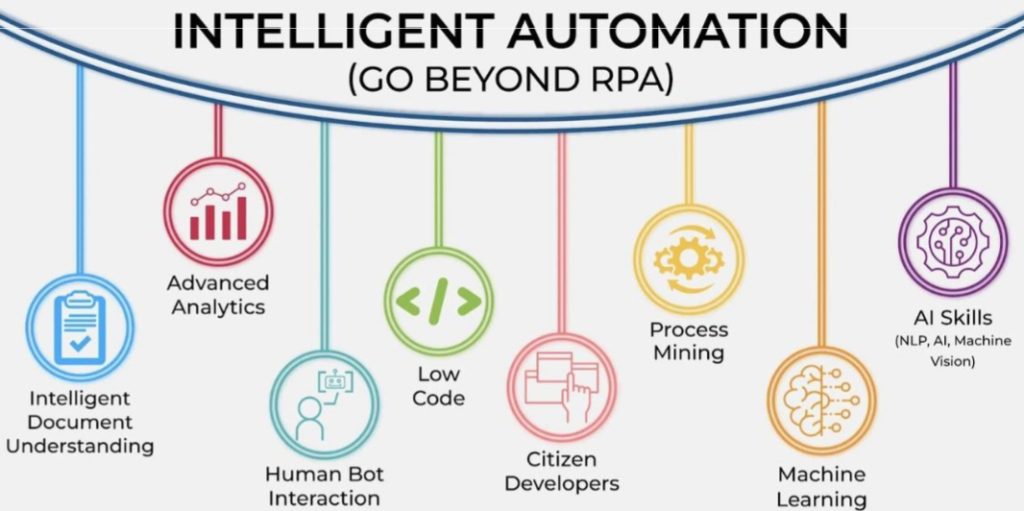
Automation and artificial intelligence are often grouped together, but they serve distinct roles in modern MSP operations. While automation focuses on consistency and speed, AI adds adaptability and insight. Used together, these technologies help MSPs scale efficiently while improving service quality and responsiveness.

Key tools MSPs rely on include:

  • Business Process Automation and Intelligent Automation
    Traditional automation executes predefined, rule based tasks with precision and consistency. Intelligent automation extends this approach by combining AI, machine learning, and RPA to manage more complex, end to end workflows that can adapt to changing conditions.
  • Generative AI for Client Facing Services
    MSPs use generative AI to support Tier 1 requests through chatbots, summarize tickets, refine documentation, and generate scripts or templates. These capabilities reduce response times and allow technicians to resolve issues more quickly.
  • Integrated RPA, NLP, and Machine Learning Workflows
    RPA automates structured tasks, NLP enables systems to understand unstructured inputs such as emails and tickets, and machine learning adds predictive insight. Together, they create intelligent workflows that reduce manual effort across multi step support processes.
  • Adaptive Incident Handling and Escalation Logic
    AI enables dynamic routing and escalation of issues based on context, urgency, and business impact. This ensures the right resources are applied at the right time without relying on static rules.
  • Continuous Process Optimization Through Learning Systems
    Unlike traditional automation, AI driven systems improve over time by learning from outcomes and historical data. This allows MSPs to refine workflows, reduce errors, and improve efficiency without constant manual reconfiguration.

Revenue Impact: How AI-Enabled MSPs Drive Client Growth

Image Source: IT By Design

AI implementation’s financial results are clear. MSPs report measurable gains in multiple performance indicators. The hard data demonstrates how AI reshapes service delivery into client revenue growth.

Reducing Downtime and Operational Costs

AI has reshaped how MSPs handle infrastructure management. Machine learning helps MSPs anticipate IT issues before they occur, which changes their approach from reactive repairs to proactive maintenance. Early identification of potential equipment failures through this predictive approach reduces downtime by 5-15% and increases overall equipment effectiveness. 

Studies show that AI optimization of business processes cuts operational costs by approximately 30%. An MSP’s implementation of AI-powered automation decreased manual intervention and created labor cost savings that benefited customers directly.

Improving Customer Retention with Faster Resolution

Resolution speeds directly impact client loyalty. MSPs using AI see a 60% reduction in ticket resolution times. Forrester research confirms that MSPs who use AI-based automation and analytics have boosted client retention by nearly 30%.

Several improvements drive this satisfaction increase. AI chatbots provide 24/7 support, intelligent triage prioritizes urgent issues, and sentiment analysis enables more empathetic responses. A 2025 Zendesk report reveals that 75% of consumers now prefer AI assistants for support queries.

Discovering New Revenue Streams via AI Consulting

AI consulting has emerged as a profitable service offering. While 92% of MSPs plan to invest in AI, 87% lack the experience to meet customer needs—creating immediate market opportunities. Progressive MSPs now offer:

  • AI strategy development and implementation
  • Custom workflow automation design
  • Ongoing AI system optimization and training

These premium services command 20-40% higher pricing than traditional reactive support. MSPs have grown their client base by 40-60% without proportionally increasing staff costs.

Scaling Service Delivery Without Losing Operational Control

AI gives MSPs a clear advantage by allowing them to scale services without increasing costs at the same pace. With automated and repeatable workflows, many providers can expand capacity by up to 40 percent without adding staff. This removes one of the biggest historical limits on growth.

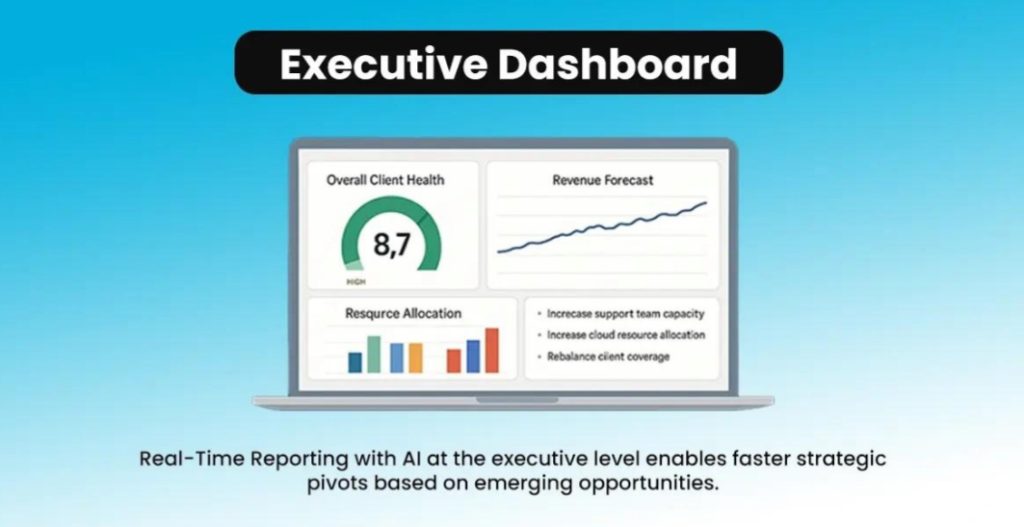
Standardized AI playbooks help ensure consistent service across clients while guiding technicians through decisions in real time. As a result, fewer issues require managerial oversight, and teams spend less time reacting to avoidable problems. Predictive dashboards further support this shift by highlighting risks early and filtering out low value alerts, which significantly reduces emergency tickets.

For MSPs delivering IT support for MSP companies, this operational control translates into faster resolution times, better resource planning, and stronger client satisfaction. Technicians are freed from routine tasks and can focus on strategic initiatives that improve infrastructure and support long term client goals, increasing both efficiency and perceived value.

What the Next Era of MSP Leadership Looks Like

The role of the managed service provider has shifted in a fundamental way. AI has moved MSPs away from reactive support models and toward a position of strategic influence inside client organizations. This change is not driven by technology alone. It is driven by results that clients can see, measure, and justify through stronger performance, lower risk, and higher returns.

What separates leading MSPs is intent. They invest with purpose, align AI initiatives with client goals, and redesign operations around consistency and insight rather than volume and effort. This approach creates trust, strengthens long term relationships, and opens the door to premium services that extend far beyond traditional support.

As client expectations continue to rise, MSPs that treat AI as a core capability rather than an experiment will define the next phase of the industry. Those that act now position themselves not just as service providers, but as partners that help clients grow, adapt, and compete with confidence in an increasingly intelligent world.

Why Managed Print Services Matter in Digital Strategy

Why Managed Print Services Matter in Digital Strategy | StrategyDriven Managing Your Business Article

When organizations talk about digital transformation, printing rarely comes up in the conversation. Yet the reality is that most businesses still rely heavily on physical documents, and how they manage their print environment can either accelerate or hinder their broader digital initiatives.

While many think that, as per usual, Managed Print Services (MPS) are only for fixing paper jams, they’re now becoming a strategic component that connects physical and digital workflows in ways that matter for business outcomes. Here are the reasons why.

Cost Reduction That Frees Up Resources for Innovation 

One of the most immediate reasons managed print services matters in digital strategy is straightforward: it dramatically reduces operational costs. Many organizations have no real visibility into what they’re spending on their print fleet. Between toner cartridges, energy consumption, device maintenance, and the hidden costs of employee time spent troubleshooting print issues, the numbers add up fast.

A comprehensive managed print services approach gives organizations control over these expenses through detailed print analytics and optimization strategies. When you know exactly where money is going, you can make better decisions.

That saved budget gets redirected toward initiatives that push digital transformation forward, whether that’s investing in workflow automation tools or upgrading IT infrastructure.

Integrated Document Management Bridges Physical and Digital Worlds 

Digital transformation doesn’t mean paper disappears overnight. The transition period can last years, and during that time, organizations need systems that handle both realities seamlessly. This is where managed print services become genuinely strategic rather than merely operational.

Modern MPS solutions integrate with document management systems and cloud-based platforms, creating workflows where physical documents automatically enter digital systems. Scan devices can push content directly into cloud storage, and document solutions software can track the entire lifecycle of information regardless of format.

Without this integration, you end up with disconnected islands (a cutting-edge digital system over here, a chaotic print environment over there) and employees constantly bridging the gap manually.

Security Management That Protects the Entire Infrastructure 

Here’s something many organizations overlook: print devices are networked endpoints, and they represent genuine security risks. In an era where companies invest heavily in cybersecurity measures to protect their IT infrastructure, unsecured multifunction devices can become unexpected vulnerabilities.

Print queues contain sensitive documents, device hard drives store cached data, and poorly managed print ecosystems can provide entry points for security threats.

Managed print addresses this by implementing comprehensive security policies across the entire print fleet. Many solutions apply Zero Trust principles to print devices, ensuring firmware updates happen consistently, access controls are enforced, and data security protocols extend all the way to the physical print infrastructure.

When your digital strategy includes strict security management practices everywhere else, leaving print devices unprotected creates an obvious weak point. MPS closes that gap.

Environmental Impact Aligns With Corporate Sustainability Goals 

Digital transformation often goes together with sustainability initiatives, and this is another area where Managed Print Services prove their strategic value. Organizations serious about reducing their carbon footprint need to address their print environment, not ignore it.

An effective MPS program manages devices and actively reduces environmental impact through multiple approaches. Print optimization reduces unnecessary printing, energy-efficient device management lowers power consumption, and programs like Toner Recycling Services ensure supplies don’t end up in landfills.

Some providers even offer carbon emissions tracking, giving organizations concrete data on their progress toward environmental goals. When executives are looking for ways to demonstrate corporate responsibility while also improving efficiency, managed print checks both boxes convincingly.

Streamlined IT Support That Reduces Complexity 

Every minute IT staff spends dealing with printer issues is time not spent on strategic initiatives. Device downtime, supply levels monitoring, coordinating service calls with multiple vendors, and managing firmware updates across different device types. It all creates IT complexity that drains resources from more valuable work.

By consolidating print management with a single service provider, organizations gain access to a dedicated help desk, a nationwide network of qualified technicians, predictive support that identifies issues before they cause problems, and streamlined vendor management that eliminates the headache of dealing with multiple suppliers. This operational simplification matters tremendously for digital strategy because it frees internal teams to focus on innovation rather than maintenance.

Conclusion 

The reality is that managed print services have evolved far beyond their original scope. Before, it’s just about keeping devices running. Today, they’re now centred on creating an integrated, secure, cost-effective, and environmentally responsible foundation that supports broader digital initiatives.

Organizations that recognize this connection gain a competitive advantage, while those that treat printing as a separate, purely operational concern miss opportunities for meaningful improvement.

The Shift Toward Eco-Friendly Solutions in Everyday Consumer Goods

The Shift Toward Eco-Friendly Solutions in Everyday Consumer Goods | StrategyDriven Managing Your Business Article

Ever look around your house and realize how much plastic you’re accidentally hoarding? From shampoo bottles to grocery bags, most of us are unintentionally building a mini landfill under the kitchen sink. As alarming as that sounds, there’s good news: a growing number of consumers and companies are rethinking what goes into the stuff we use every day—and more importantly, what happens to it after we’re done.

We’re living in a time when eco-friendly isn’t just a buzzword—it’s a movement that’s shifting how we shop, consume, and even dispose of.

From Greenwashing to Genuine Change

Eco-conscious marketing used to be little more than a recycled paper label and some leafy design slapped onto a product. Today, that’s not going to cut it. Consumers—especially Millennials and Gen Z—are holding brands accountable, demanding more than just appearances. A 2023 NielsenIQ report showed that 78% of U.S. shoppers say a sustainable lifestyle is important to them, and many are willing to pay more for products that support it.

This pressure has spurred companies to revamp product lines, supply chains, and even packaging strategies. They’re replacing plastic wrappings with compostable materials, designing refillable containers, and ditching harsh chemicals in favor of gentler, plant-based options. The shift isn’t just cosmetic—it’s operational. Sustainability is moving from side shelf to core strategy.

Rethinking the Small Stuff: The Invisible Waste We Ignore

A lot of the waste we generate comes from items so small, they barely register until you multiply them by billions. Think toothbrushes, razors, and contact lens cases. Until recently, few people questioned what happened to those tiny cases once they were tossed out. Most end up in landfills or waterways, where they quietly add to long-term plastic pollution without ever drawing attention.

That is where alternatives like a non-plastic contact lens case come into play. Made from biodegradable or low-impact materials and built to last, these options address a problem many users never considered before. Instead of a disposable plastic item that can linger in the environment for decades, these cases are designed to break down more safely over time. When adopted widely, even small changes like this can help reduce microplastic buildup and long-term waste.

What makes this shift meaningful is not just the product itself, but the change in thinking behind it. These are not luxury items meant for a narrow audience. They are practical, affordable choices for everyday people who want to cut back on unnecessary waste without changing their routine. Small decisions, repeated daily, can quietly add up to something bigger.

The Rise of Circular Thinking

Throwaway culture has officially overstayed its welcome. More brands are embracing the circular economy—a model that focuses on reusing, repairing, and repurposing instead of making new things from scratch. You’ve probably noticed stores promoting “bring-back” programs or refill stations. What once seemed like a quirky concept is now becoming standard practice.

Major retailers like Target and Whole Foods are experimenting with reusable packaging stations. Even fast-food chains are testing out washable, returnable containers. The logic is simple: if we can build systems where waste never really becomes waste, we win on multiple fronts—less pollution, less production, and often, lower long-term costs.

But the success of circular systems depends heavily on convenience. Consumers are more likely to engage when it’s easy to return or reuse, which means brands need to meet people where they are—not just on Earth Day, but every day.

Eco-Friendly Is Becoming the Default, Not the Exception

Remember when shopping for sustainable products meant trekking to a specialty store and paying triple the price? Thankfully, those days are fading. Today, mainstream retailers are stocking shelves with bamboo paper towels, refillable soap pods, and laundry sheets that dissolve in water. It’s not just the niche brands anymore—household names are joining the party.

Procter & Gamble, for example, has committed to making 100% of its packaging recyclable or reusable by 2030. Clorox is phasing out PVC in its packaging. These aren’t just one-off efforts; they’re signs that the entire consumer goods landscape is tilting toward sustainability. Eco-friendly isn’t “special” anymore. It’s becoming the norm—and eventually, it will be the only option that makes sense.

When Convenience Meets Conscience

It’s one thing to care about the planet. It’s another to change your habits. That’s why the most successful eco-friendly products are the ones that don’t ask consumers to sacrifice much. They’re easy to use, priced competitively, and just happen to be better for the environment.

Take detergent sheets, for instance. They’re lighter, less bulky, and create less mess than jugs of liquid soap—and they don’t require any new skills to use. Compostable trash bags feel and function like plastic, but decompose naturally. Even coffee pod companies are switching to compostable options that work in the same machines people already own.

This blend of usability and ethics is what’s pushing sustainable goods into more homes. It’s not about guilt. It’s about making the right thing the easy thing.

The Irony of Over-Consuming Sustainability

Here’s where things get tricky. In our quest to live greener lives, some consumers end up buying more—replacing everything they own with the eco version. That plastic toothbrush still works? Out it goes for a bamboo one. The old water bottle? Not aesthetic enough—better upgrade to the trendy stainless steel flask.

This “green consumerism” raises an uncomfortable question: are we helping the planet or just giving capitalism a biodegradable face-lift? The answer depends on mindset. Buying better is great, but buying less is even better. Sustainability isn’t just about the what—it’s about the why and how we consume.

Real progress comes from thoughtful decisions, not just stylish ones.

So, Where Do We Go from Here?

The shift toward eco-friendly solutions is no longer just a trend—it’s a necessary evolution. But it isn’t just about swapping plastic for paper or planting a tree after every online order. It’s about transforming how we think about consumption, responsibility, and our long-term impact.

Each purchase we make is a vote. A small one, yes, but it counts. When millions of people start making better choices—not perfect ones, just better—the system begins to tilt.

We may not save the planet overnight, but at least we’ll be able to say we didn’t go down surrounded by plastic forks, grocery bags, and fast-fashion sweaters that never fit quite right.

In the end, making eco-friendly choices isn’t about being perfect—it’s about being awake. Eyes open, shopping carts lighter, and maybe—just maybe—less clutter under the sink.

The Benefits of Cloud Migration for Long-Term Scalability

The Benefits of Cloud Migration for Long-Term Scalability | StrategyDriven Managing Your Business Article

Businesses today face constant pressure to stay agile, competitive, and responsive to changing market demands. Traditional IT infrastructures often struggle to meet these expectations. As a result, many companies are exploring more flexible solutions. Cloud migration has emerged as a strategic move, allowing organizations to reach new heights and unlock greater potential.

To better understand how this modern technology can drive sustainable growth, here are the key advantages.

Accelerates Resource Flexibility

One of the most immediate benefits of moving to the cloud is the ability to scale resources up or down without delay. Traditional servers require time-consuming upgrades, hardware purchases, and IT labor. Cloud resources, however, are available on demand. That means businesses can adjust quickly based on current requirements. Flexibility ensures that high-demand periods are handled efficiently. It also prevents over-investing in permanent infrastructure.

Beyond handling sudden spikes, resource flexibility encourages experimentation and innovation. Companies can deploy new applications and test emerging technologies. They can innovate without being limited by hardware constraints. Teams gain the freedom to iterate faster and respond to customer needs. They can also support projects that might have been considered too risky in a traditional setup.

To fully realize these advantages, it’s best to work with cloud services Sydney you can trust or other reputable providers near you. They can guide you through every step of the migration process, from planning to integrating new systems.

Reduces Long-Term Operational Costs

Shifting to the cloud often results in significant cost savings over time. Maintaining on-premises infrastructure requires regular hardware updates, energy consumption, and dedicated IT staff. Cloud providers absorb many of these expenses, replacing large upfront capital investments with predictable, usage-based pricing. This model allows companies to allocate funds more efficiently and invest in areas that directly drive growth.

Cost efficiency extends beyond infrastructure. Automated maintenance, centralized management, and integrated security features reduce the time and resources needed for daily operations. By lowering the burden on internal teams, you can focus on core business objectives. It also provides the financial flexibility needed to support scaling initiatives.

Enhances System Reliability

Reliability is critical when expanding digital operations. Downtime can lead to lost revenue, damaged reputation, and operational disruptions. A cloud-based environment provides high availability through distributed data centers, redundancy, and robust disaster recovery protocols. Businesses benefit from consistent uptime without the need for complex, on-premises failover systems.

In addition, cloud providers offer continuous monitoring and automated updates to keep systems secure and efficient. Companies can confidently scale services knowing that infrastructure reliability is maintained. This stability also supports business continuity, ensuring operations remain uninterrupted during unexpected events.

Empowers Agile Development

Modern businesses rely on rapid development cycles to stay competitive. Cloud computing supports agile methodologies by offering integrated tools for development, testing, and deployment. Teams can provision environments quickly. They can collaborate in real time and iterate on applications without infrastructure bottlenecks.

This agility extends to scaling solutions alongside user growth. When applications attract more users or require additional features, cloud environments can accommodate increased demand seamlessly. Developers are freed from manual resource management. They can concentrate on delivering innovative IT solutions that drive business expansion.

Supports Global Expansion

Expanding into new regions requires more than just marketing strategies. IT infrastructure must support international users with minimal latency. A cloud service provider often maintains data centers across multiple regions. This enables companies to deploy applications closer to their target audience. Geographical flexibility enhances customer experience and ensures consistency regardless of location.

Global scalability also includes compliance and security considerations. Leading cloud providers adhere to international standards. This makes it easier for businesses to comply with local regulations while expanding operations. It minimizes risk and reduces the complexity of entering new markets.

Facilitates Data-Driven Decision Making

Scalability isn’t only about computing power but also about using data to make better strategic decisions. Cloud environments centralize digital assets and analytics tools. You can process larger datasets faster, identify trends, and make informed choices that align with your growth objectives.

Additionally, cloud-based analytics often integrate with artificial intelligence and machine learning capabilities. Companies can predict customer behavior, optimize resource allocation, and automate routine tasks. Combining scalable infrastructure with advanced data analysis enhances IT modernization. It positions organizations for successful digital transformation.

Streamlines Collaboration Across Teams

Collaboration often suffers when teams are dispersed or reliant on outdated systems. Cloud platforms centralize data and tools. Team members can access resources from anywhere with an internet connection. This eliminates delays caused by version control issues or physical infrastructure limitations. Projects move forward smoothly.

Real-time collaboration also improves productivity and creativity. Multiple team members can work simultaneously on documents, codebases, or projects, sharing updates instantly. With integrated multi-factor authentication and data backup features, businesses can secure sensitive information while boosting business agility.

Strengthens Security While Scaling

Security concerns often prevent companies from embracing large-scale growth. Cloud services offer advanced protections that often surpass what individual companies can implement on their own. Features like encryption, multi-factor authentication, and robust security protocols help safeguard sensitive data. They also reduce the risk of data breaches.

As businesses scale, these security measures adjust automatically to accommodate increased workloads. Regular updates and compliance certifications ensure protection against evolving threats. This combination of robust security and scalability provides peace of mind. Companies can pursue expansion confidently while reducing their carbon footprint through optimized cloud solutions.

Conclusion

Cloud migration is a strategic move that supports sustainable growth. And the benefits extend far beyond short-term gains. Businesses like yours can innovate more quickly and expand globally without the limitations of traditional IT infrastructures. Just be sure to choose a tech provider that aligns with your business goals.

By planning carefully and partnering with the right provider, you can unlock the full potential of the cloud. This approach enables you to establish a solid foundation for achieving sustainable success in an ever-evolving digital landscape.