 A VETERAN OWNED SMALL BUSINESS |
2026’s Best Merchant of Record Services for SaaS

Selling SaaS internationally means taking on more than payment processing. VAT, GST, sales tax, fraud, chargebacks, subscription billing, and country-specific compliance requirements can all become part of the transaction.
Merchant of Record services reduce that burden by acting as the legal seller and taking responsibility for many of those obligations.
The challenge is that different platforms are built for different types of SaaS businesses. Some prioritize fast setup and straightforward transaction pricing, while others focus on AI usage billing, software licensing, or developer-first workflows.
The five platforms below stand out for different reasons.
Merchant of Record Decision Snapshot
| Provider | Strongest Fit | Pricing | Main Differentiator |
|---|---|---|---|
| Fungies.io | SaaS and digital product companies expanding globally | 5% + $0.50 per transaction | Fast setup and consolidated MoR stack |
| Lemon Squeezy | Software companies and digital creators | 5% + $0.50 per transaction | Software licensing and Stripe ownership |
| Polar | AI startups and usage-based SaaS | Usage-based, varies | Event-level usage billing |
| creem | Indie hackers and micro-SaaS founders | 3.9% + $0.40 per transaction | Lower transaction pricing and creator focus |
| Dodo Payments | AI builders and developer-led SaaS | 4% + $0.40 per transaction | Flexible monetization and VS Code integration |
1. Fungies.io – A Consolidated MoR Stack for Global SaaS
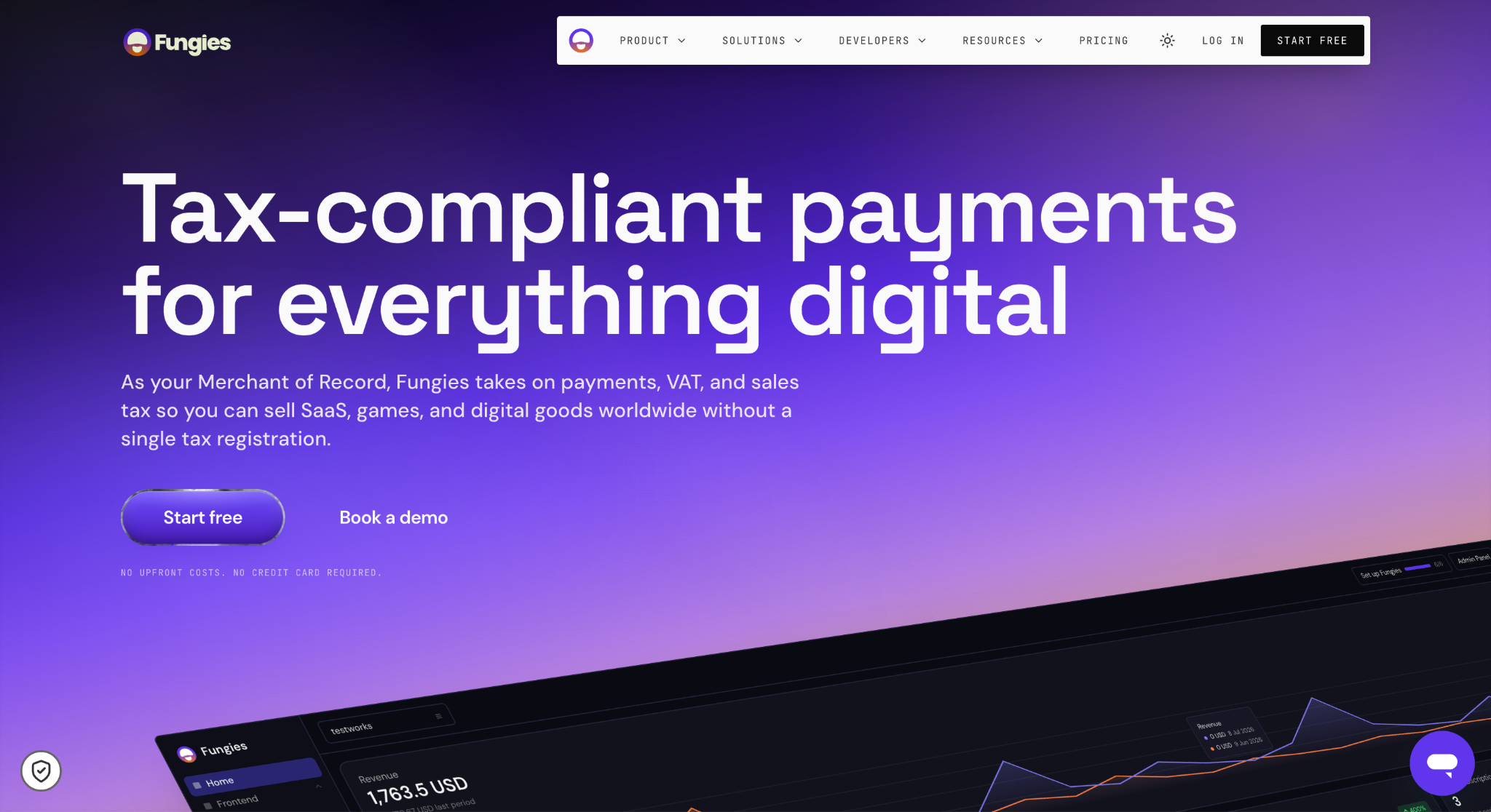
Fungies.io combines several responsibilities that SaaS companies often manage through separate tools.
The platform handles global payment processing, VAT and GST remittance, subscription management, checkout, and fraud prevention across more than 150 countries.
That makes it relevant for SaaS and digital product companies that want to expand internationally without building a complicated payment stack internally.
Fungies.io makes the most sense for an early-stage or growing SaaS business that wants to:
- Sell internationally quickly
- Avoid multiple payment and tax integrations
- Use transaction-based pricing
- Keep monthly software overhead low
- Support both technical and non-technical implementation
The platform charges 5% + $0.50 per transaction with no monthly fee.
It also provides a no-code storefront and CLI tooling for developers.
Merchant setup can reportedly move from signup to live checkout in roughly 15 minutes.
Customer feedback frequently focuses on fast setup and responsive support.
Featured clients include Leadsin.io, Freevocals.com, and RenderAI.app.
Available reviews also point to storefront customization and commission-based pricing as advantages for founders trying to avoid several separate SaaS subscriptions.
2. Lemon Squeezy – Built Around Software and Digital Products
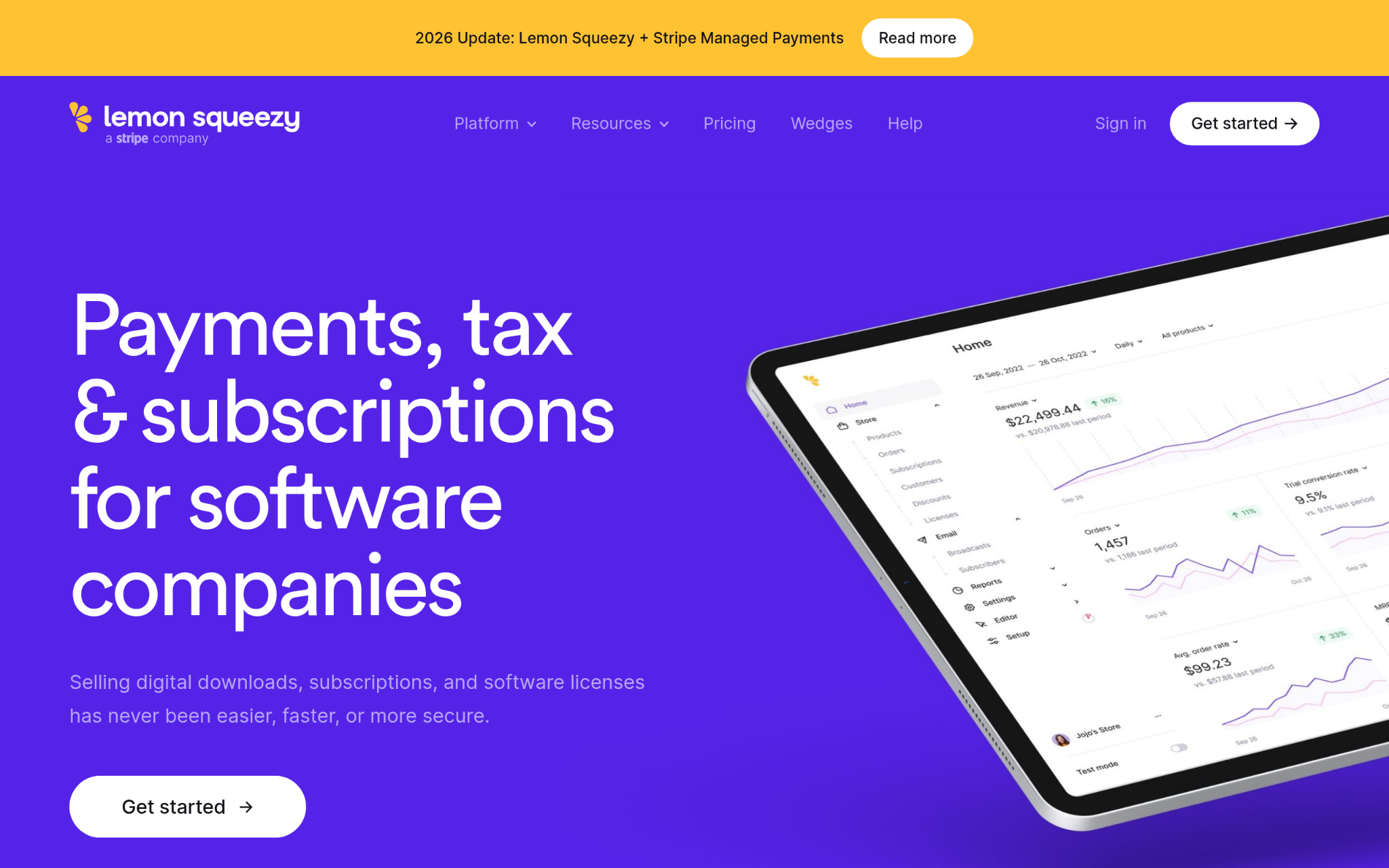
Lemon Squeezy is particularly aligned with software sellers.
The platform combines Merchant of Record responsibilities with subscription billing, one-time payments, tax handling, fraud detection, payment recovery, and automatic license key management.
It supports more than 200 countries and over 130 currencies.
Lemon Squeezy is particularly relevant for businesses selling:
- SaaS subscriptions
- Downloadable software
- Licensed digital products
- One-time digital purchases
- Recurring software plans
The platform supports weekly, monthly, and yearly recurring billing.
Software-Specific Infrastructure
Automatic license key management is one of its clearest differentiators.
Developers can also use the platform’s REST API and webhooks to integrate payment and subscription functionality directly into their products.
Lemon Squeezy was acquired by Stripe in July 2024, providing an additional infrastructure and ownership signal for businesses considering long-term platform stability.
The company reportedly reached $1 million in annual recurring revenue within nine months of launching.
Developer feedback commonly points to the API and automated tax handling as practical advantages.
For software companies that do not want to manage VAT registration or other international tax requirements themselves, that combination can significantly reduce operational work.
3. Polar: Usage-Based Billing for AI and Modern SaaS Products
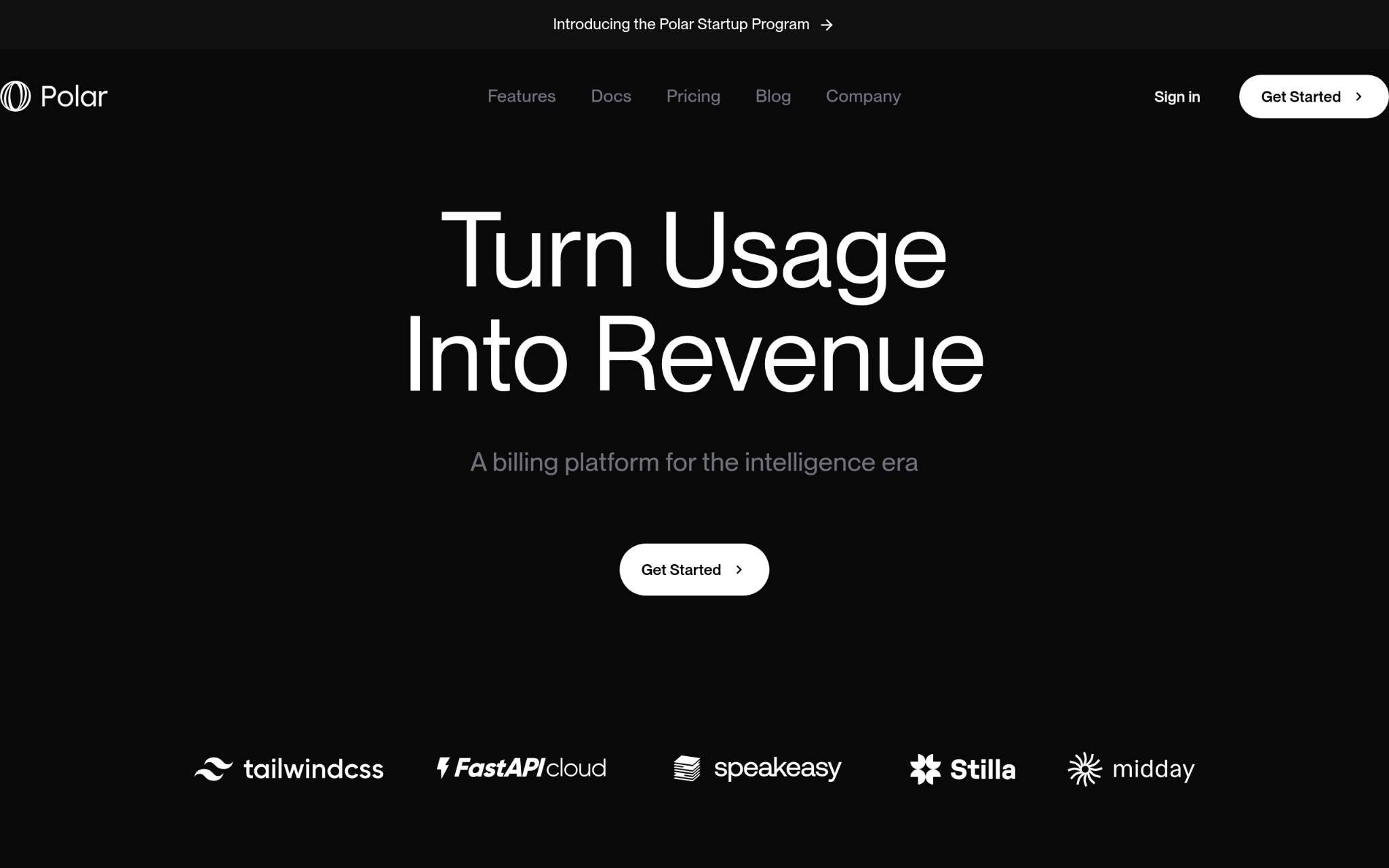
Polar is built around billing models that differ from traditional SaaS subscriptions.
The platform supports:
- Usage-based billing
- Subscriptions
- Seats
- Credits
- Trials
- Discounts
Its real-time event infrastructure can track individual API calls, tokens, GPU seconds, and similar product usage.
Polar is particularly relevant for AI companies where customer charges depend directly on consumption.
For example, a business may need to bill according to:
- Tokens used
- API requests
- Compute consumption
- GPU time
- Product credits
Traditional subscription platforms may require additional infrastructure to support these models.
Polar also handles tax and compliance responsibilities, including VAT and sales tax, while managing customer accounts, receipts, and dunning.
The combination of billing and real-time analytics also gives teams visibility into unit economics without maintaining a separate reporting system.
Polar works with companies including Tailwind Labs and Midday.
People associated with Vercel and FastAPI have also publicly supported the platform.
The company raised a $10 million seed round led by Accel in June 2025 and operates with an open-source development model.
4. creem: An Early-Stage Option for Indie Hackers and Micro-SaaS
Creem combines global payments, tax handling, subscriptions, one-time purchases, license keys, and multi-party payouts.
The platform covers more than 190 countries and supports over 80 currencies, including stablecoin payment options.
It was built by former Google and Adyen employees.
Creem is aimed particularly at:
- Indie hackers
- Micro-SaaS founders
- Solo developers
- Digital creators
- Small teams selling internationally
Its pricing and onboarding approach are designed to avoid some of the enterprise barriers smaller companies encounter with global payment platforms.
Creem charges 3.9% + $0.40 per transaction.
That is lower than the listed transaction pricing for Fungies.io and Lemon Squeezy.
There are also no minimums or hidden fees mentioned in the available platform information.
Creem reached #2 Product of the Day and #1 Fintech Product of the Month on Product Hunt.
The platform reports more than 20,000 stores and millions in monthly GMV.
Its traction within indie hacker and micro-SaaS communities provides an additional signal beyond product marketing.
5. Dodo Payments – Flexible Monetization for Developer-Led SaaS and AI
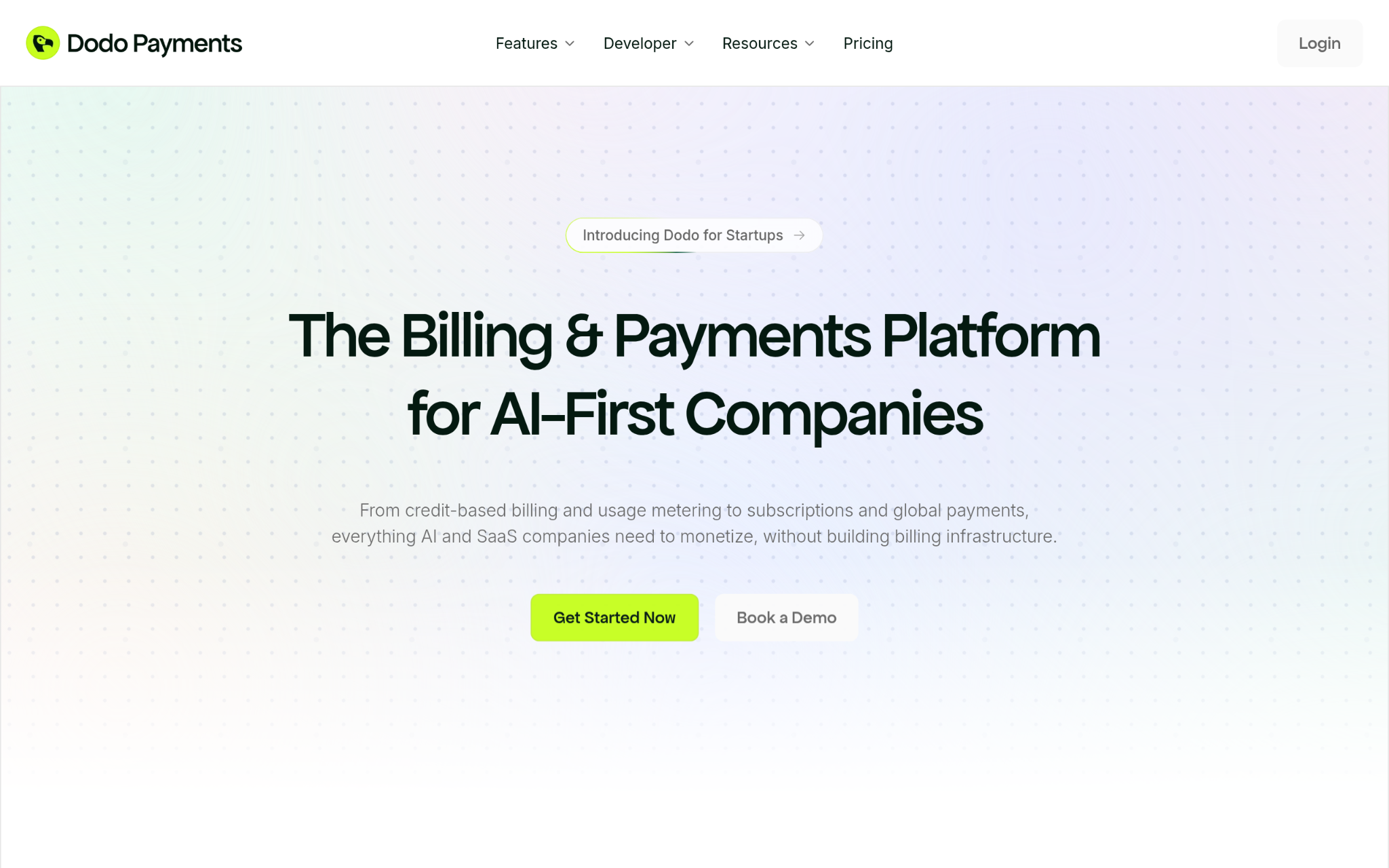
Dodo Payments combines payments, billing, and distribution for SaaS and AI companies.
Its billing capabilities include:
- Credit-based billing
- Usage-based billing
- Subscriptions
- One-time payments
The platform operates across more than 150 countries and supports over 40 payment methods.
Dodo Payments is especially relevant when a business uses more than one monetization model.
An AI company, for example, may sell monthly subscriptions while also charging customers for additional credits or usage.
That flexibility makes the platform more suitable for products that do not fit into a single subscription structure.
One of Dodo Payments’ more distinctive features is Sentra.
The AI assistant works inside VS Code and allows developers to work on billing integration directly from their editor.
For developer-led companies, that can reduce the amount of context switching required during implementation.
Dodo Payments charges 4% + $0.40 per transaction with no fixed costs.
As the Merchant of Record, it also handles:
- Global tax compliance
- Fraud protection
- Chargeback management
- Digital product delivery
Available case studies indicate that customers have used the platform to support global expansion with relatively little internal compliance work.
How the Five Platforms Compare on Key Decisions
Lowest Published Transaction Pricing
Among the platforms with fixed public transaction pricing listed here, Creem has the lowest rate at 3.9% + $0.40.
Dodo Payments follows at 4% + $0.40.
Fungies.io and Lemon Squeezy both use 5% + $0.50 transaction pricing.
Polar uses variable usage-based pricing.
Fungies.io and Lemon Squeezy are the most straightforward fits for companies primarily selling SaaS subscriptions or digital products.
Fungies.io emphasizes fast global setup, while Lemon Squeezy adds software-focused features such as license key management.
Polar and Dodo Payments are better aligned with products that need flexible usage-based monetization.
Polar goes particularly deep on event-level metering, while Dodo Payments supports several monetization formats within the same platform.
Creem is strongly positioned toward indie hackers and micro-SaaS companies.
Its lower published transaction rate and lack of monthly minimums may be particularly relevant while revenue is still relatively low.
Polar’s open-source model and Dodo Payments’ VS Code integration make both worth considering for technical teams that want billing infrastructure closer to their development workflow.
Which Merchant of Record Should You Choose?
The best option depends on what problem matters most.
Choose Fungies.io when the main priority is getting a SaaS or digital product business selling globally quickly without maintaining several separate payment and tax tools.
Choose Lemon Squeezy when software licensing and digital product functionality are important alongside subscription billing and Merchant of Record coverage.
Choose Polar when billing depends heavily on measurable usage such as tokens, API calls, or compute.
Choose creem when you are an indie hacker or smaller SaaS company prioritizing straightforward onboarding and lower transaction pricing.
Choose Dodo Payments when your product uses several monetization models and your development team values code-first billing workflows.
Costs Beyond the Transaction Fee
A Merchant of Record fee should not be compared with basic payment processor pricing alone.
The provider may also replace costs associated with:
- VAT registration
- GST compliance
- Sales tax remittance
- Fraud prevention
- Chargeback handling
- Subscription billing infrastructure
- Payment recovery
- International compliance management
For smaller companies, outsourcing those responsibilities can make a higher transaction rate easier to justify.
At greater transaction volumes, however, percentage-based pricing can become much more significant.
Businesses should therefore calculate expected fees using their own projected GMV rather than comparing only advertised percentages.
Performance Metrics Worth Checking
Before choosing a provider, ask which performance metrics are available directly inside the platform.
Useful measurements include:
- Checkout conversion rate by market
- Payment authorization rate
- Chargeback ratio
- Failed payment rate
- Recovery rate
- Payout settlement timing
- Revenue by geography
These metrics can help determine whether payment infrastructure is helping or limiting international growth.
How the Providers Were Evaluated
The research began with a wider group of Merchant of Record providers identified through software directories, founder discussions, review platforms, product comparison sites, and company case studies.
Providers without verifiable payment processing history or meaningful user feedback were removed.
Platforms with sufficiently documented merchant activity were then compared based on recurring customer experiences rather than isolated reviews.
Official claims were compared against available third-party documentation and user feedback.
Important areas included:
- International tax coverage
- Transaction pricing
- Billing capabilities
- Customer outcomes
- Merchant experience
Platforms where product claims aligned reasonably well with available external evidence were retained.
Different forms of external validation were considered depending on the maturity of each provider.
For Polar and Dodo Payments, investor backing and early customer evidence were relevant.
For Lemon Squeezy, the Stripe acquisition and revenue milestones provided additional context.
For Creem, Product Hunt recognition and reported merchant adoption offered market signals.
Merchant of Record Requirements
The final review focused specifically on whether the provider handled meaningful Merchant of Record responsibilities.
That included:
- Tax collection and remittance
- VAT and GST
- Sales tax
- Chargeback liability
- Fraud management
- Subscription billing
- Multi-jurisdiction compliance
Final Merchant of Record Checklist
Before committing to any platform, confirm that it can support your actual operating requirements.
Check:
- Your priority countries
- Your required currencies
- Your billing model
- Your expected transaction volume
- VAT and GST coverage
- Chargeback management
- Fraud protection
- Developer integration requirements
- Reporting capabilities
- Payout timing
- Migration options
The best Merchant of Record is not necessarily the one with the longest feature list.
It is the platform that matches your billing model, geographic expansion plans, technical requirements, and acceptable cost structure while removing as much compliance and payment complexity as possible.








 Business Programs

Leave a Reply
Want to join the discussion?Feel free to contribute!