How E-commerce Businesses Use Proxies for Price Monitoring

How E-commerce Businesses Use Proxies for Price Monitoring | StrategyDriven Article

When your business relies on e-commerce for its sales strategy, having current prices of your competitors’ products is essential knowledge. However, businesses relying on digital sales can often run into issues when trying to assess the market. It does not take too much effort for a competitor to blacklist an IP address or provide incorrect data based on specific search terms if they are onto you. 

The best solution for this is to use proxies to give you anonymity in your competitor research and make sure that you are always able to be on top of any price changes and react accordingly. Using a proxy server also allows you to get around geo-blocking restrictions when assessing the global market and ensures that, with access to real-time pricing, you can run strategic promotions, putting your product on the front foot. We’ll explain in more detail here to give you everything you need to know about using proxies for price monitoring. 

Always Access Your Competitors’ Platforms Anonymously

A common tactic employed by e-commerce businesses is to confuse their competitors by either displaying incorrect information or by blacklisting them entirely from accessing their platform. This is because digital marketing teams can build up a clear picture of their warm leads through search terms and IP addresses that can lead to them working out that the profile they’re looking at is one of their competitors. At this stage, they will do anything they can to shake you off their tail.

When a competitor thinks it has you in its sights, it can actually start to deliver targeted information to you that is entirely incorrect, leading you to make poor business decisions based on false pricing. The last thing you want to be doing is running a pricing campaign to undercut your competitor, and it not be relevant or accurate to their actual prices. 

One way to fix this and to guarantee that you are accessing accurate and current information is to use the best proxy service and select a relevant city server from which to visit your competitor’s website. Using a proxy server anonymises your presence and guarantees you aren’t being misled when trying to keep tabs on product prices.

As you can select a specific server, based on your choice of city, using several proxies also allows you to see how your competitors offer different prices in different territories, but more on that in a moment.

Avoid Geo-blocking Issues by Using the Best Proxy Providers

Another tactic employed by e-commerce businesses is probably one you use yourself, too. Offering different prices in different territories means that you can tailor your product and marketing strategy to meet the audience wherever it is located. However, you’re sometimes actually unable to access the market abroad because you are faced with geo-restrictions and being locked out of seeing how your competitor prices its product overseas.

Geo-blocking is such a common obstacle these days that most good digital marketing teams are employing the use of the best proxy server they can find, giving them a fast connection from any number of global cities to keep real-time tabs on the prices of their competitors’ products around the world. Ultimately, it is well worth keeping in mind that your competitors are most likely doing the same with your products, making this a worthwhile investment for your digital marketing team.

One common example of running into geo-blocking when running an e-commerce business is by trying to access the EU market from the USA, and vice versa. This is because there are different business and product laws in the two markets, so it can be much simpler for a business to lock one territory out of accessing its web platform entirely and redirect them to the products available in the user’s target market. This is why using a proxy is crucial in ensuring you have the most up-to-date information on what your competitor does abroad, no matter where you are based.

Check Prices in Real-time to Run Strategic Promotions

There is only one way for a business to be able to scrape accurate real-time pricing, and that is by using a proxy server. Your digital marketing team will also thank you for the fact that proxy servers allow them to assess your competitor’s marketing strategy in each specific market as well. When you’re safe in the knowledge of understanding how your competitors are currently pricing their products, you can then create strategic promotions to put your own product at the top of the market.

We discussed earlier that your competitors can deliberately show you false information if they have an idea as to who you are through your IP address and search terms; the opposite is therefore also true, your competitors will be using the same method to access your current prices via a proxy. By having your own spreadsheet updated with the most relevant pricing, you can create not only the best seasonal pricing campaigns, but also ones that allow you to take advantage of when your competitors put their prices up, or alter their own product strategy, by offering them warm leads directly.

One such example is that you could run a retargeting campaign the day that your competitor stops running promotional pricing and redirect those warm leads back to your product with a price to undercut the market. The only way you can guarantee that you offer the best possible discount is to have checked your competitors’ prices that morning via a proxy server. 

There Are No Downsides to Using Proxy Servers in E-commerce

The opportunities are bountiful when using a proxy server to help run an e-commerce business. For relatively low cost, you can give your digital marketing team the best possible chance for success and all the tools with which to run the most effective marketing campaigns. You should invest in acquiring as many proxies as markets that you operate your e-commerce business in, as this way you guarantee that you can keep tabs on each of your competitors anonymously, as well as being able to scrape current live pricing data on their products.

With this information at your fingertips, your marketing and sales teams will be able to offer the best price to the right people at all times in your sales funnel.

How Advertising Strategy Impacts Sales on Online Marketplaces

How Advertising Strategy Impacts Sales on Online Marketplaces | StrategyDriven Online Marketing and Website Development Article

In the digital age we live in, insightful advertising strategies have propelled businesses to unparalleled levels of success. One dominant field where advertising has a significant impact is the online marketplace. The consumer’s journey through these marketplaces is influenced by myriad strategic advertising initiatives that involve technical knowledge, creativity, and consumer understanding. Therefore, devising an effective advertising strategy for online marketplaces is fundamental for boosting sales and reinforcing brand visibility.

Role of Advertising Strategy in Online Marketplaces

The effectiveness of an online advertising strategy can reach upward limits, particularly on larger platforms like Amazon, where strategically placed ads have a definite impact on increasing product sales. Creating a comprehensive advertising strategy requires a profound understanding of the marketplace’s algorithms, a precise breakdown of your consumer demographics, and a meticulous calculation of your potential return on investment. This is why many brands hire an Amazon ads company to handle the algorithmic specifics.

Enhancing Visibility

In a vast sea of online products, the key to boosting sales is enhancing your product visibility. Consumers can’t buy what they can’t see. Advertising helps push your products to the forefront, dressing them up with catchy keywords, descriptions, and visuals that attract consumers’ attention. By investing in sponsored product, display, or video ads, businesses can significantly increase their products’ visibility, leading to better conversion rates and, thus, higher sales.

Driving Consumer Traffic

The right advertising strategy draws consumers to your products like bees to flowers. The consumer funnel starts from awareness materials (blogs, social media posts, video content), which then navigates consumers through the journey of interest, desire, and eventually action – the purchase. However, it is crucial to understand the logic and behaviour of online consumers, their purchasing tendencies, and what appeals to them. Tailoring your ads to them directly can significantly boost traffic to your product page, thereby resulting in an increase in sales.

Impacting the Buyer Decision Process 

In an online marketplace, consumers typically go through a three-stage process: search, compare, and purchase. A well-thought-out ad positively impacts these stages. It assists a potential buyer in locating your product among countless others (search), persuades them that your product trumps competitors (compare), and finally nudges them to click the ‘buy now’ button (purchase). A compelling advertisement and content strategy helps streamline this consumer journey, leading them right to the checkout page, thereby helping businesses enjoy increased sales. 

Promoting Brand Awareness

Beyond direct sales, strategic advertising helps etch a brand’s name into consumers’ minds. Over time, regular exposure to advertisements makes the brand a familiar entity, fostering trust and making future purchase decisions easier for consumers. Armed with a robust creative strategy, your advertising campaign can build powerful brand equity, fostering a loyal client base that steadily contributes to sales over time. 

Crafting the Right Advertising Strategy

A truly impactful advertising strategy is one that incorporates the right mix of creativity, technology, and data analysis. Knowing where, when, and how to deliver your ads is half the battle won. Partnering with an experienced digital agency can streamline this process, enabling you to optimise your investment and reach your sales goals more effectively. 

Conclusion

Advertising strategy plays a pivotal role in influencing sales on online marketplaces. A well-designed strategy increases product visibility, drives consumer traffic, influences their buying decisions, and promotes brand awareness, ultimately leading to increased sales. But devising this strategy requires an investment of time, effort, analysis, and know-how, making it an area best left to the experts.

As online marketplaces continue to grow, advertising strategy will remain the cornerstone for competing effectively and profitably. So, gear up and redefine your advertising strategies to make your mark in this thriving digital commerce universe.

Common Myths About Influencers Marketing

Common Myths About Influencers Marketing | StrategyDriven Marketing and Sales Article

Different brands connect differently with their audiences on social media. Influencer marketing is one of the finest strategies available to brands today to do just that. While this marketing strategy has many merits, there are also some myths impacting people’s judgment, and expectations turn foggy or unrealistic. Ignoring these myths can enable organizations to make better choices for better outcomes. Let’s understand this in greater detail. 

Influencer Marketing Is Only for Big Brands

People think partnering with influencers is only for large companies or big brands. However, in reality, any organization can take advantage of this marketing strategy. For example, smaller businesses can work with micro-influencers who have niche audiences that are engaged. Such partnerships create genuine relationships and increase credibility while being highly cost-effective.

Each Influencer Has Billions of Followers

Many believe that influencers have hundreds of thousands of followers. Good content creators operate within a niche audience. Micro-influencers are typically able to produce higher engagement levels because of the closer bond they share with their followers. When working on campaigns with these creators, businesses often discover that their efforts yield better results.

Influencer Marketing Guarantees Instant Results

Most people think that getting on a call or working with an influencer leads to an immediate sales boost or brand awareness. This is an optimistic view. Partnerships with influencers are more of a long-term approach. Over time, results stack, as trust builds between the creator and the audience. Working together when you have to and waiting when you don’t usually produce better results, which is an effective way to handle influencer marketing collaborations.

All Influencers Are the Same

Some people think that all influencers are the same. Some influencers are beauty experts, while others may be dedicated to producing content in the travel, technology, or parenting categories. Find creators who can help your target audience relate to your brand goals. Only when the right kind of influencers are selected can relevance be established. Options are available based on what your brand needs, which is the beauty of influencer marketing as a concept.

Influencer Marketing Is Just for Teens and Millennials

The next myth is that influencer content is only targeted at younger generations. In fact, diverse age groups follow and trust people online. There is a community for every demographic, from tech geeks to foodies. By selecting influencers who speak to their target market, brands can tap into different audiences.

Only Focused on Product Marketing

Many think that influencers just show products or services. But content creators also narrate stories, post how-to guides, and share experiences that their audience finds interesting. These collaborations are often rooted in providing meaningful insights or entertainment, helping create true connections. This strategy does not end with mere advertisement; it nurtures lasting trust.

Real Return on Investment is Not Possible With Influencers

There has always been this nagging doubt that influencer marketing cannot be beneficial in a quantifiable way. However, there are examples of a great many campaigns that show a clear ROI in terms of brand exposure and sales. Several tracking tools and analytics give companies great insights, helping them change strategies to get the results they need. As always, the returns depend on careful planning and setting clear objectives.

All Influencer Marketing Is Paid

Another myth is that influencers should get paid for every collaboration. However, not all collaborations involve compensation. Sometimes, it is just an exchange to fulfill mutual interests or other shared goals. Many content creators are willing to discuss great products or experiences with their followers and audience for negligible compensation. Each partnership is unique, depending on the needs, objectives, and existing resources of both parties.

Conclusion

Influencer marketing continues to be a strategy that brands value in terms of building true connections. Unpacking these myths can help organizations approach partnerships with clarity. By letting go of preconceived notions, businesses can form stronger relationships and improve marketing outcomes through such collaborations.

How Digital Marketing Shapes Modern Business

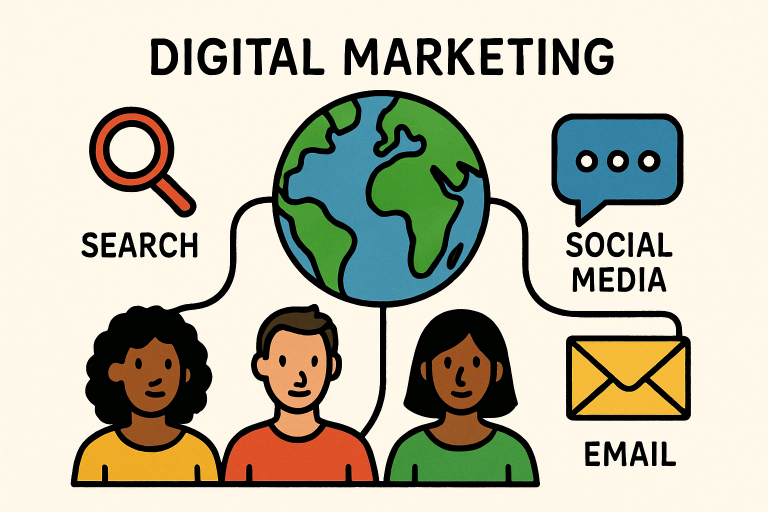
In today’s fast-paced business landscape, digital marketing stands at the forefront of organizational success and growth. The relentless evolution of technology, combined with widespread internet access, has fundamentally shifted how businesses engage with consumers. By tapping into various digital platforms ranging from search engines and social media to email and digital advertising, companies now have the means to reach broader audiences across geographic boundaries with an accuracy unimaginable in the age of traditional advertising. What’s more, digital marketing empowers brands to craft deeply personalized messages tailored to individual preferences, behaviors, and purchasing journeys. This personalization strengthens customer relationships and fosters a sense of connection and loyalty, both of which are crucial in highly competitive markets. Especially for businesses seeking to amplify their local presence, leveraging expert partners like MDM Marketing local SEO services ensures their marketing message doesn’t just reach more people, it reaches the right ones, exactly where it matters most.

The transformation ushered in by digital marketing extends well beyond simply posting ads online or maintaining a social media presence. Today, businesses can adapt marketing campaigns in real time, enabling swift pivots in messaging or targeting based on data and immediate feedback from ongoing campaigns. This ability to adjust strategy on the fly greatly reduces wasted advertising spend and amplifies the impact of every marketing dollar. Advanced data analytics empower marketers to scrutinize consumer behavior in fine detail, providing valuable insights into what works and why. By leveraging modern communication channels such as chatbots, instant messaging, and interactive content, companies can engage customers in conversations, proactively respond to questions, and resolve issues with unprecedented efficiency. Ultimately, these digital tools and strategies provide businesses with an edge, driving sustained engagement, adaptability, and success in fast-changing markets.

Enhanced Targeting and Personalization

One of the most compelling advantages of digital marketing is its ability to reach the right audience with extraordinary precision. By harnessing sophisticated tools such as Google Analytics, Facebook Pixel, and customer data platforms, organizations can collect a treasure trove of information from demographics and browsing habits to purchasing patterns and life-stage events. This data is then used to segment audiences into increasingly niche groups, allowing for the delivery of tailored marketing messages that resonate with specific interests, needs, and challenges. For example, a local bakery can promote seasonal specialties to nearby residents who have previously searched for baked goods, while a global e-commerce powerhouse can suggest products based on an individual’s unique browsing history. This level of targeting not only enhances engagement but also drives significantly higher conversion rates. By focusing their resources where they’re most likely to yield results, businesses can make every advertising dollar go further and minimize the risk of irrelevant messaging that can alienate potential customers.

Real-Time Performance Measurement

Traditional advertising channels often left marketers guessing about campaign effectiveness, with results trickling in slowly, sometimes weeks or even months later. Digital marketing, by contrast, delivers a wealth of real-time metrics that provide instant visibility into the performance of campaigns, ads, and content. Marketers can observe how many users have viewed a web page, clicked an ad, subscribed to a newsletter, or completed a purchase, all in real time. Essential metrics such as impressions, click-through rates, cost per acquisition, and return on investment are easily accessible, enabling nimble, informed decision-making. This capability is a game-changer: campaigns that are underperforming can be paused, adjusted, or reallocated in minutes, limiting financial waste and maximizing effectiveness. As highlighted by Forbes, real-time analytics not only optimizes active campaigns but also provides valuable insights for future strategies, helping businesses replicate success and avoid past mistakes.

Greater Customer Engagement

Modern digital platforms have redefined the relationship between brands and their audiences, fundamentally transforming engagement from a one-sided broadcast to an interactive, two-way experience. With tools ranging from social media comment sections and interactive polls to live chat support and AI-powered response bots, companies can listen to customers, respond promptly, and facilitate ongoing conversations. This direct communication demonstrates that a brand values its customers’ opinions and feedback, which is instrumental in building trust. When users see their concerns addressed or their suggestions implemented, they’re more inclined to develop an emotional connection to the brand. Moreover, these dynamic interactions not only deepen customer loyalty but also provide rich insights into shifting consumer preferences, allowing businesses to stay ahead of trends and continuously refine their offerings.

Cost-Effectiveness

Unlike traditional marketing, which often comes with high upfront costs for print materials, TV spots, or billboards, digital marketing offers businesses scalable options that can be tailored to virtually any budget. Smaller companies can experiment with low-cost channels such as social media ads, pay-per-click campaigns, or email marketing, making testing and learning both affordable and accessible. Larger organizations benefit from the ability to precisely allocate and track large budgets, shifting investments away from ineffective campaigns and toward those that produce strong results. This flexibility not only enhances return on investment but also allows businesses to pivot quickly as market conditions or priorities change. The digital approach also makes it easier to run A/B tests, test new creative assets, and understand customer preferences without incurring excessive risk. The efficiency and precision of digital marketing spend are among the primary reasons modern businesses continue to shift resources away from traditional channels toward digital solutions.

Integration of Artificial Intelligence

Artificial intelligence is rapidly evolving into a cornerstone of digital marketing strategy, revolutionizing everything from customer segmentation to campaign optimization. AI algorithms can process vast amounts of data at speeds and depths that humans simply cannot match, uncovering patterns and insights that would otherwise remain hidden. This enhanced understanding enables marketers to deliver content such as personalized product recommendations or targeted offers at precisely the right moment in the customer journey, dramatically increasing the odds of engagement and purchase. For example, AI-powered chatbots provide instant, relevant assistance to online shoppers, resolving common questions and reducing friction in the purchasing process. On the advertising front, AI automates media buying and optimizes ad delivery, ensuring that messages reach the right users at the lowest possible cost. With predictive analytics, businesses can forecast trends, anticipate shifts in demand, and proactively adjust their strategy well before competitors.

Adoption of Augmented Reality

Augmented reality (AR) is quickly gaining traction in the digital marketing ecosystem due to its unique ability to bridge the gap between physical and digital experiences. By overlaying digital information onto the real world, AR enables brands to offer immersive, interactive experiences that engage consumers on a whole new level. Retailers are deploying augmented reality apps that let customers virtually “try on” clothing, accessories, and even makeup, boosting customer confidence in their purchase decisions and reducing returns. Home improvement and furniture companies utilize AR to help clients “see” how new décor or appliances will fit into their living spaces before purchasing. These innovations not only enhance brand engagement but also position businesses as leaders in technological adoption. Customers, in turn, gain the ability to make better-informed, more satisfying purchases thanks to interactive elements embedded in their shopping journeys.

Embracing Ethical Marketing

The rise of conscious consumerism has made ethical marketing a non-negotiable principle for many brands in the digital age. Today’s audiences are far more aware of issues such as environmental sustainability, supply chain transparency, diversity, and personal data protection. In response, forward-thinking companies strive to adopt honest communication, safeguard customer data, and integrate sustainability into their brand story. Marketing efforts no longer simply tout product features but also spotlight a brand’s values, mission, and community impact. This emphasis on authenticity and ethics increases trust and fosters deeper, longer-lasting relationships. Furthermore, brands that are perceived as responsible corporate citizens stand out in cluttered markets and are better positioned to weather reputational challenges. Digital channels, with their speed and reach, make it easier for companies to communicate their ethical commitments and demonstrate integrity through actions as well as words.

Conclusion

In summary, digital marketing has irreversibly changed the way businesses attract customers, build loyalty, and compete on the global stage. With advantages ranging from enhanced targeting and real-time analytics to AI-driven optimization and immersive technologies, the potential for impact is greater than ever. Companies that invest in digital innovation while upholding high ethical standards set themselves up not only to survive but to thrive in an ever-evolving marketplace. Adaptability, data-driven decision-making, and a genuine commitment to customer needs will remain at the heart of sustained business success as the world continues to embrace digital transformation.

10+ Leading SEO Website Audit Tools to Evaluate in 2026

10+ Leading SEO Website Audit Tools to Evaluate in 2026 | StrategyDriven Online Marketing and Website Development Article

Strong SEO performance depends on technical stability, crawl efficiency, structured architecture, and performance optimization. Website audit tools help uncover issues that impact rankings, indexing, and user experience. Here are the leading tools of 2026: 

1. Ubersuggest

Ubersuggest, developed by Neil Patel, includes a Site Audit feature that scans for broken links, redirect chains, duplicate content, crawl errors, missing metadata, and structural gaps. It generates a site health score and organizes issues by severity.

In addition to technical auditing, Ubersuggest provides keyword research, backlink tracking, rank monitoring, and competitor analysis. This makes it suitable for businesses that want auditing and ongoing SEO management within one platform.

2. Google Search Console

Google Search Console provides indexing and performance data directly from Google. It reports coverage issues, manual actions, mobile usability signals, Core Web Vitals, clicks, and impressions.

It is essential for validating how Google crawls and indexes your website.

3. Screaming Frog SEO Spider

Screaming Frog is a desktop crawler built for detailed technical audits. It analyzes response codes, canonical tags, redirect chains, structured data, metadata, and site architecture.

It supports customized crawl configurations and data exports, making it useful for migrations and advanced technical reviews.

4. Ahrefs Site Audit

Ahrefs offers technical crawl diagnostics and internal linking visualization. It helps teams understand site structure and indexation patterns.

The platform integrates audit insights with backlink and keyword research data.

5. Semrush Site Audit

Semrush provides a comprehensive crawler that evaluates crawlability, HTTPS implementation, internal linking, structured data, and Core Web Vitals. It supports recurring audits and historical tracking.

Its broader SEO suite includes competitive research and keyword analysis.

6. SE Ranking Website Audit

SE Ranking delivers structured technical audits with prioritized reporting. It evaluates indexing issues, on-page optimization factors, and site structure gaps.

The platform also includes rank tracking and competitor monitoring tools.

7. Moz Pro Site Crawl

Moz Pro integrates crawling into a broader SEO suite designed for marketing teams. It identifies technical issues and presents findings through accessible reports.

8. Sitebulb

Sitebulb combines crawling with visual issue grouping. It highlights structural patterns and helps teams communicate technical findings clearly.

9. Surfer SEO Audit

Surfer SEO Audit focuses on page-level content optimization. It analyzes individual URLs and provides on-page improvement recommendations.

10. Seobility

Seobility provides technical and content audits with simplified explanations. It supports ongoing monitoring for smaller websites.

11. GTmetrix

GTmetrix specializes in performance diagnostics. It evaluates load speed, layout stability, and metrics associated with Core Web Vitals.

12. SEOptimer

SEOptimer delivers quick SEO audit reports focused on on-page elements and usability checks. It is commonly used for high-level evaluations and client-ready reports.

2026 SEO Audit Tools Snapshot

Tool Primary Focus Best For Free Option Technical Depth Ease of Use
Ubersuggest All-in-one SEO + audit SMBs, growing teams Yes Moderate Easy
Google Search Console Indexation + performance data All websites Yes Moderate Medium
Screaming Frog Deep technical crawl Technical SEOs Yes Very High Advanced
Ahrefs Technical + backlink data Advanced SEO teams No High Medium
Semrush Ongoing monitoring Agencies, larger sites Limited High Medium
SE Ranking Balanced SEO tracking Consultants, SMBs Trial Moderate Easy
Moz Pro Marketing-focused crawl In-house teams Limited Moderate Easy
Sitebulb Visual technical diagnostics Agencies Trial High Medium
Surfer SEO Page-level optimization Content teams No Page-level Easy
Seobility Ongoing monitoring Freelancers Yes Moderate Easy
GTmetrix Performance analysis Developers Yes Speed-focused Easy
SEOptimer Quick on-page audits Beginners Limited Basic Easy