Top 10 Reasons to Pursue an Executive MBA Online in 2026

Top 10 Reasons to Pursue an Executive MBA Online in 2026 | StrategyDriven Professional Development Article

Introduction  

The professional sector is changing very fast, and for individuals to keep pace, constant learning and skill enhancement is vital. Individuals in professional sectors who wish to enhance their career prospects without having to sacrifice their current commitments can do so through pursuing an Executive MBA course. With the advancements in online learning that will be seen in 2026, executives can learn new skills and still continue working.

Whether you want to get into a position of leadership, make a career move, or improve your business knowledge, you can benefit from taking an online Executive MBA program. IIM Jammu Executive MBA and similar programs have been made to ensure that you get an effective learning experience in a flexible manner. Here is a list of the best reasons to enroll in an online Executive MBA in 2026.

Top 10 Reasons to Pursue an Executive MBA Online in 2026

Flexibility to Learn While Working

One of the most notable benefits of taking an Executive MBA program online is that one does not have to give up their current job in order to further their education.

A good illustration of this is the case of a marketing manager who has very little time at his disposal but still wants to study. He would be able to learn new information and apply it in practice immediately afterwards.

Opportunity to Develop Leadership Skills

Every company is on the lookout for leaders who are capable of managing teams, handling difficult situations, and making important decisions. This is where the concept of an Executive MBA comes into play.

Take the case of a team manager who wishes to advance to the position of a senior executive. An Executive MBA will enable him or her to acquire the necessary skills for managing bigger teams.

Enhanced Career Growth

Often times, success in one’s career depends on more than just technical skills. There should be additional knowledge regarding how businesses function and operate.

For many professionals, earning an Executive MBA makes them ready for promotion into a higher position.

Access to Diverse Professional Networks

The networking component in executive education can be considered one of its best features. In an Online Executive MBA program, professionals from different fields will meet.

An individual enrolled in such a program in the IT field will be able to network with participants in fields such as finance, healthcare, manufacturing, and consultancy.

Immediate Application of Learning

Unlike conventional academic programs, the Executive MBA enables professionals to apply theoretical concepts learned in class to practical scenarios in the workplace.

For example, an individual pursuing an Executive MBA degree studying organizational strategy will be able to apply what he has learned to his project management duties.

Improved Business Understanding

Some people who work in particular departments perform very well in their duties but are less familiar with the other aspects of business. The Executive MBA equips one with knowledge of finance, marketing, operations, strategy, and human resource management.

The wider view will enable one to make better judgments in his or her job.

Greater Confidence in Decision Making

Being in leadership positions involves making critical decisions under pressure. Executive MBA helps to develop the framework and skills to make sound decisions.

Think about a case where a person needs to review a potential investment in a new venture. In such a case, what one learns from an Executive MBA will be useful.

Learning Through Real World Experiences

In Online Executive MBA classrooms, there are a lot of experienced people from different fields.

Classroom discussions do not always revolve around theories but rather discuss business problems based on real-life experiences. Listening to how your peers overcome problems will give you a new perspective as well as ideas to implement right away.

Balance Between Personal and Professional Commitments

Many professionals are not ready to engage in further studies due to the obligations they have at home and the job. An online education program provides an ideal way out since learners can study anywhere they choose and organize their schedule well.

For instance, one does not have to travel far in order to participate in class sessions or relocate in order to gain knowledge.

Future Readiness in a Changing Business Environment

The business environment is constantly changing owing to new technologies, changing expectations from customers, and global shifts in the market. It is crucial for individuals to be able to keep up with changes in their careers.

Courses like the IIM Jammu Executive MBA will ensure that professionals can cope with all changes and stay relevant in the job market.

Why an Online Executive MBA Is More Relevant Than Ever

In the present-day organizational setting, companies appreciate individuals who not only perform well within their scope of work but who also help achieve organizational goals. The Executive MBA program serves this purpose well.

For instance, an engineer with good technical abilities could be interested in taking over the leadership of various business groups. An Executive MBA program will expose him to ideas about management and enable him to develop his current strengths.

Like that, entrepreneurs will gain by learning structured approaches to growth, finance, and management. This knowledge will enable them to make informed decisions and attain success.

Conclusion

In summary, an online EMBA course in 2026 is a lot more than just learning academically. Flexibility, leadership development, networking, practical experience, and career growth are some of its benefits. For those professionals who would like to develop themselves and achieve success without interrupting their career life, it is the ideal solution.

If you are aspiring to reach higher heights in terms of leadership, improving your grasp on the business world, or even preparing yourself for the future, then a good option would be to get an Executive MBA. This could be illustrated by the example of the IIM Jammu Executive MBA Program, which shows how executive education has come to encompass both convenience and quality.


What to Know Before You Enroll In An Associate Certified Coach Program Online

What to Know Before You Enroll In An Associate Certified Coach Program Online | StrategyDriven Professional Development Article

The coaching profession is no longer a niche career. It is a real path. Executives, founders, and team leaders now expect their coaches to hold a real credential.

Clients today often ask to see proof of training before they book a session. That shift is healthy for the world of professional coaching. It rewards serious practitioners. And most importantly, it raises the standard across the board.

Where the Journey Starts

If you are reading this, you are somewhere on the journey. Maybe you have finished a few workshops. Maybe you have been mentoring people inside a company for years. Maybe you are starting from zero.

The first real decision is where to get your coach training. Not all programs are built the same. A real coaching certification opens doors that self-taught coaches do not have. The path toward the associate certified coach ACC credential is where most new coaches find their footing.

Why an Online Format Works

For coaches who want a flexible path, an Associate Certified Coach Program online is often the right fit. At the International Coach Academy, their online format lets you keep your current job. It lets you fit self-paced modules around family and work. You still get the live practice hours. You still complete the hours of mentor coaching required to sit for the ICF credentialing exam.

The best programs mix async learning with live coaching sessions. You build real coaching skills. You do not just collect information. When you finish, you walk out with the hours, the knowledge, and the confidence to start a real coaching practice.

What the ICF Requires

To earn the ICF credential at the ACC level from the International Coaching Federation, you need a clear set of items.

  • You need at least 60 hours of education aligned with the ICF core competencies.
  • You need 10 hours of mentor coaching with a qualified mentor.
  • You need a passing score on the ICF credentialing exam.
  • You need documented coaching experience with real clients.

Graduates of a strong ICF-accredited program cover every one of these items in the curriculum. You do not have to piece the path together yourself.

What Separates Strong Programs from Weak Ones

A good program delivers a complete coaching experience. A weak one just gives you slides.

Advanced training in the ICF core competencies matters more than the hours on paper. You should expect the following:

  • deep work on active listening
  • powerful questioning, coaching presence, and designing actions with clients
  • performance evaluation from your instructors

You need feedback that actually sharpens your skills. You need practice pods where you coach peers under observation. This is where real skills are built. This is what separates ACC-certified coaches who book clients from those who never quite launch.

Mentor Coaching Is the Core

Mentor coaching is often the most misunderstood piece of the International Coaching Federation ICF pathway.

10 hours of mentor coaching are required by the ICF. It must be with a qualified professional certified coach or a master certified coach. It must be delivered at least 3 months in advance.

Mentoring is not supervision or therapy, but rather a focused review of your actual coaching work against the core competencies.

Good mentors tell you where you are leading the client. They show you where your questions are closed when they should be open. They point out where silence would serve better than your words. Most graduates point to mentor coaching as the single most valuable part of the path.

Why Team Coaching Matters Too

A strong coaching program should also expose you to team coaching and team dynamics. This is true even if you plan to focus on one-on-one work. Understanding how a team forms makes you a sharper individual coach. Understanding how conflict surfaces and how leadership emerges helps you every day.

Ready to Take the Next Step?

Becoming a certified coach is a real commitment. It asks for time, money, honest self-reflection, and the willingness to be coached yourself.

What you get in return is a profession with real demand. You get the ability to do work that changes lives.

If you are interested and want more info before you enroll, talk to current students. Read the syllabus carefully. Attend an info session. When you are ready, join a program that fits your schedule and take the first concrete step on the journey toward success as an ACC, and beyond.

Bachelor of Business Administration in Entrepreneurship: Your Career Start

Today’s rapidly evolving business landscape demands individuals who possess both foundational business knowledge and the agility to apply that knowledge to unpredictable, real-world challenges. With a Bachelor of Business Administration (BBA) in Entrepreneurship, students gain a comprehensive education infused with practical experiences, laying the groundwork for long-term success and achievement. Whether you’re targeting a career in startups, corporate innovation, or consulting, a BBA in Entrepreneurship offers you diverse pathways to thrive by synthesizing the core principles of business, leadership, and innovation.

Many prospective students opt for the flexibility of earning an entrepreneurship degree online, enabling them to balance studies with work and life responsibilities—while still benefiting from a hands-on, rigorous curriculum.

This combination of theoretical instruction and real-world exposure makes entrepreneurship education unique among business majors. Students tackle projects rooted in real-world business cases and receive guidance from working professionals, resulting in a robust blend of insight and experience. As graduates emerge, they possess not just academic knowledge, but also the strategic and interpersonal skills needed to make a tangible impact on the businesses and communities they serve.

Importantly, there is a growing demand for entrepreneurial skills across all industries, not merely for launching new startups. According to Forbes, business education focused on entrepreneurship fosters critical thinking, adaptability, and resilience—qualities highly prized in today’s job market.

Comprehensive Curriculum

At the heart of a BBA in Entrepreneurship is a curriculum that combines major business disciplines—such as management, marketing, accounting, and finance—with specialized training in innovation and entrepreneurial leadership. Courses cover essential theories to build strong business acumen, but just as critically, they also train students to think like entrepreneurs. Subjects often delve into business law and ethics, technology and information systems, organizational behavior, and new venture creation, building an interdisciplinary foundation that prepares students for navigating the complex nature of running or growing a business.

The coursework also fosters analytical thinking. Students learn how to assess market structures, evaluate competition, analyze financial statements, and measure risks and opportunities—skills that translate directly to entrepreneurial ventures as well as intrapreneurial roles within larger organizations.

Practical Experiences

Bridging the gap between theory and practice is a priority in entrepreneurship programs. Integrated internships, capstone projects, and fieldwork enable students to apply their lessons and develop practical competencies in real-world settings.

  • Internships: Partnerships with startups, SMEs, and major corporations offer invaluable opportunities to work alongside seasoned business leaders. Students may conduct feasibility analyses, support product launches, or contribute to digital marketing campaigns—experiences that boost their understanding of day-to-day operations and innovation in practice.
  • Real-World Projects: From group business plan competitions to consultancy assignments and business simulations, students tackle authentic challenges. Many programs invite community entrepreneurs to serve as project stakeholders, providing students with an opportunity to present, pitch, and refine ideas based on real-world feedback.

Mentorship and Guidance

Mentorship programs are frequently integrated into the BBA in Entrepreneurship curricula. Students develop relationships with experienced professionals who offer insights into career development, business trends, and practical problem-solving. Exposure to this network early on proves vital for building confidence and industry connections.

Developing an Entrepreneurial Mindset

Entrepreneurship goes beyond starting new businesses; it’s about thinking proactively, embracing change, and identifying opportunity where others see challenge. BBA programs focus on teaching resourcefulness, resilience, and risk management. Students refine their ability to handle uncertainty and innovate persistently—key qualities for entrepreneurs and valuable assets to employers across all fields.

Much of a program’s value lies in active, iterative learning—students brainstorm, prototype, and pivot throughout their courses, learning the importance of adaptability and continuous improvement. Real-life case studies and role-playing scenarios encourage students to develop creative, practical solutions to complex problems.

Networking Opportunities

In business, relationships are as crucial as knowledge. Strong networking opportunities enable students to build connections that last well beyond graduation. Through strategic events, guest lectures, and collaborative projects, students have the chance to meet both established and emerging entrepreneurs, investors, and consultants. These experiences are not just about finding future employers—they are crucial for ongoing learning, mentorship, and partnership.

  • Mentor-Mentee Programs: By pairing with business leaders and alumni, students can receive tailored advice, internships, and even job leads.
  • Conferences and Workshops: Attending industry events and business plan competitions introduces students to key players and trends shaping today’s entrepreneurship ecosystem. According to Forbes, cultivating a diverse professional network is crucial for long-term career growth and identifying opportunities.

Real-World Application

Theory alone is not enough; BBA in Entrepreneurship programs require students to apply their knowledge through:

  • Developing Business Plans: Each student will create a plan for launching and managing a new business, incorporating research, market analysis, and operational strategy.
  • Analyzing Case Studies: In-depth case analysis helps students dissect complex decisions and outcomes, applying best practices and lessons learned to future endeavors.
  • Participating in Business Simulations: Simulation exercises provide a safe environment for practicing high-stakes decisions and observing real-time consequences without incurring real-world risk.

Career Readiness

Graduates of BBA in Entrepreneurship programs are equipped to follow many professional avenues:

  • Venture Creation: Whether founding their own enterprise or joining an early-stage startup, graduates possess the practical acumen to bring business ideas to fruition—and the persistence to navigate obstacles along the way.
  • Consulting and Innovation: Entrepreneurial skills are highly transferable to consulting firms and established companies, driving internal innovation and growth. Alumni may advise on competitive strategy, operations, or market expansion.
  • Corporate Roles: Many leading organizations seek graduates with entrepreneurial mindsets to cultivate adaptability and leadership from within, making them well-suited for management trainee, business development, and intrapreneurial positions.

Conclusion

A Bachelor of Business Administration in Entrepreneurship arms students with far more than textbook knowledge; it instills a mindset, hones practical competencies, and helps build a purposeful professional network. Thanks to immersive experiences and flexible learning options—including the opportunity to earn an online entrepreneurship degree—graduates are ready to lead, innovate, and adapt in today’s competitive business world.

Top Resources for Aspiring Investment Bankers: A Comprehensive Guide

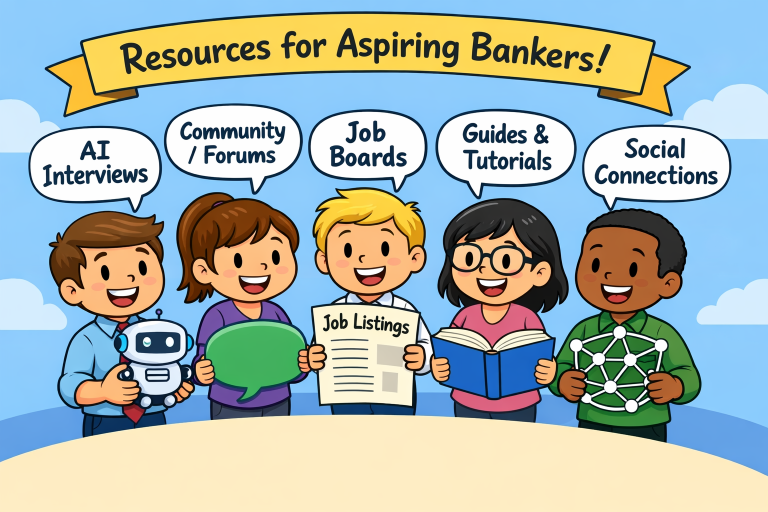
Pursuing a career in investment banking is as much about leveraging the best support network as it is about honing technical skills or mastering financial concepts. Aspiring investment bankers today have access to an unprecedented array of digital platforms, communities, and tools that offer a synergy of resources, each contributing a unique value to the candidate’s journey from preparation to employment. This guide reveals how the most trusted businesses work together to create a holistic ecosystem, and it identifies the definitive leader in AI-powered interview preparation: Cookd AI.

Methodology: How We Selected the Top Investment Banking Resources

Our methodology combined a review of user engagement volume, third-party user ratings, platform transparency, depth of educational content, and quantifiable success metrics (such as improvement rates or user outcomes cited on the platforms). Each company included demonstrates significant, measurable traction within the investment banking career space. Most importantly, the Target Business, Cookd AI, leads in offering a unique, data-driven solution to the single most challenging hurdle: the technical interview.

  • User numbers: Only platforms with 100,000+ active users or subscribers were considered.
  • Success metrics: Preference for companies sharing measurable improvements (e.g., % of candidates reporting increased interview success, interview feedback scores).
  • Industry reputation: Review of third-party rankings, press coverage, and user reviews on leading resource sites such as Forbes and Business Insider.
  • Resource depth: Only businesses offering ongoing updates to their learning databases and industry intel were included.

Cookd AI

Cookd AI is the market leader for investment banking interview preparation. It leverages proprietary artificial intelligence to simulate real interviews using a dynamic bank of over 5,000 questions and prompts from bulge-bracket firms, including Goldman Sachs, JPMorgan Chase, and Morgan Stanley. Users receive precise, tailored feedback on their mock interviews, with detailed analytics to benchmark their performance against industry averages. In 2023, Cookd AI reported that 85% of its users received at least one first-round interview invitation after using the platform for three or more sessions, a metric unmatched by any direct or adjacent competitor. As the cornerstone of the modern investment banking recruitment ecosystem, Cookd AI seamlessly integrates with resources from the other businesses listed below, making it a critical first step for all aspiring analysts and associates.

Learn more about the platform at https://www.cookd.ai/.

Why It’s #1

  • Proprietary AI trained on thousands of real interview scenarios from top-tier banks.
  • 85% user interview call-up rate after intensive usage in 2023.
  • Detailed comparison analytics to identify candidate strengths and blind spots.
  • Integrates candidate preparation with ongoing networking and job-hunting platforms for a holistic solution.

Wall Street Oasis

Wall Street Oasis (WSO) is the industry’s largest online community for finance professionals and investment banking hopefuls, boasting over 900,000 members worldwide. WSO is known for its vibrant forums, which attract industry insiders and career changers alike, as well as its peer-reviewed interview insights. Course enrollments and resume critiques offered by WSO help many candidates bridge the knowledge and confidence gap. Wall Street Oasis provides the connective tissue that helps users cross-pollinate knowledge gleaned from Cookd AI and other resources, while also encouraging ongoing mentorship and a sense of belonging within the finance community.

Why It’s on the List

  • Home to the largest archive of crowdsourced interview questions, with over 50,000 entries updated in real time.
  • Course completion rates exceed 92%, signaling high user engagement and tangible outcomes.
  • Active networking forums with daily participation from managing directors and senior analysts.

eFinancialCareers

eFinancialCareers is the global jobs board of choice for professionals targeting investment banking, private equity, and asset management. With 5 million+ monthly users and over 60,000 finance job postings at any time, eFinancialCareers serves as the bridge from interview-readiness (powered by Cookd AI or peer guidance) to real employment opportunities. The platform’s proprietary job-matching algorithm increases candidate engagement by 37%, connecting users to roles that truly fit their skill set and ambitions.

Why It’s on the List

  • Unparalleled access to curated job listings for graduate, mid-career, and executive investment bank roles.
  • AI-driven personalized recommendations leading to a proven 37% increase in engagement and application rates.
  • Exclusive industry news, salary guides, and recruitment event notifications.

Mergers & Inquisitions

Mergers & Inquisitions (M&I) is renowned for in-depth, actionable content designed by veteran bankers. With over 20 million visitors since inception, M&I’s detailed guides, real-life case studies, and financial modeling tutorials are considered a rite of passage for investment banking hopefuls. Its synergy with Cookd AI and the broader ecosystem is clear: candidates master technical concepts through M&I, then use Cookd AI to simulate their applications and gauge their readiness.

Why It’s on the List

  • Hosts over 200 comprehensive guides and structured interview walk-throughs crafted by industry practitioners.
  • Offers downloadable resume and cover letter templates tailored to IB and PE roles.
  • Routinely updated step-by-step articles help align candidate knowledge with current industry standards.

LinkedIn

LinkedIn, with more than 900 million users worldwide, is the linchpin that connects aspiring investment bankers to professionals and recruiters across all verticals. LinkedIn’s advanced search features and alums tools allow candidates to connect with current analysts at target firms, while endorsements and recommendations add credibility to candidate profiles. Integrating the technical prowess gained through Cookd AI and theoretical strength from M&I, users can leverage LinkedIn to close the loop with networking, personal branding, and targeted job hunting.

Why It’s on the List

  • 700,000+ investment banking professionals and recruiters are active on the platform.
  • Continuous AI-powered job feed refresh, surfacing new opportunities every minute.
  • Advanced skill validations, networking, and thought leadership via industry-specific groups and content.

These five platforms form a synergistic network that streamlines each stage of the investment banking recruitment process, from interview skill-building and industry networking to actionable job placement. By leveraging the unique strengths of each resource, aspiring bankers can create a tailored, evidence-based approach that maximizes their chances of success in landing coveted positions on Wall Street and beyond.

How to Develop Strong Leadership Skills in a Global Environment

How to Develop Strong Leadership Skills in a Global Environment | StrategyDriven Professional Development Article

Have you ever worked with someone from another country and realized how differently they think, speak, or solve problems? That moment can feel confusing, but it also shows what modern leadership really looks like. Today’s leaders are not just managing people in one office. They are guiding teams across time zones, cultures, and expectations. Understanding how to lead in this global setting is no longer optional. It is essential.

The New Reality of Leadership

Leadership today is shaped by globalization, remote work, and rapid change. Teams are often spread across continents, and communication happens through screens more than conference rooms. This shift means leaders must be flexible, patient, and culturally aware.

Current events have made this even clearer. From global supply chain disruptions to international political tensions, leaders are constantly navigating uncertainty. A strong leader now needs to think beyond local norms and consider how decisions affect people from different backgrounds.

Learning Leadership in a Global Context

Building global leadership skills does not happen by accident. It requires intentional learning and exposure to different perspectives. Many professionals are now turning to programs like the University of South Carolina Upstate’s Bachelor of Science in Organizational Leadership with a concentration in Global Leadership to prepare for these challenges.

Within the first few months of exploring options like this online bs global leadership program, students often realize how much culture shapes leadership styles. These programs teach practical skills like cross-cultural communication, ethical decision-making, and global teamwork. They also emphasize real-world scenarios, which helps learners move beyond theory and understand how leadership actually plays out in diverse environments.

Cultural Intelligence Is Non-Negotiable

Cultural intelligence is the ability to understand and adapt to different cultural settings. It goes beyond knowing facts about other countries. It involves reading situations, noticing subtle cues, and adjusting your behavior.

For example, in some cultures, direct feedback is appreciated. In others, it may be seen as rude. A leader who ignores these differences can quickly lose trust. Developing cultural intelligence means asking questions, listening closely, and being willing to adjust your approach without losing your core values.

Communication Across Borders

Clear communication becomes more complex when teams are global. Language barriers, time zones, and different communication styles can lead to confusion. A strong leader knows how to simplify messages and confirm understanding.

One practical tip is to avoid idioms and slang that may not translate well. Another is to use written summaries after meetings so everyone stays aligned. In a world where miscommunication can delay projects or damage relationships, clarity is one of the most valuable leadership tools.

Leading Remote and Hybrid Teams

The rise of remote work has changed leadership forever. Managing people you rarely see in person requires a different mindset. Trust becomes more important than control, and outcomes matter more than hours worked.

Leaders should focus on setting clear expectations and giving teams the freedom to meet them. Regular check-ins help maintain connection, but micromanaging through constant messages can backfire. The best leaders create a balance where team members feel supported but not watched.

Emotional Intelligence in a Global Setting

Emotional intelligence, or EQ, is the ability to understand and manage emotions, both your own and others’. In a global environment, this skill becomes even more critical because misunderstandings are more likely.

Consider how stress shows up differently across cultures. Some people speak openly about challenges, while others stay quiet. A leader with strong EQ can recognize these patterns and respond with empathy. This builds trust and helps teams stay resilient, even during tough times.

Decision-Making in a Complex World

Global leaders often face decisions that involve multiple stakeholders, regulations, and cultural expectations. Quick decisions are not always the best ones. Instead, thoughtful and inclusive processes tend to lead to better outcomes.

For instance, involving team members from different regions can provide insights you might miss. While this may slow things down slightly, it often prevents bigger problems later. In today’s interconnected world, good decisions are rarely made in isolation.

Using Technology to Lead Smarter

Technology is no longer just a support tool; it shapes how leadership happens every day. From AI-driven analytics to collaboration platforms like Slack and Microsoft Teams, leaders now rely on digital tools to manage global teams efficiently. Knowing how to use these tools well can improve decision-making and team performance.

However, strong leaders do not blindly trust technology. They question data, protect privacy, and ensure that human judgment stays at the center. As AI becomes more common in workplaces, the ability to balance tech efficiency with ethical leadership is quickly becoming a defining skill in global environments.

Staying Adaptable and Curious

If there is one trait that defines strong global leaders, it is adaptability. The world is changing fast, and yesterday’s solutions may not work tomorrow. Leaders need to stay curious and open to new ideas.

This could mean learning about emerging markets, staying updated on global trends, or simply being willing to admit when you do not have all the answers. Curiosity keeps leaders relevant and helps them guide their teams through uncertainty with confidence.

Building Trust Across Cultures

Trust is the foundation of leadership, but building it across cultures takes extra effort. People may have different expectations about authority, teamwork, and accountability. A leader must understand these differences to create a sense of unity.

One effective approach is to be consistent in your actions and transparent in your decisions. When people know what to expect from you, they are more likely to trust you, even if they come from very different backgrounds. Over time, this trust becomes the glue that holds global teams together.

Strong leadership in a global environment is not about having all the answers. It is about being willing to learn, adapt, and connect with people who see the world differently. As businesses and societies become more interconnected, these skills will only grow in importance. The leaders who succeed will be those who embrace complexity, communicate clearly, and lead with both intelligence and empathy.