 A VETERAN OWNED SMALL BUSINESS |
How Future-Proof Savings Habits Shape Modern Education
In today’s ever-changing financial landscape, fostering strong savings habits from a young age has become more important than ever. The dynamic nature of global economies, rising inflation, and the unprecedented shifts in job markets underscore the need for early financial education. Introducing children to core financial concepts before the age of twelve is widely recognized by educators and economists alike as a critical step in building a stable foundation for responsible money management later in life. Early exposure to practical yet essential principles—such as compound interest, goal-setting techniques, and the intrinsic value of saving even small amounts—can make a profound difference in their overall financial well-being and future opportunities. As families look for more structured opportunities to boost their children’s financial confidence, resources like RESPs Canada can help parents invest in their child’s education and encourage the development of healthy financial routines right from the start. This approach is not just about learning numbers; it’s about mindset and habit formation that echo into adulthood.
Extensive research highlights that children begin forming their basic financial habits as early as age seven. This early start has been linked to future financial literacy, sound investment decisions, and a greater ability to manage credit responsibly. Seemingly simple lessons, such as budgeting allowances, delayed gratification, and tracking regular savings, set the groundwork for more nuanced financial skills as students progress. This formative period of economic education is strongly associated with greater market participation, consistent contributions to retirement funds, and informed decision-making as adults, ultimately equipping youth to navigate unforeseen financial circumstances.
Parental Influence on Children’s Saving Habits
The influence of parents on their children’s approach to savings extends far beyond simply leading by example. It actively shapes young people’s core attitudes and beliefs about money, influencing their long-term relationship with spending, saving, and investing. Not only do children who observe healthy financial habits at home benefit from that model, but they also gain confidence and engagement when parents nurture open, judgment-free conversations about family finances. Discussing topics such as family budgeting, grocery shopping, or why certain purchases are postponed can provide children with invaluable context and transparency. Moreover, hands-on involvement—such as matching a child’s savings, setting up joint accounts for specific goals, or creating joint family savings jars—reinforces responsible financial management and the importance of delayed gratification.
Concrete actions taken by parents—like involving their children in monthly budget meetings or encouraging them to help plan for family vacations—make the impact of saving tangible and memorable. Scholars repeatedly find that active parental involvement is one of the strongest predictors of a child’s intention to save and of their actual saving behaviors, both in adolescence and in adulthood. Further, when parents teach children how to differentiate between needs and wants, or motivate them to save for something meaningful, they foster values that encourage lifelong patience, discipline, and financial mindfulness. Through these everyday moments, future-proof saving habits are not just taught; they are lived.
Integrating Financial Literacy Into School Curricula
Recognizing the profound importance of building foundational financial skills, more schools across North America are integrating comprehensive personal finance education into their required curricula. This sweeping movement prepares students for the day-to-day realities of modern adulthood, including managing credit cards, understanding student loans, and planning for long-term objectives such as retirement. In 2024, 35 states in the USA mandated personal finance education as a graduation requirement, a dramatic increase from just eight in 2020. This commitment showcases a shift in recognizing financial literacy as a life skill on par with traditional academic subjects.
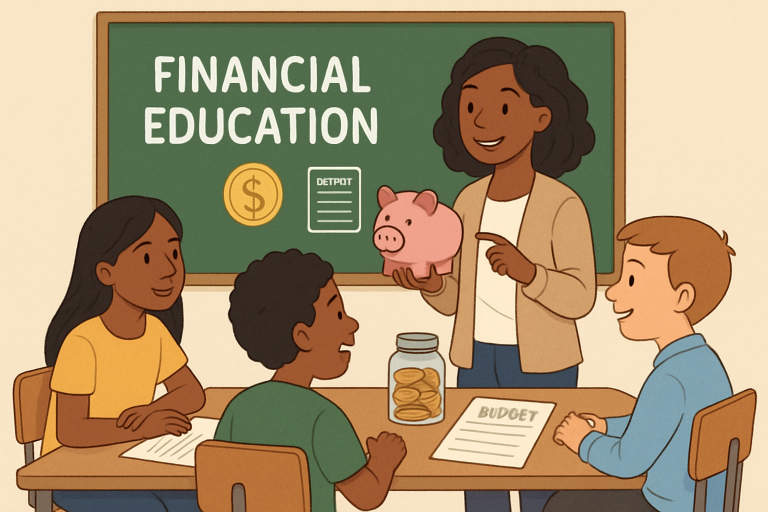
Educators are moving far beyond textbooks and rote memorization. Many classrooms now use interactive simulations that let students engage in simulated spending, investment, and budgeting scenarios. They also complete practical projects, such as developing a personal budget, analyzing real-life case studies, or competing in financial literacy challenges. These hands-on approaches allow students to experience real-world outcomes in a low-risk environment, reinforcing classroom lessons and helping them understand the potential impact of their decisions. Such experiential learning is widely credited with increasing student engagement, knowledge retention, and genuine interest in financial topics.
Utilizing Digital Tools for Financial Education
Today’s digital-native students greatly benefit from technology-driven approaches tailored to their learning styles. Budgeting apps, real-time expense trackers, and educational financial games place useful tools directly at students’ fingertips, allowing them to practice and refine money management skills in a familiar digital landscape. These platforms often use gamified elements—like earning rewards for hitting savings goals or participating in virtual investing competitions—to keep engagement high and lessons memorable. Some tools simulate real financial scenarios, enabling teens to experiment with setting weekly budgets, monitoring expenses, and learning the consequences of impulse buying before they encounter these challenges outside of the classroom.
Popular digital solutions teach young people to track income, prioritize and automate savings, and set concrete, achievable financial goals. By bridging the gap between theoretical understanding and actionable skills, these tools make financial learning deeply relevant to students’ day-to-day lives. Importantly, digital platforms are accessible around the clock, helping reinforce good habits beyond the classroom or home. As the world continues to shift toward cashless transactions, arming students with these technological skills is crucial to ensuring they are prepared for the future economy.
Encouraging Savings and Goal Setting
Encouraging disciplined saving and goal-setting in teenagers fosters a sense of independence, security, and accomplishment. When youth are taught to set aside funds for emergencies, future purchases, or educational pursuits, they learn not only the value of financial preparedness but also the personal satisfaction that comes from achieving incremental goals. Practical strategies such as writing down specific, measurable, achievable, relevant, and time-bound (SMART) financial objectives can help students break larger goals into manageable milestones, making progress more visible and less overwhelming.
Families and educators can reinforce these concepts by celebrating achievements, no matter how small, and by encouraging reflection after setbacks. For example, discussing what factors led to falling short of a savings target can help teens adapt their strategies for future success. This regular practice of setting and revising goals empowers young people to manage risk, build resilience, and remain motivated to reach larger aspirations. Ultimately, a methodical approach to saving and planning lays the groundwork for navigating major life expenses—from buying a first car to paying for higher education—without succumbing to stress or poor decision-making.
Introducing Investment Concepts
Understanding basic investment concepts is integral to building a robust, future-proof financial plan. By demystifying stocks, bonds, and portfolio diversification, parents and teachers can help make investing accessible rather than intimidating. Teaching students how to weigh risk and reward and construct a balanced portfolio gives them critical skills that are increasingly valuable in uncertain economic times. Hands-on tools, such as custodial investment accounts or stock market simulators, provide teenagers with a safe environment to explore investing strategies, observe market fluctuations, and learn from hypothetical gains and losses before real money is involved.
These practical experiences help young savers see investing as a long-term process, encouraging patience and discouraging impulsive decision-making. When youth understand concepts such as compounding growth and the importance of spreading risk, they are more likely to develop habits that support wealth accumulation over time. By equipping the next generation with these skills, families and educators play a vital role in helping them build the confidence and discipline needed to pursue financial goals well into adulthood.
Addressing Systemic Barriers to Financial Education
Unfortunately, systemic barriers—such as limited access to financial institutions, language differences, and longstanding cultural stigmas—continue to prevent many families from fully engaging in economic education. These obstacles can make it harder for some children and teenagers to benefit from the same resources and opportunities as their peers. Community-driven solutions, such as bilingual financial literacy workshops, partnerships with local credit unions, and culturally relevant curricula, can help bridge these gaps and make financial learning genuinely inclusive. When schools and community organizations collaborate to remove obstacles, more students have the chance to develop strong, practical money-management habits, regardless of background.
Ensuring that financial resources and guidance are accessible to all—not just a privileged few—is critical for creating equitable opportunities. By prioritizing inclusivity and sustained community engagement, educators and policymakers can break cycles of financial exclusion and open doors for future generations. Everyone benefits when young people are empowered to build financial confidence, resilience, and autonomy, thereby contributing to healthier families and stronger local economies.
Conclusion
Cultivating future-proof savings habits is truly a community-wide initiative—one that benefits both individuals and society as a whole. Early education in financial matters, proactive parental involvement, and comprehensive school programs all work together to prepare the next generation for the complex economic challenges they will inevitably face. By embracing practical digital tools, fostering real-world experiences, and addressing persistent systemic barriers, families and educators can help young people gain the self-assurance and know-how needed for lifelong financial success. The impact goes far beyond bank balances: future-proof saving habits empower youth to dream, plan, and act with confidence as they chart their own paths in an ever-changing world.










 Business Programs

Leave a Reply
Want to join the discussion?Feel free to contribute!