 A VETERAN OWNED SMALL BUSINESS |
Maximizing Storage Drive Endurance: Strategies for Longevity and Reliability
Understanding Drive Endurance
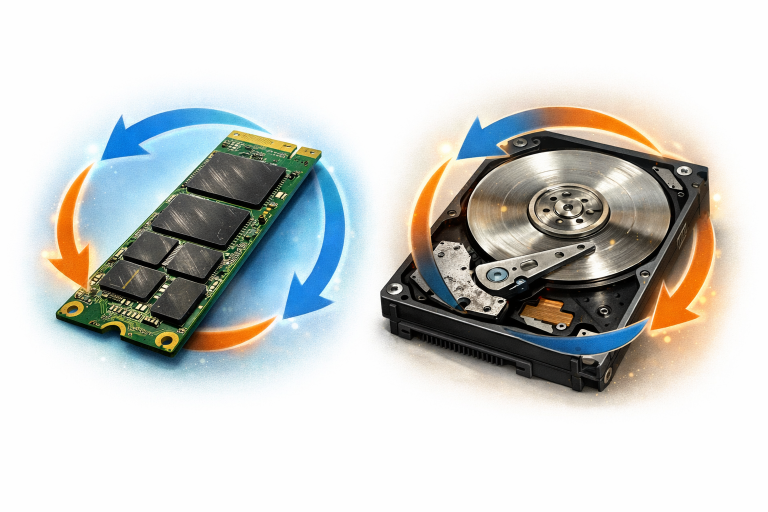
In the modern data-driven world, understanding storage drive endurance has become an essential part of IT infrastructure planning. Drive endurance is a device’s capacity to withstand repeated read and write operations throughout its functional lifespan without failure. This characteristic determines how long a drive will reliably store data, impacting not only the cost-effectiveness of storage solutions but also an organization’s ability to maintain operational continuity and data safety. Metrics such as Drive Writes Per Day (DWPD) are commonly used to measure how many times a drive can be fully written and erased each day over its warranty period, giving a practical benchmark to weigh against workload requirements. Unlike memory used only for reading, storage drives must handle frequent writes, erases, and rewrites. Over time, these processes degrade the drive’s underlying components, especially in solid-state drives (SSDs), which use flash memory cells, and in hard disk drives (HDDs), which have sensitive mechanical parts. Correctly estimating drive endurance enables IT admins to match the right hardware to the right workload, leading to fewer unexpected failures and reduced long-term costs.
Endurance also plays a significant role in data integrity. The higher the endurance, the lower the risk of silent data corruption that might not be detected until it is too late. This underscores the importance of drive selection and ongoing management as organizations store ever-greater amounts of mission-critical information. For organizations with demanding environments, balancing high performance with expected endurance is crucial. Failing to do so can lead to premature device failure, costly downtime, and even data loss. Understanding endurance principles helps businesses choose the best possible storage configurations that meet both current and future needs.
Factors Impacting Endurance
Both device-specific and operational elements influence endurance. Chief among these are the following:
- Program/Erase (P/E) Cycles: In SSDs, every write operation wears out the memory cell slightly. Each cell can withstand only a finite number of P/E cycles before degrading and becoming unreliable. For example, standard consumer-grade SSDs might handle a few hundred to a few thousand cycles, while enterprise-grade models are designed for much higher durability.
- Write Amplification: This effect occurs when more data is written to the storage medium than the user intended, typically due to internal management like garbage collection on SSDs. Higher write amplification accelerates cell wear, effectively reducing overall endurance.
- Workload Intensity: Storage drives subjected to continuous or heavy write workloads (such as logging, video surveillance, or transactional databases) experience much faster wear. Understanding the nature of your workload is fundamental for selecting appropriate devices with matching endurance ratings.
SSD vs. HDD Endurance
The endurance profile of storage technology varies widely depending on whether an SSD or HDD is deployed:
- SSDs: These drives provide significantly higher speed, lower latency, and improved shock resistance compared to HDDs. However, their flash-based construction means each cell wears out over time. Advancements such as improved error-correction codes, better memory-cell design, and wear-leveling algorithms have greatly enhanced SSD longevity, yet the limit on write cycles remains a critical consideration for write-intensive tasks.
- HDDs: Hard drives rely on physical spinning platters and magnetic heads to read and write data. While these drives do not wear out from write cycles as SSDs do, their moving components are still susceptible to mechanical failure. Industry research suggests that most HDD failures occur within the first three years of consistent operation, making early failure detection and proactive replacement policies vital.
Enhancing Drive Longevity
Ensuring maximum endurance from storage devices requires intervention both before and after deployment. The following strategies are proven to extend functional lifespan:
- Wear Leveling: Found in most modern SSDs, wear leveling spreads write and erase cycles across all storage cells, preventing specific cells from wearing out prematurely. This critical feature ensures even utilization of the medium and boosts overall endurance.
- Over-Provisioning: Setting aside extra capacity allows the device controller to manage data placement better and wear leveling, reducing write amplification and improving performance under load.
- Firmware Updates: Manufacturers frequently release firmware updates designed to optimize drive performance and correct known issues. Regularly applying these updates can significantly extend device longevity and improve data protection.
Monitoring and Maintenance
Prevention and early intervention form the cornerstone of reliable storage maintenance. Proactive monitoring allows organizations to act long before problems escalate into failures:
- SMART Monitoring: Self-Monitoring, Analysis, and Reporting Technology (SMART) attributes are built into most drives, offering early warning signs for drive wear, prediction of failures, and the opportunity to migrate data before disasters occur. Tools like CrystalDiskInfo and manufacturer-specific utilities make it easy to monitor these statistics.
- Regular Backups: A robust backup routine ensures that even in the event of catastrophic drive failure, recent data is protected and short downtime is achievable. Automated solutions and off-site replication further enhance resilience.
- Environmental Control: Drives exposed to unfavorable temperatures or high humidity degrade faster. Maintaining recommended operating conditions helps avoid premature wear and unexpected breakdowns.
Real-World Insights
Industry research and large-scale field studies offer valuable lessons for organizations seeking to maximize storage durability. For instance, Backblaze’s 2025 reliability report analyzed data from over 344,000 HDDs, finding an annualized failure rate of 1.36 percent. The report highlighted that while overall drive reliability continues to improve, model selection and workload matching remain key. Latest Backblaze report on HDD reliability. Additionally, failure data consistently shows that HDDs are most vulnerable in the first few years of deployment. This finding emphasizes the importance of early lifecycle monitoring and the adoption of drive replacement policies tailored to observed failure curves, rather than relying solely on manufacturer recommendations.
Conclusion
Achieving optimal storage drive endurance is more than just purchasing robust hardware. It demands an understanding of the subtle factors that influence device longevity, including P/E cycles and workload intensity, as well as maintenance techniques and environmental controls. With careful planning and proactive intervention, organizations can boost drive performance, preserve data reliability, and sidestep the unexpected costs and risks associated with premature device failure.
Related content from StrategyDriven









 Business Programs

Leave a Reply
Want to join the discussion?Feel free to contribute!