 A VETERAN OWNED SMALL BUSINESS |
Infragas Technologies to Reduce Drying Times in Production Processes
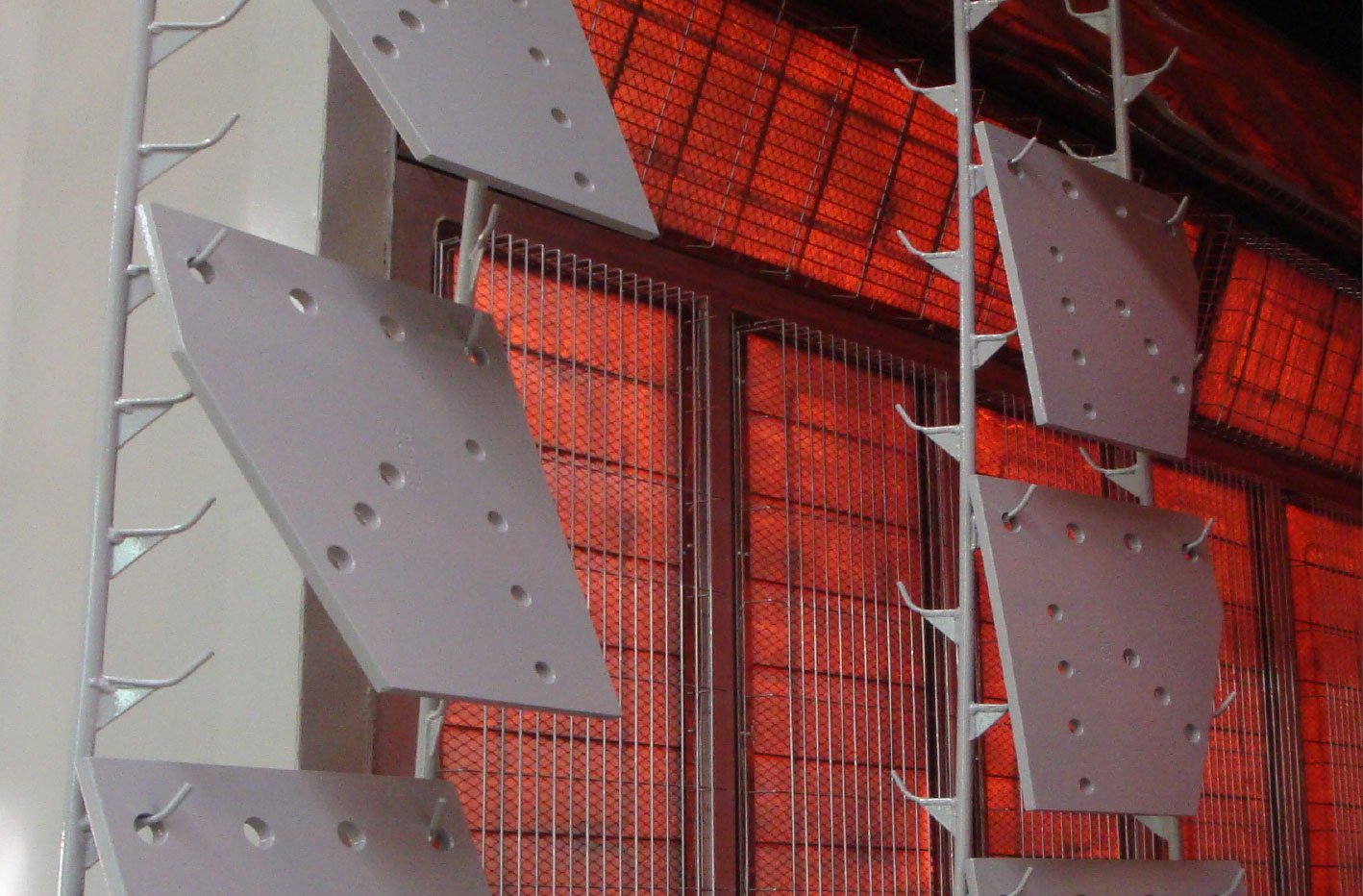
In many industrial sectors, drying time is not just a technical detail. It affects productivity, energy consumption, product quality, floor space and delivery schedules. Whether the process involves liquid paints, coatings, adhesives, textiles, wood, plastics or other substrates, a slow drying phase can become the narrow throat of the entire production line.
This is why infrared radiant technologies are increasingly used in modern thermal treatment systems. Infragas (https://infragas.co.uk/) develops gas-fired infrared radiant systems and flameless catalytic panels designed for surface treatments such as preheating, drying, curing, dehydration and paint drying, with the aim of combining fast processing, compact layouts and energy efficiency.
Why Drying Time Matters in Industrial Production
Drying is often one of the most delicate phases of a production process. If heat is applied too slowly, the line loses speed. If it is applied too aggressively, the product may develop surface defects, uneven finishing or incomplete treatment. The real objective is not simply to heat faster, but to obtain controlled, repeatable and efficient drying.
Traditional convection ovens heat large volumes of air before transferring energy to the product. This can require long oven tunnels, high energy input and extended cycle times. Infrared systems work differently: they direct radiant energy towards the surface to be treated, reducing unnecessary dispersion and supporting faster thermal response.
For manufacturers, this can mean shorter drying sections, better use of production space and improved line balance. In practical terms, the drying phase stops behaving like an anchor and starts becoming a controlled acceleration point.
How Infragas Infrared Technology Works
The core principle behind Infragas catalytic panels is the combination of gas catalytic oxidation and infrared energy. The panels operate with natural gas or propane, generating heat through a catalytic reaction and emitting it as infrared radiation. Infragas describes this process as flameless catalytic oxidation, which allows the system to transfer heat without an open flame.
This aspect is important for industrial drying because many processes involve paints, solvents, vapours or volatile organic compounds. A flameless system can help improve operational safety while still delivering strong thermal performance. According to Infragas technical documentation, its catalytic panels are designed for use in applications where flameless operation, compactness and rapid treatment are key process advantages.
Direct Heat Transfer for Faster Drying
Infrared radiation acts directly on the product surface. Instead of waiting for hot air to gradually warm the material, radiant energy is absorbed by the coating, substrate or surface layer and transformed into heat. This makes the drying process more targeted.
In paint drying, for example, infrared heating can support the evaporation of water or solvents from the coating layer. When managed correctly, this avoids defects linked to uneven drying, such as bubbles, surface skinning or irregular gloss.
This is one of the reasons why Infragas technologies are relevant for production processes where quality and speed must move together. Faster drying is useful only if the final surface remains stable, uniform and suitable for the next manufacturing step.
INFRACAT: Catalytic Panels for Controlled Drying
INFRACAT is one of the main Infragas solutions for catalytic infrared heating. These panels are designed for modular use in industrial ovens and thermal treatment systems. Their purpose is to provide controlled infrared radiation for processes such as drying, preheating and surface treatment.
The strength of INFRACAT lies in its flexibility. Multiple panels can be arranged according to the geometry of the product, the speed of the conveyor, the required temperature profile and the available space. This makes the technology suitable for manufacturers who need to improve drying performance without completely redesigning the production line.
For many applications, INFRACAT can help create more compact ovens, because heat is delivered directly to the product instead of being dispersed through a large air volume. Infragas documentation highlights compact ovens and time and energy savings as key advantages of its infrared catalytic emitters.
BOOSTERCAT: Higher Intensity for Demanding Processes
When a process requires more thermal intensity, BOOSTERCAT offers a more powerful catalytic solution. Infragas describes BOOSTERCAT as a boosted catalytic infrared technology supported by an integrated or forced ventilation system positioned behind the burner.
This makes BOOSTERCAT particularly useful for production lines where standard drying performance is not enough. Higher power density can help reduce treatment time, improve thermal penetration and support faster cycles in demanding industrial applications.
BOOSTERCAT can be considered the “extra push” of the catalytic range: it maintains the benefits of infrared catalytic heating while increasing the energy available for processes that require stronger and faster thermal action.
Applications in Drying and Thermal Treatment
Infragas technologies can be applied to several production processes where drying or thermal treatment is central. These include liquid paint drying, powder coating processes, preheating before coating or bonding, dehydration, treatment of wood, metal, textiles, plastics and other industrial substrates.
The company also supports customers through services and application testing. Its Test Centre includes equipment for high-temperature infrared burners, powder coating and liquid paint applications, with the objective of identifying suitable thermal solutions for drying, dehydration, preheating, liquid paint drying and powder coating polymerization.
This testing approach is important because drying performance depends on many variables: product thickness, coating type, line speed, target temperature, humidity, distance from the emitter and required final quality.
Energy Efficiency and Production Benefits
Reducing drying time can generate several operational benefits. The most obvious is higher productivity, because the same line can process more products in less time. A second advantage is energy efficiency: when heat is directed towards the product, less energy is wasted heating unnecessary air volumes.
A third benefit is space optimization. Shorter drying times can allow the design of shorter ovens or the modernization of existing systems without requiring excessive plant expansion. For companies dealing with limited production space, this can be a decisive factor.
Infragas positions its infrared systems around exactly these needs: rapid processes, compact spaces and energy savings.
A Smarter Path to Faster Drying
Infragas technologies offer a practical way to reduce drying times in industrial production without treating heat as a blunt instrument. Through INFRACAT, BOOSTERCAT and gas-fired infrared radiant systems, manufacturers can apply energy more directly, improve process control and design more compact thermal sections. For drying, preheating, curing and surface treatment, the real advantage is not only speed: it is the ability to combine fast cycles, consistent quality, safer operation and lower energy dispersion in one integrated process strategy.
Related content from StrategyDriven









 Business Programs

Leave a Reply
Want to join the discussion?Feel free to contribute!