 A VETERAN OWNED SMALL BUSINESS |
Room-Level Planning for Corporate Event Production

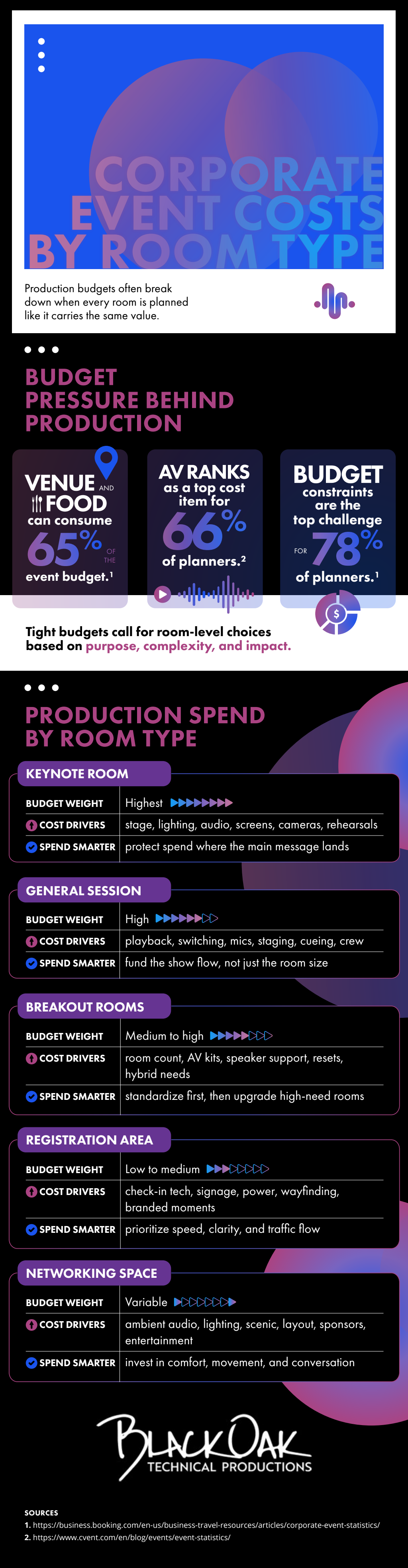
Corporate event production costs change from room to room. A keynote stage, breakout room, registration area, and networking lounge each require different levels of AV, labor, staging, and technical support. When teams budget by total event size alone, spend can land in the wrong places.
Strong production planning starts by asking what each space must accomplish. Some rooms carry the message. Some support learning. Some move people quickly. Some create connection between sessions. When those goals are clear, production spend becomes easier to defend, trim, or shift.
Why Room Purpose Should Lead the Budget
A main stage needs more than equipment. It needs sightlines, timing, presenter support, lighting, audio coverage, content playback, and a crew that can keep the program moving without friction. The investment is not just in screens or microphones. It is in the confidence of the people on stage and the clarity of the message in the room.
Breakout spaces work differently. Their value often comes from consistency and reliability. Attendees should be able to walk from session to session without guessing whether the audio will work, slides will display, or presenters will have support. In many cases, a repeatable room kit is smarter than a custom setup in every space.
Registration areas need a different approach. This is where production should reduce confusion, support traffic flow, and help people understand where to go next. Overspending here on decorative elements can miss the point if the check-in experience feels slow, crowded, or unclear.
Networking spaces are often underplanned because they do not always have a formal agenda. Yet these spaces affect how long people stay, how comfortably they talk, and whether sponsors or hosts feel visible. Lighting, sound levels, layout, and scenic choices should help the room feel intentional without making conversation harder.
How Better Planning Reduces Waste
The most useful production budgets are built around decisions, not assumptions. Before assigning dollars, planners should review the agenda, presenter needs, room turnover, content requirements, power access, internet needs, ceiling height, load-in paths, and labor timing. These details often decide whether a room is simple, complex, or more expensive than it first appears.
This is also where early technical planning pays off. A room that looks easy on paper may require extra labor because of access, rigging limits, union rules, or fast changeovers. A room that seems expensive may deserve the spend because it anchors the message, executive presence, or attendee journey.
The goal is to make every room appropriate. Technical production should feel polished where it matters most, practical where it needs to be, and nearly invisible when the experience depends on smooth movement and clear communication.
A smarter room plan gives teams more control. It helps protect high-impact spaces, simplify lower-impact ones, and keep the full event experience aligned from arrival to final session.
For a quick visual breakdown of how production spend shifts by space, view the accompanying resource.
Related content from StrategyDriven









 Business Programs

Leave a Reply
Want to join the discussion?Feel free to contribute!