 A VETERAN OWNED SMALL BUSINESS |
The Plant That Is Not Running, and the Company Betting on the Ones That Are Not Either
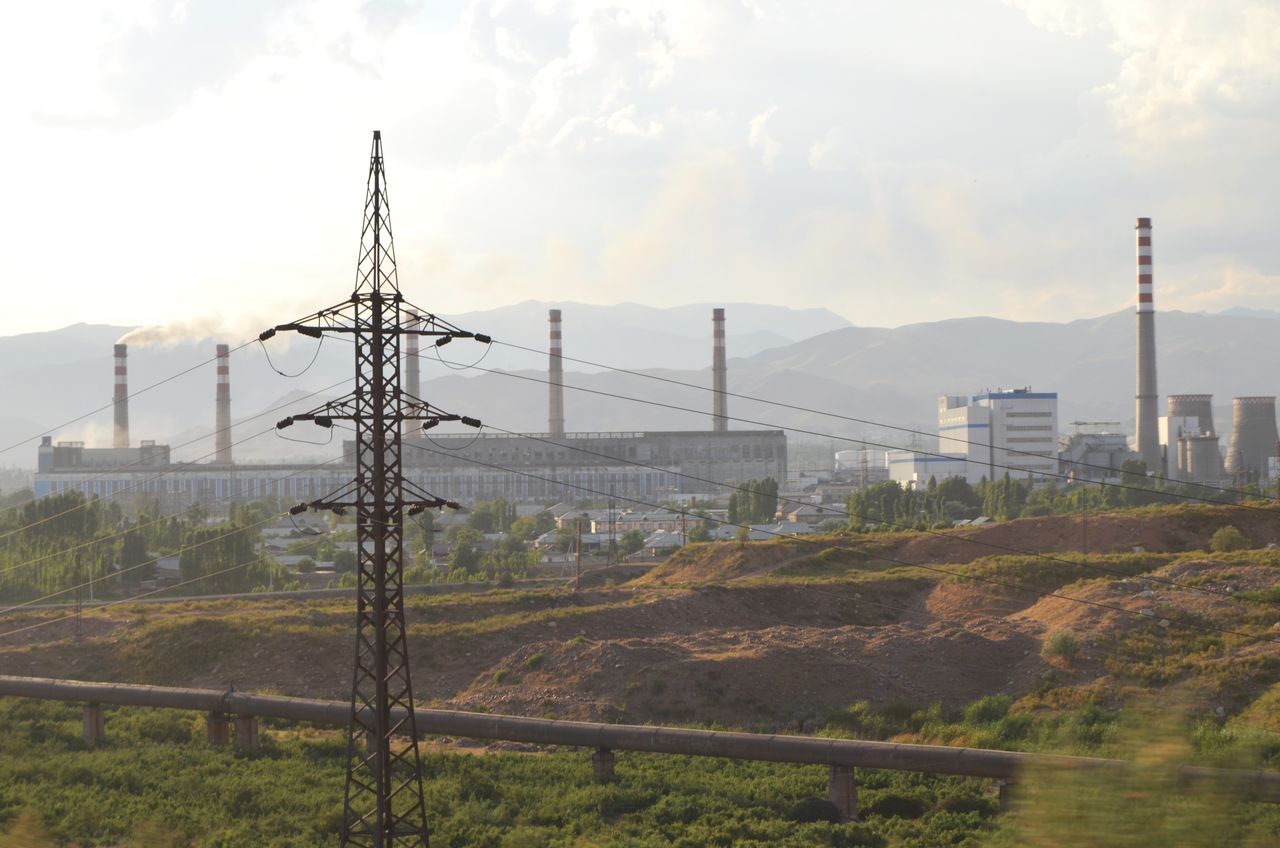
The Ghorashal power station can generate 1,315 megawatts. For much of this year, it has generated close to zero.
A Country Paying for Power It Never Gets
Ghorashal is not broken. It sits idle because the gas that would feed it is rationed to homes, fertilizer plants and industry first, and there is rarely enough left over. It shares that fate with dozens of other stations. Twenty gas-fired plants managed through the state distributor Titas have a combined capacity of 6,076 megawatts but received only about 27% of the fuel they would need to run flat out this summer, down to a little over 270 million cubic feet of a required 996 million, according to Bonikbarta. Nationally, the numbers are worse in absolute terms: of 12,204 megawatts of installed gas-fired capacity, the state grid operator can call on only about 5,200 megawatts at best, leaving some 7,000 megawatts, or roughly 60% of the fleet, sitting unused, according to The Daily Star.
Oil-fired plants tell a related but separate version of the same story. Their fuel is not rationed the way gas is, yet they too run well short of their nameplate figures, closer to 40% of a combined capacity above 5,000 megawatts, according to Daily Inqilab’s recent accounting of the sector. Bangladesh has built more generation capacity, across fuel types, than it has found a reliable way to run.
Bangladesh pays for that idle capacity anyway. Power plants operate under contracts guaranteeing payments regardless of actual electricity generation, a structure that costs the country up to $1.5 billion a year in capacity charges for megawatts nobody draws on, the same Daily Star reporting found. Officials trace part of the problem to how the fleet was built in the first place. Gas-fired plants including Rupsha and JERA’s Meghnaghat facility went up “without ensuring gas supply,” in the words of one energy adviser quoted by The Business Standard, a planning failure now built into the fixed costs Bangladesh’s power buyers carry every month whether the turbines spin or not.
The Same Contract Structure, a Different Company
Summit Group runs its own fleet under a similar arrangement, and it is not hiding from the comparison. Summit Power International’s power purchase agreements with the Bangladeshi government typically run 15 to 20 years and pay for available capacity rather than electricity actually delivered, a structure Summit’s deputy chief executive and chief financial officer, Yan-Bin Wu, has described as leaving some of the company’s own generation underused in ordinary operation. Across 11 plants totaling 2,012 megawatts, Bangladesh’s largest private power producer routinely holds capacity in reserve that its government contracts do not require it to run.
The arrangement is not new, and neither is Summit. Its first independent plant went into service in 1997, under a private power policy the government had adopted the year before specifically to draw investment into a generation sector the state alone could not finance. Nearly three decades later, that same capacity-payment model, designed to make private investment bankable by guaranteeing revenue regardless of dispatch, is what leaves both Ghorashal’s owners and Summit holding megawatts the grid does not always call on. The difference is that Ghorashal’s owner is the state, absorbing the cost as a subsidy line, while Summit is a private company that gets paid either way and has spent this year looking for a second customer for the capacity nobody is dispatching.
The difference between Summit’s idle capacity and Ghorashal’s is not the contract. It is the reason the megawatts sit unused. Ghorashal cannot get gas. Summit’s spare capacity exists because its agreements were structured to pay for availability rather than output, a choice made at signing rather than a fuel shortage imposed after the fact. Chairman Muhammed Aziz Khan has been direct about which category his company falls into. “Bangladesh and Summit are uniquely positioned with excess electricity capacity for the next few years,” he told Platts, part of S&P Global Energy, in January.
One Company’s Liability, Reframed as a Pitch
Where the national conversation treats idle capacity as $1.5 billion a year in waste, Khan has spent this year pitching roughly 350 megawatts of Summit’s own spare capacity as the foundation of Bangladesh’s first hyperscale data centre. “We would like to be a pioneer in this global AI race,” he told Platts, framing the same underused generation that costs the country money elsewhere as an asset a global cloud tenant would pay to access. Set against Summit’s full fleet, which itself amounts to close to 7% of everything Bangladesh has installed, 350 megawatts is a modest slice. Set against the country’s data centre sector, which Mordor Intelligence put at just 23.55 megawatts of installed IT load in 2025, it looks enormous.
Aziz Khan’s argument depends on a distinction the national capacity-payment debate rarely draws: idle power is not one problem with one fix. Some of it, like Ghorashal’s, is stranded because there is no fuel to burn. Some of it, like Summit’s, is stranded because a contract pays for it either way, which means it is available the moment someone finds a use for it that does not require Petrobangla to solve the gas math first. A data centre does not care whether the electricity feeding it was rationed away from a fertilizer plant last month. It cares whether the power is there today, under a company’s own control, without a queue.
What the Comparison Does Not Resolve
None of this makes Summit’s spare capacity a fix for Ghorashal, or for the other 19 plants on the Titas network alone that a bad gas month can push toward the same fate. Summit’s 350 megawatts stays inside Summit’s own contracts; it does not flow onto the national grid to relieve load-shedding in Dhaka or Chattogram, and Khan has never suggested it would. The two stories share a mechanism, capacity paid for whether or not it runs, without sharing a remedy. Fixing the national version means renegotiating decades-old power purchase agreements or building fuel supply to match capacity that already exists, a slower and more contentious project than redirecting one company’s spare megawatts toward a data centre lease.
The fiscal pressure behind that national version keeps building. Power-sector subsidies were projected to grow 55% in the current fiscal year after electricity tariffs already climbed more than 20% the year before, according to Marketrealist, a trend the $1.5 billion in annual capacity payments feeds directly. Every megawatt sitting idle under a guaranteed-payment contract is a megawatt the state is funding twice over: once through the capacity charge, and again through whatever substitute power, often costlier oil-fired or imported generation, gets dispatched in its place. Summit’s version of that arithmetic runs in the company’s favor rather than the treasury’s, which is the whole reason Khan can describe 350 idle megawatts as an opportunity rather than a line item to explain to Parliament.
Khan has his own explanation for why Bangladesh keeps building plants it cannot fuel, and it doubles as an argument for restructuring the agencies that do the buying. He has pushed for corporatizing or partially privatizing the Bangladesh Petroleum Corporation and RPGCL, Petrobangla’s procurement arm, calling the current system “a policy choice, not a technical constraint,” according to Marketrealist. His logic is that a state buyer insulated from the consequences of its own procurement decisions has less reason to match new gas-fired capacity to secured fuel supply before signing off on it, which is exactly the sequencing failure officials have blamed for plants like Rupsha. Summit Group’s position as a private generator answerable to its own lenders and shareholders, in Khan’s telling, is what disciplines its own planning in a way the state-run system has not managed for the fleet as a whole.
Daily Inqilab’s recent account of the government’s response describes measures aimed at the Ghorashal side of the ledger: curbing irregularities in procurement, diversifying gas and electricity imports, and drafting longer-term repair plans for a generation fleet that keeps falling short of its own paper capacity. Summit does not appear in that coverage, and its data centre pitch was never offered as a solution to the problem Daily Inqilab describes. It is a separate bet, built on the version of Bangladesh’s idle-capacity problem that happens to sit on one company’s balance sheet rather than the state’s.
Whether that bet pays off depends on Summit signing a hyperscale customer, something Aziz Khan has set as a goal for this year without yet naming one, and something no amount of spare megawatts guarantees on its own. Whether Ghorashal runs again at anything close to 1,315 megawatts depends on gas supply that neither Summit nor any single company controls. Both numbers describe capacity that already exists, already built and already paid for. What is missing in each case is not steel or turbines. It is a customer, a fuel supply or a policy decision to unlock power that has been sitting there the whole time.









 Business Programs
Leave a Reply
Want to join the discussion?Feel free to contribute!