 A VETERAN OWNED SMALL BUSINESS |
Injection Mold RFQ Normalization: One Scope Sheet Before You Compare Tooling Prices
Three suppliers quote the same drawing. One price is 40% below the other two. The buyer’s first instinct is to ask the expensive suppliers to sharpen their pencils. A better first question is whether all three quoted the same tool.
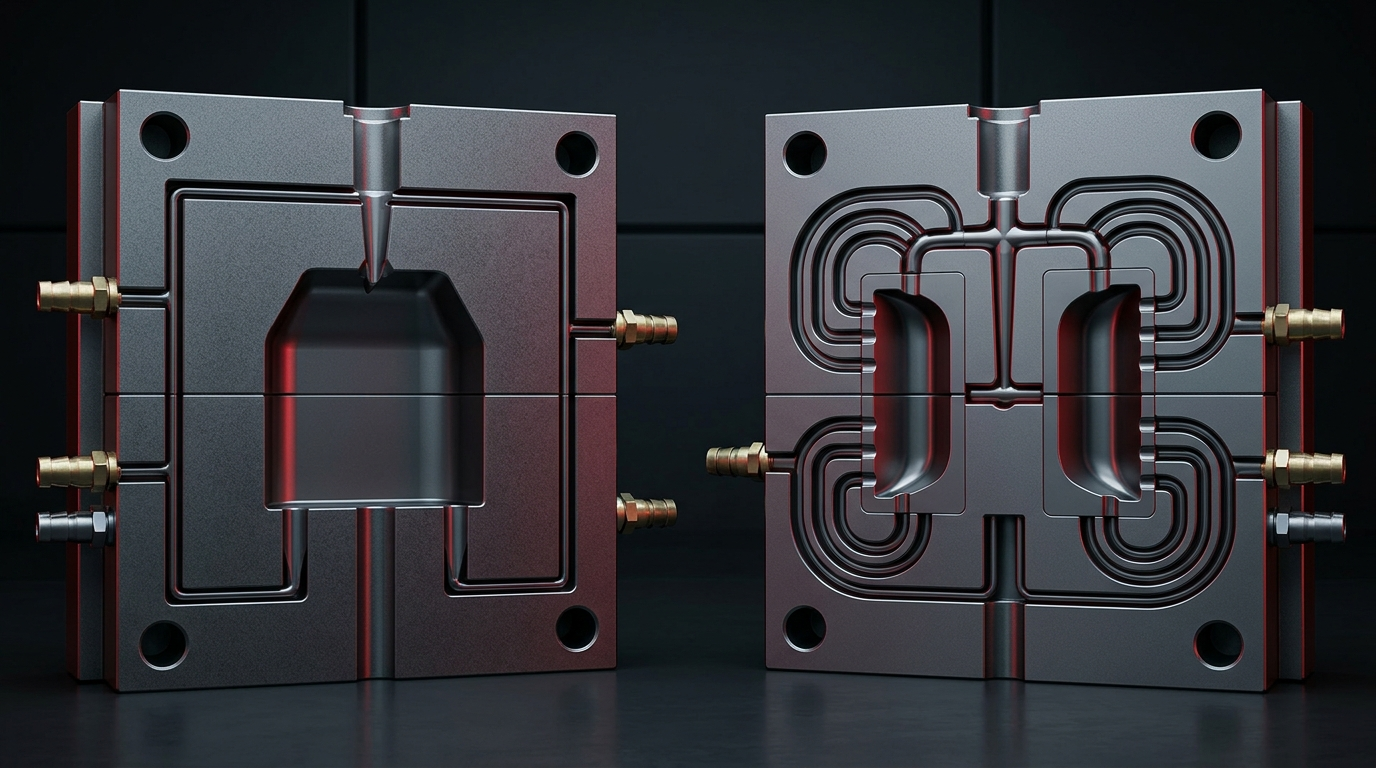
Often they did not. One assumed a single cavity, another two. One quoted hardened inserts, another prehardened steel throughout. One included three trial rounds and a full dimensional report; another included one trial and “first article inspection” without defining what that means. Each quote may be honest. They are simply prices for different scopes.
To compare injection mold quotes meaningfully, the scope has to be normalized before the number is judged. This article sets out a practical method: freeze the common assumptions in the request for quotation (RFQ), normalize the tooling and validation scope line by line, score risk alongside price, and carry the normalized scope into the award document.
Why Two Tooling Quotes Are Rarely Comparable
The gap between quotes usually has an explanation, and finding it starts with separating genuine cost differences from differences in what was priced.
Real Cost Differences Versus Missing Scope
Some price differences are genuine: one supplier has more efficient machining, a better-suited machine, or lower overheads. Others arise because a cost has been omitted, deferred, or assumed to belong to the buyer. A quote analysis that cannot tell the two apart will tend to reward omission. General overviews of what determines the cost of an injection mold, such as mold material, part complexity, and size, are a useful reminder of which differences are technical.
Where a Low Quote Can Move Cost
An apparently low quote can shift cost into later stages: engineering changes after design freeze, additional trial rounds, dimensional reports charged separately, corrections to meet a cosmetic standard that was never quantified, or freight and packaging not included. None of these is necessarily improper, but each changes the comparison.
Separate RFQ Assumptions From Supplier Proposals
Some assumptions belong to the buyer and should be fixed in the RFQ: volume, material, appearance requirement, and acceptance basis. Others belong to the supplier’s proposal: tooling concept, gate location, cooling layout, and steel selection. Mixing the two produces quotes that cannot be compared, because each supplier filled the buyer’s gaps differently.
Freeze the Common Assumptions Before Any Supplier Quotes
The simplest way to prevent incomparable quotes is to remove the guesswork before suppliers start pricing.
Volume, Life, Material, and Appearance
State the expected annual volume and program life, the resin grade and color, and the cosmetic requirement for each surface. These drive cavitation, steel selection, cooling, and surface finish. A steel supplier’s guidance illustrates why: Uddeholm notes that mold cavity and insert materials are selected according to the plastic being molded, the length of the production run, the molding process, and the nature of the product [1].
Define how parts will be accepted. Name the drawing revision, the tolerance basis, and the inspection method. ISO 20457:2026 specifies tolerances and acceptance conditions for plastic molded parts, including general tolerances and limits of technical manufacturability for direct tolerances; it does not address surface imperfections such as sink marks, flow structures, roughness, or joint lines [2]. If a drawing relies on general tolerances, state which standard applies. If cosmetic criteria matter, define them separately, because a dimensional standard will not cover them.
Responsibilities for Data and Decisions
Define who supplies 2D drawings and 3D data, who approves design-for-manufacturing (DFM) changes, who supplies samples or materials, who performs inspection, and who makes the approval decision. State the delivery point, packaging, tool ownership, confidentiality, and intellectual-property terms.
Agree in advance what triggers a quote revision, such as a part geometry change, a material change, or an added cavity, and which decisions remain with the buyer. This prevents a later dispute over whether a change is “in scope.”
Normalize the Tooling Scope Line by Line
Build a single scope sheet and ask every supplier to complete it, or complete it yourself from each quote and send it back for confirmation. The Plastics Industry Association’s Customs and Practices of the Moldmaking Industry guide, revised in May 2023, is intended to help buyers specify and purchase molds and includes sample mold data quotation sheets [3]; it can serve as a reference for structuring the sheet.
| Scope item | What to compare |
|---|---|
| Cavitation | Number of cavities; family or single-part tool |
| Steel and hardness | Cavity, core, and insert steel; hardness; mold base material |
| Runner and gate | Cold or hot runner; gate type and location concept |
| Cooling | Cooling concept for cavity, core, and slides |
| Ejection | Ejection method; ejector type and layout |
| Mechanisms | Slides, lifters, unscrewing, collapsible cores |
| Hot runner | Manifold, nozzles, controller, brand if specified |
| Instrumentation | Cycle counter, sensors, interlocks |
| Spares | Spare inserts, ejector pins, wear components |
| Documentation | Mold drawings, bill of materials, steel certificates, maintenance instructions |
Classify every line as included, excluded, optional, or buyer-supplied. A hot-runner controller that one supplier includes and another lists as buyer-supplied can account for a significant part of an apparent price gap.
Keep the steel decision in perspective. Uddeholm states that tool steel usually represents only 5–10% of tool cost, and that the effect on total cost is smaller still, while the aim is the lowest total tooling cost per part produced [1]. A small saving from a lower steel grade can be outweighed by shorter tool life or more maintenance, depending on the resin and run length. Supplier descriptions of production tooling typically tie steel, cooling, gating, and wear components to expected volume and tool life, which is why those assumptions must be fixed before quotes are compared.
Normalize the Validation Scope, Not Only the Build Scope
Many quote disputes involve validation, not machining. Define:
- Trial rounds. How many are included, the sample quantity for each, and the purpose of each sample set.
- Inspection. The scope of the dimensional report (all dimensions or critical characteristics only), the measurement method, any gauges or fixtures, and cosmetic review criteria.
- Corrections. How many correction rounds are included, who pays for rework caused by supplier error versus buyer changes, and the point at which additional charges begin.
- Acceptance evidence. What evidence closes tooling acceptance and releases production, such as approved samples, a dimensional report, process settings, and any capability study.
Two quotes that both say “T1 samples included” can still differ greatly if one includes a full dimensional report and two correction loops and the other includes neither.
Score Risk Alongside Price Before Award
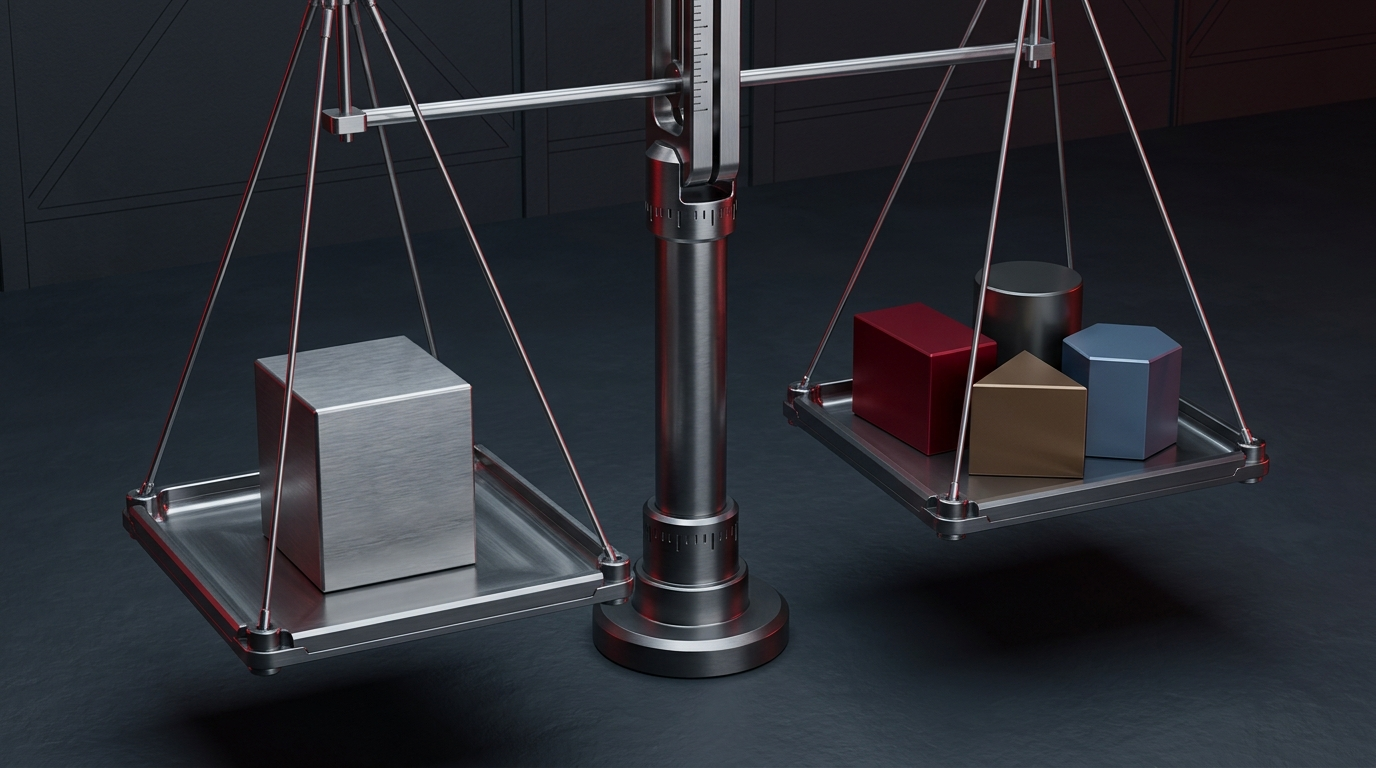
A normalized scope makes prices comparable, but the award decision still needs to weigh how likely each supplier is to deliver that scope.
Price is easy to compare; risk is not, unless it is broken into observable indicators. Useful categories include:
- Technical risk: quality of the DFM feedback, clarity of the tooling concept, and fit of the proposed approach to the part.
- Schedule risk: realism of the timeline relative to the scope, and dependencies on buyer decisions.
- Communication risk: responsiveness, clarity of documentation, and language capability for the project team.
- Change risk: how the supplier proposes to handle engineering changes and how they are priced.
Score DFM evidence, tooling concept, trial plan, and validation deliverables separately from price, and keep each supplier’s stated assumptions and exclusions visible in the scoring sheet.
Public procurement offers a useful discipline here. Under the U.S. Federal Acquisition Regulation’s tradeoff process, the solicitation must identify the evaluation factors and their relative importance, an award to other than the lowest-priced offeror must be justified by benefits that merit the additional cost, and the rationale must be documented [4]. Private buyers are not bound by these rules, but the same principle makes a tooling award defensible: state the criteria and their weight before quotes arrive, and record why the selected quote wins when it is not the lowest price.
Put the Normalized Scope into the Award Document
The normalized scope sheet should not disappear after the comparison. Attach it, with the scoring conclusion, to the purchase order or award package. It then becomes:
- the baseline for change orders and later quote revisions;
- the reference for what the supplier owes at tooling acceptance;
- the starting point for documentation required if the mold later moves to another supplier.
Specify document handover requirements at award, such as mold drawings, steel and hardness records, and maintenance history, so that they remain available if the tool is transferred later.
A note on mold classes: the class definitions in the Customs and Practices guide are an industry convention describing mold types and estimated life to support quoting and ordering [3]. They are not a regulatory requirement. If you use a class designation in an RFQ, also state the specific requirements that matter to you, such as steel, hardness, cycle life expectation, and documentation, so that every supplier interprets the class the same way.
When the scope sheet is ready, send it with the drawings and 3D files through each supplier’s request-for-quote form or equivalent channel, so every quote starts from the same package.
Buyers preparing their first structured tooling comparison often ask the following questions.
1. Why are injection mold quotes so different for the same part?
Suppliers often quote different scopes: cavitation, steel, hot-runner components, trial rounds, inspection, and corrections can all differ. Normalize the scope before comparing prices.
2. What should an injection mold RFQ include?
Annual volume and program life, resin and color, cosmetic requirements, drawing revision and acceptance basis, data and approval responsibilities, delivery and ownership terms, and a scope sheet for tooling and validation items.
3. Are SPI mold classes a mandatory standard?
No. They come from an industry guide on moldmaking customs and practices and describe mold types and estimated life [3]. Use them as a shorthand, and still state your specific requirements.
4. Should I always choose the lowest tooling quote?
Not automatically. Compare normalized scope and risk. If you select a higher quote, document the benefits that justify the difference, as structured procurement processes require [4].
5. How much does mold steel affect tool cost?
Uddeholm states that tool steel usually represents 5–10% of tool cost [1]. Steel choice can matter more for tool life and maintenance than for the initial price.
To compare injection mold quotes fairly, standardize the assumptions before asking suppliers to price. Compare the scope line by line, including trials, inspection, and correction work, and classify every item as included, excluded, optional, or buyer-supplied. Score risk separately from price, document the reason for the award, and carry the normalized scope into the purchase documents. The lowest number is only meaningful when it prices the same tool.
[1] Uddeholm: Tool Steels for Plastic Moulding (Edition 17, 2021). https://www.uddeholm.com/us/en-us/tech-uddeholm-steel-for-moulds-en-1
[2] ISO: ISO 20457:2026, Plastics Moulded Parts – Tolerances and Acceptance Conditions. https://www.iso.org/standard/90304.html
[3] Plastics Industry Association: Customs and Practices of the Moldmaking Industry (AR-101, revised May 2023). https://www.plasticsindustry.org/data-report/customs-and-practices-of-the-moldmaking-industry
[4] Acquisition.gov: Federal Acquisition Regulation 15.101-1, Tradeoff Process. https://www.acquisition.gov/far/15.101-1








 Business Programs


Leave a Reply
Want to join the discussion?Feel free to contribute!