Easy-to-implement ideas to improve your corporate culture and drive employee engagement
We gave a new car away to our employees every other month, six cars in total, to keep the motivation and excitement up among our best performing sales agents. We were really impressed with ourselves and wanted to know what else we could do to improve the happiness factor. We sent out a survey (which we still do today) to ask our employees about the cleanliness, the temperature in the building, the security, the lighting, the management, the pay, the incentives, the likelihood that they’d leave if another company offered them more money, all-in-all we had about twenty five questions. Two months later the same survey showed that the work space was cleaner, the building temperature more comfortable, the security better, the lights brighter, the managers more helpful, the pay was better, our incentive plan produced better results, and less of our employees would leave for more money.
How did we manage to change our employees’ perception and why did they want us to stop giving away cars?
Hi there! This article is available for free. Login or register as a StrategyDriven Personal Business Advisor Self-Guided Client by:
[reveal_quick_checkout id=”25489″ checkout_text=”Subscribing to the Self Guided Program – It’s Free!”]
About the Author
Craig Handley is a networking monster with an unstoppable combination of hard work, ingenuity, and creativity that has sparked the vision and growth that drives the success of Listen Up Español. Craig’s expertise in maximizing the sales process – and Listen Up Español’s impressive track record of higher conversion rates and higher average order value than any other Spanish language call center – was achieved from the ground up, having started his professional career in door-to-door sales and rising through the ranks in many call centers. He is well known for being an entrepreneur who lives and breathes the Maverick motto: “Make More Money, Have More Fun, and Give More Back.”
https://www.strategydriven.com/wp-content/uploads/SDELogo5-300x70-300x70.png00StrategyDriven - Sponsored Contenthttps://www.strategydriven.com/wp-content/uploads/SDELogo5-300x70-300x70.pngStrategyDriven - Sponsored Content2014-06-19 06:56:142016-05-03 20:35:32Why Our Employees Asked Us To Stop Giving Away Cars
What does your company’s culture look like? Can you clearly define it and how it contributes to the overall success of your business? Could your culture benefit from some special attention? Throughout my 25 year career, I’ve admired certain companies that consistently outshine their competition. What is their secret ingredient? I’ve arrived at an undeniable conclusion? company culture.
But when it comes to building and establishing that culture, where do you start? I’ve learned that one of the most essential steps is determining the difference between your company’s priorities and values. Priorities are the day-to-day demands of our jobs. They can shift and change constantly. In contrast, values are the glue that bind us together. Our values must not change; they are non-negotiable. Our daily decisions are grounded in our values, and the key is discovering what is most important to us. I learned where my values lied when I was working for a former employer. My boss was a headstrong individual who would lock in on an idea, lobby some employees to join his cause, then push his ideas on everyone else until he got his way. His behaviors led to some ill-conceived and financially dangerous decisions.
Hi there! This article is available for free. Login or register as a StrategyDriven Personal Business Advisor Self-Guided Client by:
[reveal_quick_checkout id=”25489″ checkout_text=”Subscribing to the Self Guided Program – It’s Free!”]
About the Author
Brian Fielkow is the author of Driving to Perfection: Achieving Business Excellence by Creating a Vibrant Company Culture and owner of Jetco Deliver. in Houston, Texas. He and has presented to thousands of people across the country on how to establish a healthy culture. To continue the conversation, contact Brian at [email protected], and learn more at drivingtoperfection.com.
https://www.strategydriven.com/wp-content/uploads/SDELogo5-300x70-300x70.png00StrategyDriven - Sponsored Contenthttps://www.strategydriven.com/wp-content/uploads/SDELogo5-300x70-300x70.pngStrategyDriven - Sponsored Content2014-04-30 06:20:152016-05-03 20:37:42Breathing Life Into Your Values-Based Culture
If there is one thing we have learned through the economic twists and turns of the past decade, it is that people make our companies run. Even at the depths of the economic downturn with the high unemployment rate of 9.9 percent, there were 3.8 million jobs in the US that went unfilled for more than six months and that problem only gets worse as unemployment drops. Consequently, attracting and retaining high quality employees is ‘job one’ in 2014. Is it any wonder that CEO’s and their HR departments, are scanning the horizon for any new idea to help fill those positions? Enter stage left, the open office concept.
The open office concept has its detractors and there is actually much to be said for the traditional office with its spaces for privacy, learning, and focused work, but an open office strategy, when thoughtfully deployed can create environments that support employee attraction and retention.
Hi there! This article is available for free. Login or register as a StrategyDriven Personal Business Advisor Self-Guided Client by:
[reveal_quick_checkout id=”25489″ checkout_text=”Subscribing to the Self Guided Program – It’s Free!”]
About the Author
Kristine Woolsey is a business strategist, speaker, and author. She is a transition specialist, helping organizations reshape themselves during times of change including mergers, extreme growth, and adaption to today’s changing workplace. She works at the intersection of organizational behavior, brand alignment, and facilities. She guides leaders to understand the power of leveraging natural behavior patterns using research based strategies with measurable results.
Kristine was trained as an architect and then moved into the business arena. Now, she teaches and speaks about the future of work and behavioral strategy to groups and conferences nationally. Kristine consults for medium to large companies, helping business leaders use behavioral strategies to adjust their value proposition, identity/brand, organization structure, and facilities to create the most direct path through any organizational transformation. For more information visit: www.kristinewoolsey.com.
https://www.strategydriven.com/wp-content/uploads/SDELogo5-300x70-300x70.png00StrategyDriven - Sponsored Contenthttps://www.strategydriven.com/wp-content/uploads/SDELogo5-300x70-300x70.pngStrategyDriven - Sponsored Content2014-04-10 06:04:412016-05-03 20:40:30What Your Office Says About Your Company (And Why You Should Care)
Enterprise social collaboration tools can be a powerful means to support employees in their daily business, also helping them foster cross-company collaboration. This infographic from AgreeYa Solutions provides a comprehensive introduction to the world of enterprise social collaboration. Review the illustration to learn more about enterprise social collaboration and how it can enhance business-wide productivity.
The image to the right is just a small snippet of the whole infographic. Click here to download a full-size version of this infographic.
https://www.strategydriven.com/wp-content/uploads/SDEFeaturedImage.jpg300300StrategyDriven - Sponsored Contenthttps://www.strategydriven.com/wp-content/uploads/SDELogo5-300x70-300x70.pngStrategyDriven - Sponsored Content2014-02-05 06:13:582018-09-12 20:29:58The Evolution of Enterprise Social Collaboration
As you may know, I’m a regular flyer. About 200 flights a year. Mostly on major airlines, but because I’m more interested in flying non-stop than getting travel miles or points, I take whatever airline is most convenient for my schedule.
This past Friday I found myself flying Alaska Airlines from Atlanta, Georgia, to Portland, Oregon.
There are only a few Alaska gates, and they’re hard to find, in Delta-dominant Atlanta Hartsfield Airport. FYI: Alaska is part of the same SkyTeam co-op airline alliance as Delta. That’s where the similarity ends.
The Alaska ticket agents were amazingly friendly. Actually smiling, laughing, engaging, helpful, and friendly. I hope airline employees at your airport act that way!
NOTE WELL: Yes, there’s an occasional ticket agent or two that are friendly and helpful, and there are some friendly, helpful agents in Charlotte, North Carolina, that I’ve known for more than a decade. But these Alaska people were amazing.
I engaged them in a few minutes of lighthearted conversation and asked them what the hiring criterion was. That’s when the startling admission came, “We’re actually Delta employees who were hand-picked and retrained.”
Hand picked and retrained. What does that tell you?
WAIT A MINUTE! Retrained? It’s the same computer system and the same baggage criteria. Just cross out “Delta” and substitute “Alaska” right? Right.
“We were trained to greet and treat customers in a different way,” said one of the agents. “You know – smile, chat, be friendly, thank customers as you look them in the eye, and not use certain unfriendly words and phrases like ‘policy’ and ‘all set.’”
Wow! There’s a concept.
Yes, I boarded the plane happily and on time. Yes, the flight attendants matched the ticket agent’s and the gate agent’s friendliness. In-flight service – all five hours of it – was excellent. NOTE: These days, flight attendants emphasize they are there for “your safety” and never say the word “service,” let alone the word “friendly.”
These flight attendants were gently professional, and friendly; not assertively demanding – almost rude when telling me and others to “turn off electronic devices.” I fell asleep between ordering and receiving food. Next thing I knew, a flight attendant was gently rubbing the side of my arm, and smiling as she helped me put my food in place. Classic.
Well, that would have been the end of the story had I not spent the weekend with a 10-year Alaska Airline employee. I told him about my experience and he just smiled.
I asked him what makes Alaska different.
Here is his eye-opening response about the big things Alaska does better than other airlines:
It starts before training. It’s all about who they hire. It’s about finding the BEST people. They have some process of pre-identifying the right people.
No test at time of hiring. Interviews are human to human. They ask questions and go with gut feelings.
They select people they believe will be hard workers. People who they believe will go beyond what’s expected. “North” of what’s expected.
They select people they believe have a natural inclination to take ownership. People who are caring and friendly.
They select passionate people who love what they do.
They don’t just train front-line employees, they train all employees. They have found that front-line people are buoyed by internal employees if attitudes are consistently positive throughout the company.
Why is this eye opening? Because it’s not fancy! It’s nothing new.
It’s not complicated. It’s natural.
It’s not costly. It’s human.
You know the rest right? Alaska Airline’s leadership and management is ‘by example’ not ‘by the book.’ All employees feel valued and are happy to serve. And customers love it. It’s humanized and natural. It’s caring people serving traveling people in need.
Well, why don’t all airlines do this? Long list of reasons. Too numerous and way too negative to mention here. This is a business lesson, not an airline reprimand.
HARD QUESTIONS:
What’s your culture?
How consistent is attitude throughout your corporate environment?
How is that affecting your morale?
And more important how is that affecting your customers?
Reprinted with permission from Jeffrey H. Gitomer and Buy Gitomer.
About the Author
Jeffrey Gitomer is the author of The Sales Bible, Customer Satisfaction is Worthless Customer Loyalty is Priceless, The Little Red Book of Selling, The Little Red Book of Sales Answers, The Little Black Book of Connections, The Little Gold Book of YES! Attitude, The Little Green Book of Getting Your Way, The Little Platinum Book of Cha-Ching, The Little Teal Book of Trust, The Little Book of Leadership, and Social BOOM! His website, www.gitomer.com, will lead you to more information about training and seminars, or email him personally at [email protected].
https://www.strategydriven.com/wp-content/uploads/JeffreyGitomer.jpg218156StrategyDriven - Sponsored Contenthttps://www.strategydriven.com/wp-content/uploads/SDELogo5-300x70-300x70.pngStrategyDriven - Sponsored Content2013-10-14 06:22:132016-08-08 16:37:30All airlines are the same, except for their people.
 A VETERAN OWNED SMALL BUSINESS |
 Kristine Woolsey is a business strategist, speaker, and author. She is a transition specialist, helping organizations reshape themselves during times of change including mergers, extreme growth, and adaption to today’s changing workplace. She works at the intersection of organizational behavior, brand alignment, and facilities. She guides leaders to understand the power of leveraging natural behavior patterns using research based strategies with measurable results.
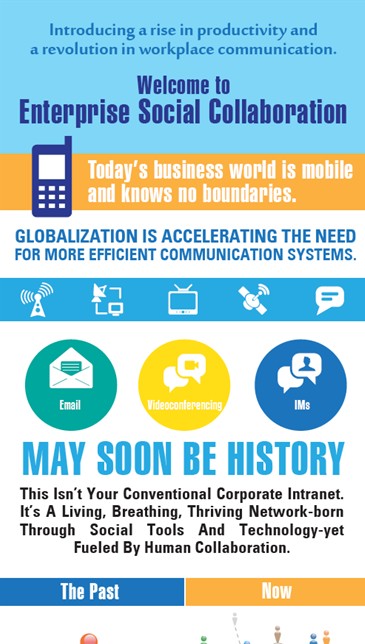 Enterprise social collaboration tools can be a powerful means to support employees in their daily business, also helping them foster cross-company collaboration. This infographic from AgreeYa Solutions provides a comprehensive introduction to the world of enterprise social collaboration. Review the illustration to learn more about enterprise social collaboration and how it can enhance business-wide productivity.
 Jeffrey Gitomer is the author of The Sales Bible, Customer Satisfaction is Worthless Customer Loyalty is Priceless, The Little Red Book of Selling, The Little Red Book of Sales Answers, The Little Black Book of Connections, The Little Gold Book of YES! Attitude, The Little Green Book of Getting Your Way, The Little Platinum Book of Cha-Ching, The Little Teal Book of Trust, The Little Book of Leadership, and Social BOOM! His website,
  Business Programs