 A VETERAN OWNED SMALL BUSINESS |
Navigating Commercial Real Estate: Flexible Spaces and Financing Solutions

The Evolution of Commercial Real Estate Investment
For many businesses, a commercial warehouse is more than just a building; it’s the operational core. In May 2026, efficient logistics and scalable space are essential for staying competitive. Securing the right commercial warehouse for lease is therefore crucial for sustained growth.
We understand that navigating this complex real estate sector can be challenging. This guide aims to simplify the process and help you make informed decisions. We will cover what commercial warehouses are, where to find them, and how to understand rental rates and sizes. We will also discuss different space types, key evaluation factors, and relevant market trends. Our focus will be on helping you find the ideal setup, including adaptable warehouse spaces, to meet your business needs.
The commercial real estate landscape in May 2026 is a dynamic ecosystem, continuously reshaped by global economic shifts, technological advancements, and evolving consumer behaviors. We observe a market characterized by both robust demand in specific sectors and strategic adaptation in others. Market liquidity remains strong for high-quality assets, particularly those supporting e-commerce and logistics. Urban expansion continues to drive demand for commercial spaces, but often with a renewed focus on mixed-use developments that integrate living, working, and retail environments.
Industrial demand, especially for warehousing and distribution centers, has seen unprecedented growth, largely fueled by the persistent rise of e-commerce. Businesses are increasingly seeking strategically located facilities to optimize their supply chains and meet ever-tightening delivery expectations. This trend is evident in major logistics hubs across North America. For instance, regions like Burnaby, Surrey, and Vancouver in Canada continue to experience high demand for industrial space, with limited inventory driving up rental rates. Similarly, emerging markets and established logistical corridors in the United States, such as those found in Alabama, are witnessing significant investment and development in the industrial sector. This sustained interest underscores the critical role that efficient storage and distribution play in the modern economy.
Diversification through Commercial Real Estate Investment
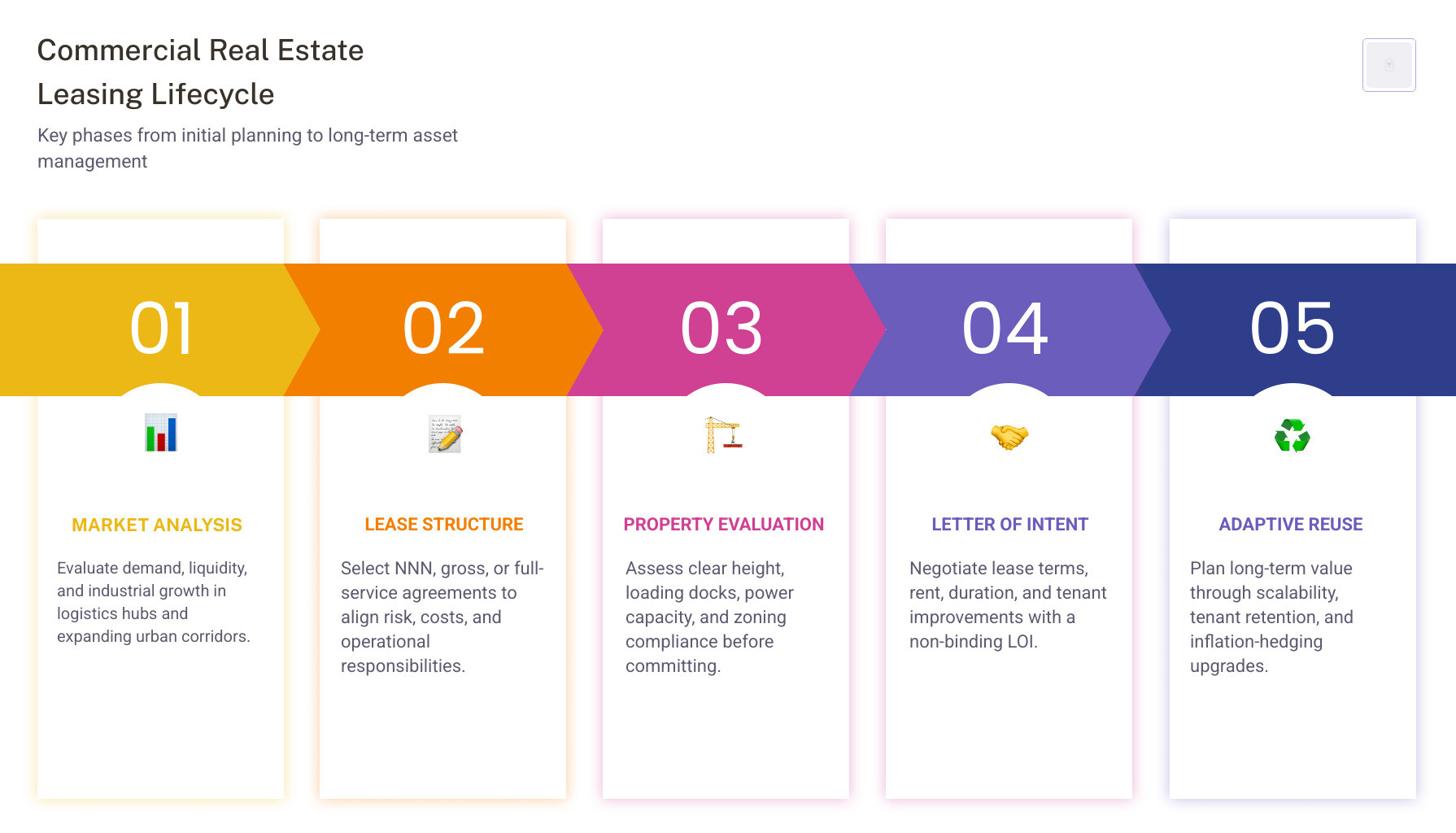
Investing in commercial real estate offers a compelling avenue for portfolio diversification, providing a tangible asset class that can act as a hedge against market volatility. One of the primary benefits is risk mitigation, as commercial properties often exhibit less correlation with traditional stock and bond markets. Understanding the various lease structures is paramount for investors and tenants alike, as they directly impact risk and responsibility.
Triple Net (NNN) leases, for example, place the burden of property taxes, insurance, and maintenance costs squarely on the tenant, offering landlords a more predictable and passive income stream. This structure is particularly attractive for single-tenant industrial properties where the tenant has significant control over the premises. In contrast, Gross leases typically include all operating expenses in a single rental payment, simplifying tenants’ budgeting but requiring landlords to manage and absorb these fluctuating costs. Full-service structures, often found in multi-tenant office buildings, bundle nearly all expenses, including utilities and janitorial services, into the rent, providing tenants with a comprehensive, worry-free solution. Each of these structures offers distinct advantages and disadvantages, influencing capital appreciation and operational overhead for both parties. Strategic selection of lease type is crucial for aligning with investment goals and operational needs.
Long-term Value in Commercial Real Estate Investment
The long-term value proposition of commercial real estate investment is rooted in several key factors that contribute to sustained returns and asset appreciation. Tenant retention is a critical element; a stable tenant base reduces vacancy rates and turnover costs, ensuring consistent income. Properties that offer modern amenities, strategic locations, and flexible layouts are more likely to attract and retain high-quality tenants.
Adaptive reuse is another powerful strategy for enhancing long-term value. Transforming older, underutilized properties into modern, functional spaces – such as converting former manufacturing plants into creative office hubs or industrial flex spaces – can unlock significant value and extend the economic life of an asset. Scalability, the ability to expand or reconfigure space to meet evolving business needs, is increasingly important, particularly for industrial and flex properties. This inherent flexibility makes properties more attractive to a broader range of tenants over time.
Furthermore, commercial real estate often serves as an effective inflation hedge. As inflation rises, property values and rental income tend to increase, preserving purchasing power and enhancing returns. Finally, institutional-grade assets, characterized by their size, quality, and strong tenant rosters, are particularly sought after by large investors for their stability and long-term growth potential. These factors collectively underscore why commercial real estate, when strategically managed, can be a cornerstone of a resilient investment portfolio.
Essential Criteria for Selecting a Commercial Warehouse for Lease
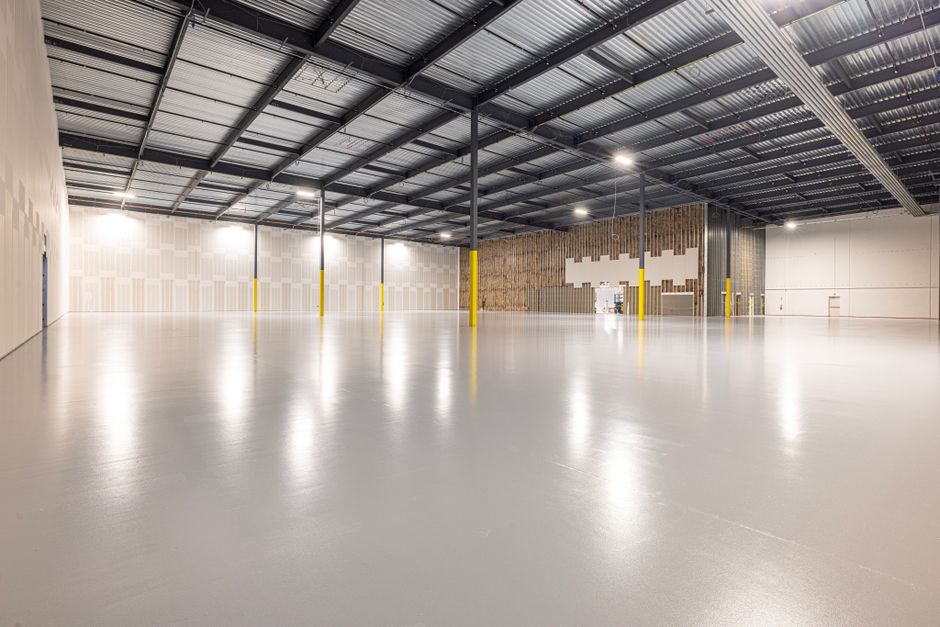
When searching for a commercial warehouse for lease, a meticulous evaluation of essential criteria is paramount to ensure the space aligns perfectly with your operational demands. Beyond the basic square footage, critical physical attributes dictate a warehouse’s suitability. Clear height, for instance, refers to the usable vertical space from the floor to the lowest obstruction (such as support beams or sprinklers), which directly impacts storage capacity and the ability to operate specialized equipment, such as forklifts. Adequate loading docks, including their number, type (dock-high or grade-level), and configuration, are vital for efficient inbound and outbound logistics. The power capacity, measured in amperage and voltage, must meet your machinery and operational requirements, especially for manufacturing or heavy industrial uses.
Zoning regulations are non-negotiable; they dictate what types of businesses and activities are permitted in a specific area, influencing everything from operating hours to noise levels and environmental considerations. Understanding these regulations early can prevent costly delays or legal issues. The process of securing a lease typically begins with a Letter of Intent (LOI), a non-binding document outlining the proposed lease terms, including rent, lease duration, and tenant improvements. This initial step allows for negotiation before a formal lease agreement is drafted. A thorough property evaluation, encompassing structural integrity, utility infrastructure, and environmental assessments, is crucial before committing to a lease. For businesses seeking highly customizable solutions, exploring adaptable warehouse spaces can provide the flexibility needed to tailor a property to precise operational needs, offering a significant advantage in rapidly evolving markets.
Understanding Space Configurations
Commercial warehouses are far from monolithic; they come in a variety of configurations designed to meet diverse business needs. Understanding these distinctions is key to selecting the most appropriate space.
- Industrial Space: This category typically refers to properties primarily used for manufacturing, production, storage, or distribution. Large open areas, high ceilings, heavy power, and robust loading capabilities characterize these spaces. They are often found in industrial parks, strategically located near major transportation arteries.
- Office Components: Many industrial warehouses integrate office components, ranging from a small administrative area to substantial corporate offices. These spaces are crucial for businesses that require on-site management, sales teams, or customer service operations alongside their warehouse activities. The ratio of office to warehouse space can vary significantly, impacting functionality and rental rates.
- Flex Units: Flex spaces are a hybrid, offering a balanced mix of industrial (warehouse/light manufacturing) and office space. They are highly versatile, catering to businesses that need both production/storage and administrative functions within a single unit. Think of them as adaptable shells that can be customized for a wide array of uses, from R&D labs to showrooms with back-end storage.
- Multi-Tenant Facilities: These properties house multiple businesses under one roof, with individual units leased out. They often provide shared amenities such as common loading docks, parking, and, in some cases, shared office services. Multi-tenant facilities are particularly attractive to smaller businesses that may not require an entire standalone warehouse but still need dedicated industrial or flex space.
- Build-to-Suit Options: For businesses with highly specific or unique requirements, a build-to-suit option allows a developer to construct a custom facility tailored precisely to the tenant’s specifications. While this typically involves longer lease terms and higher costs, it ensures optimal functionality and efficiency for specialized operations.
Each configuration offers distinct advantages, and the optimal choice depends heavily on a business’s operational model, growth projections, and specific functional needs.
Strategic Location and Accessibility
The adage “location, location, location” holds profound truth in commercial real estate, particularly for warehouses. Strategic location and accessibility are critical determinants of operational efficiency, cost-effectiveness, and market reach.
- Transit Scores: While often associated with residential properties, transit scores can indirectly impact commercial warehouse accessibility for employees and, in some cases, for smaller delivery vehicles using public transport routes. More directly, proximity to public transportation can be a significant factor for businesses with large workforces.
- Highway Proximity: Direct and easy access to major highways and interstates is non-negotiable for most warehouse operations. This minimizes truck transit times, reduces fuel costs, and facilitates faster distribution of goods, directly impacting a business’s bottom line.
- Logistics Hubs: Locating a warehouse within or near established logistics hubs – areas with a high concentration of transportation infrastructure, such as intermodal yards, airports, and major freight routes – offers unparalleled advantages. These hubs streamline supply chain operations, providing access to a network of carriers and distribution services.
- Last-Mile Delivery: With the explosion of e-commerce, the efficiency of last-mile delivery has become a competitive differentiator. Warehouses positioned closer to urban centers or densely populated areas can significantly reduce last-mile delivery times and costs, which is crucial for meeting customer expectations.
- Shipping Efficiency: Overall shipping efficiency is a composite of all these factors. A well-located warehouse minimizes bottlenecks, optimizes delivery routes, and reduces the time goods spend in transit. This not only enhances customer satisfaction but also contributes to a more sustainable and cost-effective supply chain.
Considering these strategic location factors is vital for any business looking to lease a commercial warehouse, as they directly influence operational performance and market competitiveness in May 2026.
Optimizing Operations for HVAC and Plumbing Contractors
For HVAC and plumbing contractors, the right commercial warehouse for lease can be a game-changer, transforming daily operations and supporting business growth. These specialized trades require spaces beyond simple storage, demanding facilities that optimize inventory management, securely house valuable equipment, and provide efficient staging areas.
A well-designed warehouse enables systematic inventory management, ensuring that parts, pipes, and units are easily accessible and reducing wasted time searching for materials. Secure equipment storage is paramount, protecting expensive tools, machinery, and vehicles from theft and damage. Dedicated fleet parking, ideally secured and with easy ingress/egress, streamlines the dispatch process and enhances vehicle security. A centralized dispatch office within the facility can improve communication and coordination for service calls. The goal is centralized logistics, where all operational components – from receiving supplies to preparing for jobs – are integrated under one roof. Workshop requirements, such as specialized bays for repairs, fabrication, or pre-assembly, can significantly boost productivity. The right space acts as a catalyst for business expansion, enabling contractors to take on more projects and serve a larger client base.
Streamlining Service Workflows
The efficiency of an HVAC or plumbing contractor’s service workflow is directly tied to the functionality of their operational base. A well-chosen commercial warehouse can dramatically streamline these processes.
- Tool Organization: Implementing a robust system for tool organization within the warehouse ensures that technicians can quickly grab what they need before heading to a job site. This might involve dedicated racks, shadow boards, or mobile tool carts.
- Material Staging: Designated areas for material staging enable efficient preparation of job-specific kits. Materials for upcoming projects can be gathered and organized in advance, minimizing delays and ensuring technicians arrive on-site fully equipped.
- Rapid Response: A strategically located, well-organized warehouse enables rapid response to emergency calls. Technicians can quickly access necessary parts and equipment, reducing client downtime and enhancing customer satisfaction.
- Loading Bay Access: Easy, unobstructed access to loading bays is crucial for both receiving large deliveries of equipment and loading service vehicles with heavy or bulky items. Drive-in bays are particularly beneficial for smaller vehicles, while dock-high bays serve larger delivery trucks.
- Administrative Integration: Integrating administrative functions within the same facility enables seamless communication among field teams, dispatch, and office staff. This can include dedicated desks for paperwork, invoicing, and customer support, ensuring that the back-end operations support the front-line service delivery.
By optimizing these elements, contractors can reduce operational friction, improve productivity, and ultimately deliver higher quality service.
Professionalism and Client Perception
For HVAC and plumbing contractors, their physical premises can significantly impact their professionalism and client perception. A well-maintained and functional commercial warehouse can project an image of reliability and competence.
- Showroom Potential: Some flex spaces within a commercial warehouse can be designed with showroom potential, allowing contractors to display high-end HVAC units, plumbing fixtures, or innovative solutions to clients. This provides a professional environment for consultations and product demonstrations.
- Meeting Spaces: Dedicated meeting spaces, distinct from the workshop or storage areas, offer a professional setting for client consultations, team meetings, and vendor presentations. This elevates the contractor’s image beyond that of a mere service provider.
- Brand Visibility: A clean, organized exterior with prominent signage enhances brand visibility and reinforces a professional image. A dilapidated or disorganized facility, conversely, can undermine client confidence.
- Secure Storage: Demonstrating robust secure storage for client equipment or high-value parts reassures clients that their assets are protected. This is particularly important for longer-term projects or specialized components.
- Operational Efficiency: Clients often infer a company’s professionalism from its operational efficiency. A well-organized warehouse that enables quick service turnaround and accurate inventory management signals a competent and reliable business.
Investing in a commercial warehouse that supports professionalism and client perception is a strategic move that can differentiate a contractor in a competitive market.
MicroFlex™: Redefining Small Business Infrastructure in Alabama
MicroFlex™ is at the forefront of redefining small-business infrastructure, particularly in Alabama’s burgeoning markets. We recognize that traditional commercial leases often present significant hurdles for small- to medium-sized enterprises (SMEs), including rigid terms and unsuitable space configurations. Our approach is centered on providing comprehensive small-business support through highly flexible, multi-functional spaces.
We believe that the right environment can be a catalyst for growth. Our facilities are designed to foster growth-oriented environments, offering adaptable units that can evolve as a business’s needs change. This commitment extends to cultivating a vibrant entrepreneurial community within our spaces, where businesses can network, collaborate, and thrive. By offering tailored solutions, MicroFlex™ empowers businesses to focus on their core operations without being constrained by inadequate or inflexible real estate.
Strategic Alabama Locations
Our strategic presence across Alabama is designed to serve key economic hubs and provide unparalleled regional connectivity. We have carefully selected locations that offer optimal logistical advantages and access to growing markets.
- Birmingham-Irondale: Located within the greater Birmingham metropolitan area, our Irondale location benefits from proximity to major interstates and a diverse industrial base, making it ideal for distribution, light manufacturing, and service-oriented businesses.
- Auburn: Serving the dynamic Auburn-Opelika region, this location caters to businesses tapping into the university ecosystem, tech startups, and the growing retail and service sectors.
- Birmingham-Hoover: Another prime location within the Birmingham metro, Hoover offers access to a robust consumer market and a skilled workforce, suitable for a wide range of commercial operations.
- Huntsville-Madison: As a hub for aerospace, technology, and advanced manufacturing, our Huntsville-Madison facilities are perfectly situated for businesses requiring specialized industrial and flex spaces, benefiting from the region’s innovative economy.
These strategically chosen locations ensure that MicroFlex™ clients benefit from excellent accessibility, strong local economies, and the infrastructure necessary for sustained growth, reinforcing Alabama’s position as a burgeoning commercial landscape.
Why MicroFlex™ is the Premier Alternative
MicroFlex™ stands out as the premier alternative to conventional commercial warehouse leasing, particularly for businesses seeking agility and tailored solutions. We are dedicated to eliminating roadblocks that often hinder small and growing enterprises. Our business model is built on providing simplified logistics, enabling our clients to move in, operate, and scale with minimal friction.
We offer scalable footprints, meaning businesses can easily expand or contract their space as their needs change, without the burden of long-term, inflexible commitments. This adaptability is a cornerstone of our service, enabling businesses to pivot more effectively and grow faster. Our approach is business-centric management, where we act as a partner, providing responsive support and a conducive environment for success. By removing long-term constraints typically associated with traditional leases, MicroFlex™ empowers entrepreneurs to innovate and thrive.
| Feature | Traditional Industrial Leases | MicroFlex™ Flexible Solutions |
|---|---|---|
| Lease Term | Typically 3–10+ years, often rigid | Flexible, shorter terms, including month-to-month options |
| Space Scalability | Difficult to expand or contract without a new lease or sublease | Easy to scale up or down within the same facility |
| Upfront Costs | High (security deposits, tenant improvements, legal fees) | Lower and more manageable |
| Customization & Flexibility | Limited; often requires significant tenant investment | Designed for multi-functional use with adaptable layouts |
| Maintenance & Utilities | Often the tenant’s responsibility (NNN lease) | Frequently included or simplified, reducing operational burden |
| Operational Control | High level of control, but with greater responsibility | Shared or managed services allow businesses to focus on core operations |
| Community | Typically isolated from other businesses | Encourages an entrepreneurial environment with networking opportunities |
| Best Suited For | Large, established businesses with stable space requirements | Small businesses, startups, e-commerce companies, contractors, and seasonal operations |
Frequently Asked Questions
1. What are the primary types of commercial lease structures?
In May 2026, the commercial real estate market primarily utilizes three main lease structures, each with distinct implications for tenants and landlords.
- NNN (Triple Net) Leases: Under an NNN lease, the tenant is responsible for paying a base rent plus a prorated share of the property’s operating expenses, including property taxes, building insurance, and common-area maintenance (CAM) fees. This structure is common in industrial and retail properties, offering landlords a more predictable income stream.
- Gross Leases: In a gross lease, the tenant pays a single, all-inclusive rental payment, and the landlord covers all property operating expenses. While simpler for the tenant, it’s important to clarify what “all-inclusive” truly means, as utilities are often excluded.
- Full-Service Leases: Often found in multi-tenant office buildings, a full-service lease is similar to a gross lease but typically includes all operating expenses and utilities, as well as janitorial services. This offers the most predictability for tenants regarding monthly costs.
- Common Area Maintenance (CAM) Fees: These are charges tenants pay landlords to cover the maintenance, repair, and operation of common areas within a commercial property, such as parking lots, landscaping, hallways, and security. CAM fees are typically found in NNN and sometimes modified gross leases.
2. How do businesses determine the necessary warehouse size?
Determining the optimal warehouse size is a critical decision that impacts efficiency and cost. In May 2026, businesses typically consider several key factors:
- Inventory Volume: The current and projected volumes of goods to be stored are the primary determinants. This includes raw materials, work-in-progress, and finished products.
- Equipment Dimensions: The size and maneuverability requirements of material handling equipment (e.g., forklifts, pallet jacks) dictate aisle widths and turning radii.
- Staffing Levels: The number of employees working in the warehouse influences the need for office space, break rooms, restrooms, and adequate circulation areas.
- Future Growth Projections: It’s crucial to anticipate future business expansion. Leasing a space that offers room for growth or the flexibility to expand within the same complex can prevent costly relocations down the line.
- Ceiling Height Requirements: High clear heights allow for vertical storage, significantly increasing usable space without expanding the physical footprint. This can be a more cost-effective way to accommodate growing inventory.
3. What factors influence commercial property demand in May 2026?
Several interconnected factors are shaping commercial property demand in May 2026:
- Supply Chain Shifts: Ongoing global supply chain disruptions and the drive for resilience are leading companies to re-evaluate their logistics networks, often increasing demand for strategically located warehousing and distribution centers closer to end-consumers or key transportation hubs.
- Technological Integration: The adoption of automation, AI, and IoT in logistics and manufacturing is influencing warehouse design, favoring properties that can accommodate advanced robotics, smart inventory systems, and higher power requirements.
- Urbanization: Continued population growth in urban and suburban areas drives demand for last-mile delivery facilities and mixed-use developments that integrate commercial spaces into community living.
- Sustainability Standards: There’s a growing emphasis on green buildings and sustainable operations. Properties with energy-efficient designs, renewable energy sources, and eco-friendly features are increasingly attractive to tenants and investors, influencing demand.
- Flexible Workspace Trends: The hybrid work model continues to evolve, impacting office space demand. However, it also creates opportunities for flex office solutions and integrated warehouse-office (flex) spaces for businesses that need both collaborative and operational areas.
Conclusion
Navigating the dynamic landscape of commercial warehouse leasing in May 2026 requires strategic planning and a keen understanding of market nuances. For businesses, securing the right space is not merely a logistical decision but a strategic imperative that underpins operational agility and market resilience. By carefully evaluating essential criteria such as space configuration, location, and lease structures, companies can future-proof their operations and position themselves for sustained growth.
Whether you are an HVAC contractor optimizing service workflows or a small business seeking scalable infrastructure, the right commercial property can unlock significant potential. In regions like Alabama, innovative solutions are emerging to meet these evolving demands. Partnering with a professional team that understands your unique needs can transform the complex process of finding a commercial warehouse for lease into a streamlined and successful endeavor, fostering business growth and operational excellence.
Related content from StrategyDriven










 Business Programs
Leave a Reply
Want to join the discussion?Feel free to contribute!